Best Place to Sell Pokemon Cards Near Me vs Online (2026 Guide)
Local has its perks. But the math usually favors online.
By Misprint Editorial | Published Jan 14, 2026 | 11 min read

The convenience of selling in person is real. The 40% haircut on your card's value is also real.
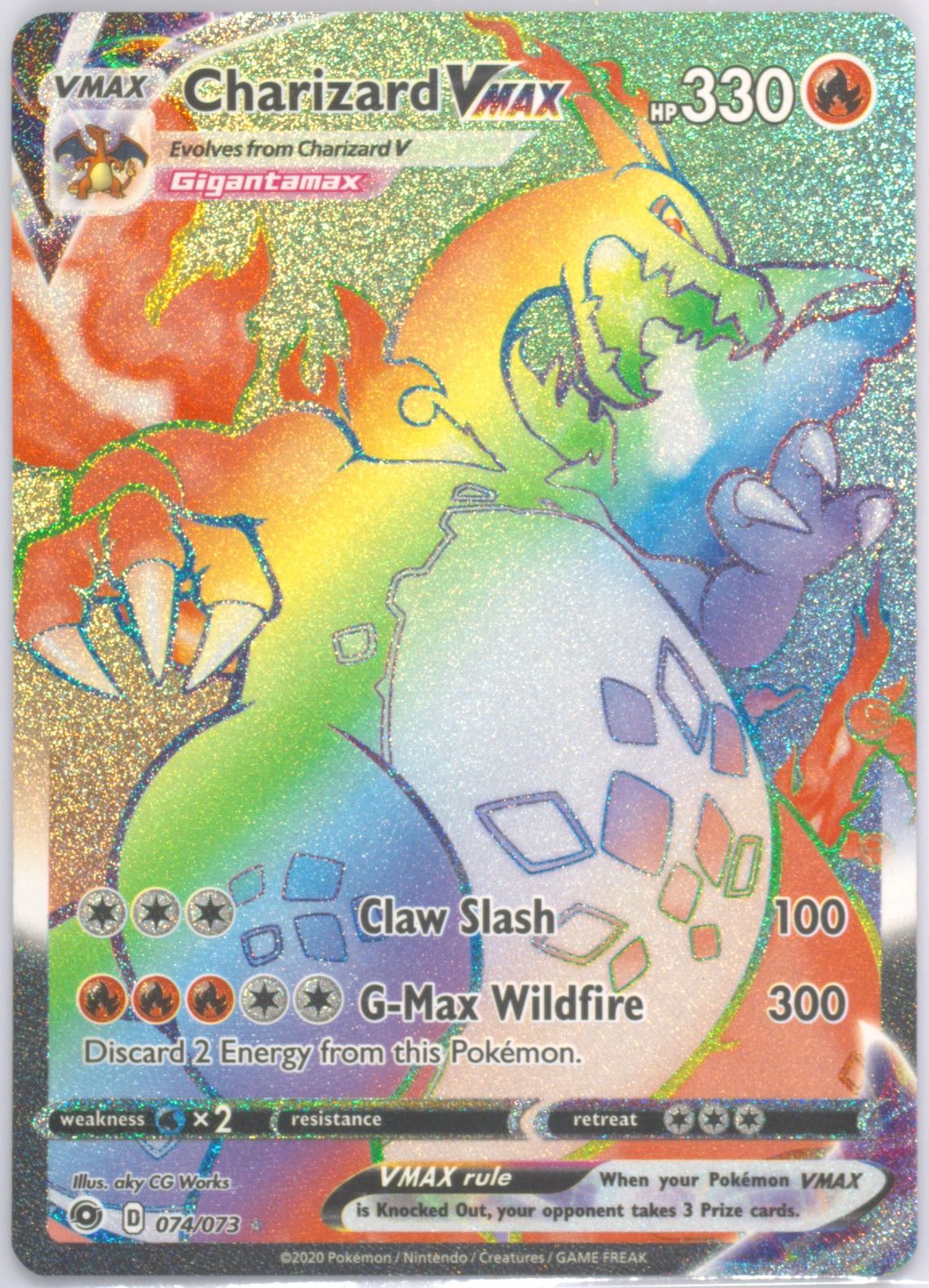
We've done it all. We've sat behind a folding table at card shows for nine hours hoping somebody wanted our Charizard VMAX. We've driven 45 minutes to a local card shop only to get offered half of what we expected. We've listed the same card on Misprint and had it sell for 90% of market value while we were asleep. The local vs. online question isn't theoretical for us — it's something we've run the experiment on dozens of times with real cards and real money.
The answer isn't always "sell online." Sometimes local makes perfect sense. But you need to understand what you're giving up in each scenario, because the gap between local and online payouts can be enormous on valuable cards.
The Local Options
Local Card Shops (LCS)
Every town with a halfway decent hobby scene has at least one local card shop. They buy Pokemon cards, they sell Pokemon cards, and for a lot of people, they're the first place that comes to mind when they want to turn cards into cash.
What they'll pay you: Expect 40-60% of market value on most cards. A card worth $100 on TCGPlayer or Misprint will get you a $40-$60 cash offer at most shops. Some shops are better — we've found a couple that offer 65-70% on high-demand graded cards — but they're the exception, not the rule.
Why the discount is so steep: The shop needs to resell the card and make a profit. They're paying rent, employee wages, and carrying inventory risk. If they buy your card for $80 and the market drops 20% before they sell it, they're losing money. The 40-60% range accounts for all of that. It's not greed — it's the economics of running a physical store.
When the LCS makes sense:
- You need cash right now, not next week
- You have a pile of bulk commons and uncommons that aren't worth listing individually
- The cards are worth under $10 each and the effort of photographing, listing, and shipping them isn't worth your time
- You want to support a local business (genuinely valid reason)
When the LCS doesn't make sense:
- You have graded cards worth $50+. The dollar difference between a shop offer and an online sale gets massive as card value goes up. A shop might offer $200 on a card you could sell for $400 on Misprint or eBay. That's $200 walking out the door.
- You have time and don't need instant cash. Even a week of patience can put significantly more money in your pocket.
Pro tip: If you do go to a local shop, know what your cards are worth before you walk in. Use a scanner app or check prices on Misprint first. Walking in blind is how people sell $200 cards for $50.

Card Shows and Conventions
Card shows are the live events of the hobby — vendors set up tables, collectors browse, and deals happen in person. They range from small monthly meetups in a VFW hall to massive events with hundreds of vendors.
What you can get: Better than a shop, usually. At a card show, you're selling directly to other collectors, not to a middleman who needs retail margin. Expect 70-85% of market value for most cards, sometimes more if someone is specifically hunting what you have.
The catch: You have to actually attend. That means burning a Saturday, possibly paying for a table ($50-$150 at most shows), and bringing your inventory with you. If it's a small show, there might only be 30 people there, and none of them might want what you're selling.
When card shows make sense:
- You have a medium-sized collection (20-100 cards) worth selling individually
- There's a regular show near you (within 30 minutes) so the time investment is reasonable
- You enjoy the social aspect of the hobby — shows are genuinely fun if you're into it
- You have cards in the $20-$200 range where the show premium over a shop is meaningful but the hassle of online selling feels like a lot
When card shows don't make sense:
- You have one or two high-value cards. The risk of carrying a $1,000+ card to a show where it might not sell doesn't justify the trip. List it online.
- There aren't regular shows near you. Driving two hours for a show is a full-day commitment.
- You're selling mostly bulk. Show attendees are looking for singles and slabs, not 3,000 unsorted commons.
Local Facebook Groups
Every major metro area has at least one "Pokemon Cards Buy/Sell/Trade" group on Facebook. Some of them are surprisingly active with hundreds of members.
What you can get: 80-95% of market value, sometimes more. You're selling directly to collectors, there are no platform fees, and shipping is optional if the buyer is local.
The catch: Scammers exist. Facebook groups have admins and rules, but enforcement is inconsistent. We've seen fake PayPal screenshots, people ghosting after agreeing to a deal, and at least one situation where someone swapped a real card for a fake during a meetup. It's not common, but it happens.
Safety tips for local Facebook sales:
- Meet in a public place. A police station parking lot is ideal — most stations have designated spots for exactly this.
- Accept cash only for in-person sales, or PayPal G&S if shipping.
- Never hand over the card before you've counted the money.
- Take photos of the card right before the meetup with a timestamp.
- If a deal feels sketchy, walk away. No card is worth a bad situation.
When Facebook groups make sense:
- You're in a major metro area with an active local group (check membership count and recent post activity)
- You have cards in the $20-$500 range where the zero-fee advantage is significant
- You're comfortable meeting strangers and have the street smarts to avoid bad deals
Craigslist and OfferUp
We'll be brief here because our experience with these platforms for Pokemon cards has been overwhelmingly negative.
What happens in practice: You list a card, you get 15 messages asking "is this still available?" with no follow-up, three lowball offers at 30% of your asking price, and one person who actually wants to buy but ghosts you the day of the meetup. The buyer pool for Pokemon cards specifically is tiny on these general marketplaces.
When it makes sense: Almost never for individual cards. The one exception is if you're selling a complete collection as a lot and pricing it to move fast. Someone might bite on "300 Pokemon cards, $150 takes everything" because it feels like a deal.
Pawn Shops
Don't. Seriously. A pawn shop will offer you 20-30% of market value at best, and most pawn shop employees can't tell a Base Set Charizard from a common Pidgey. This is the absolute worst option for selling Pokemon cards unless you are literally out of every other option.
The Online Options
Misprint
What you'll net: On a $100 card, you'll keep about $89.50 after Misprint's 8% commission and shipping costs. For a graded card worth $500, you're looking at about $455 after commission and the $5 shipping fee. No listing fees, no separate payment processing fee.
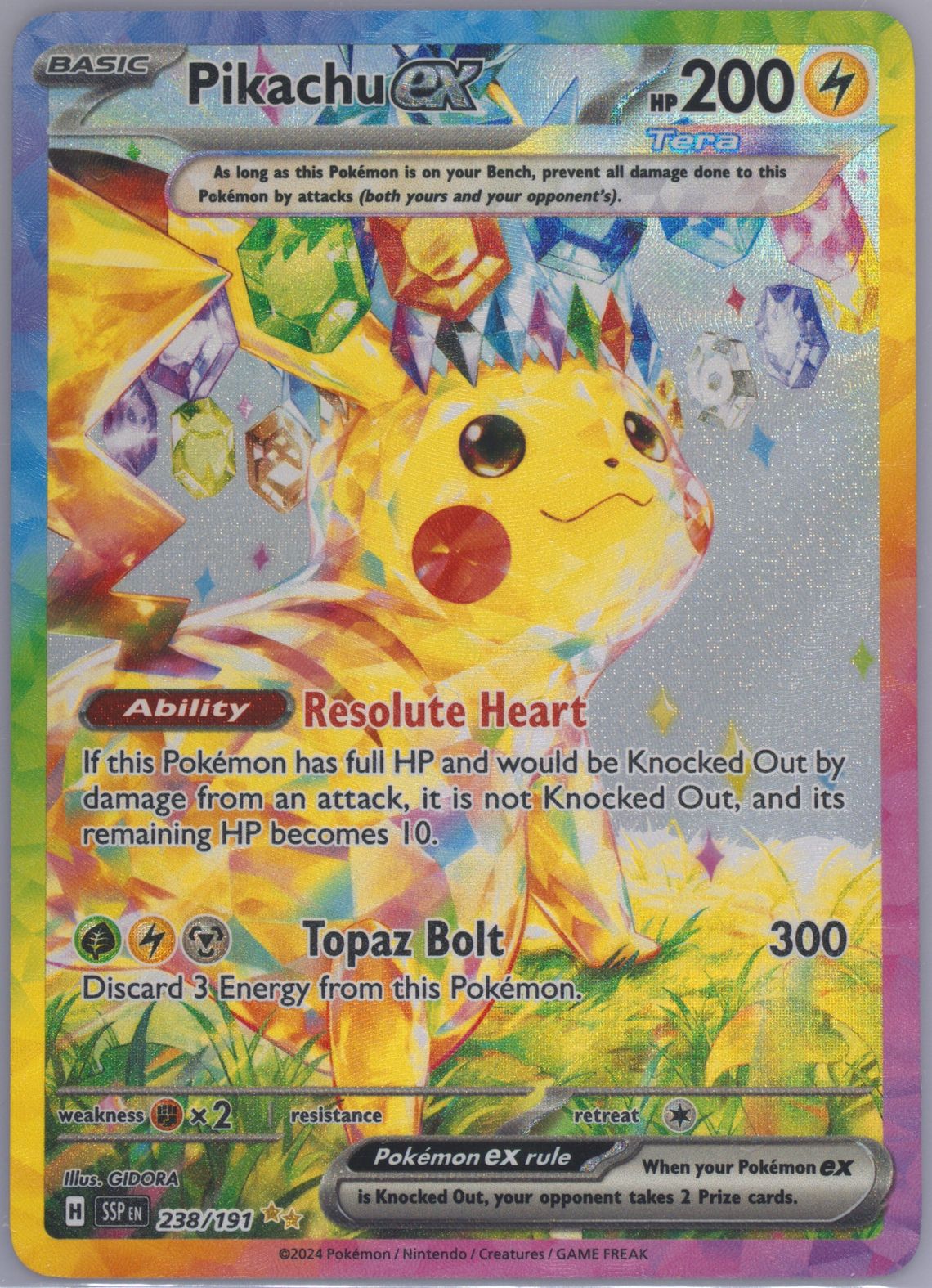
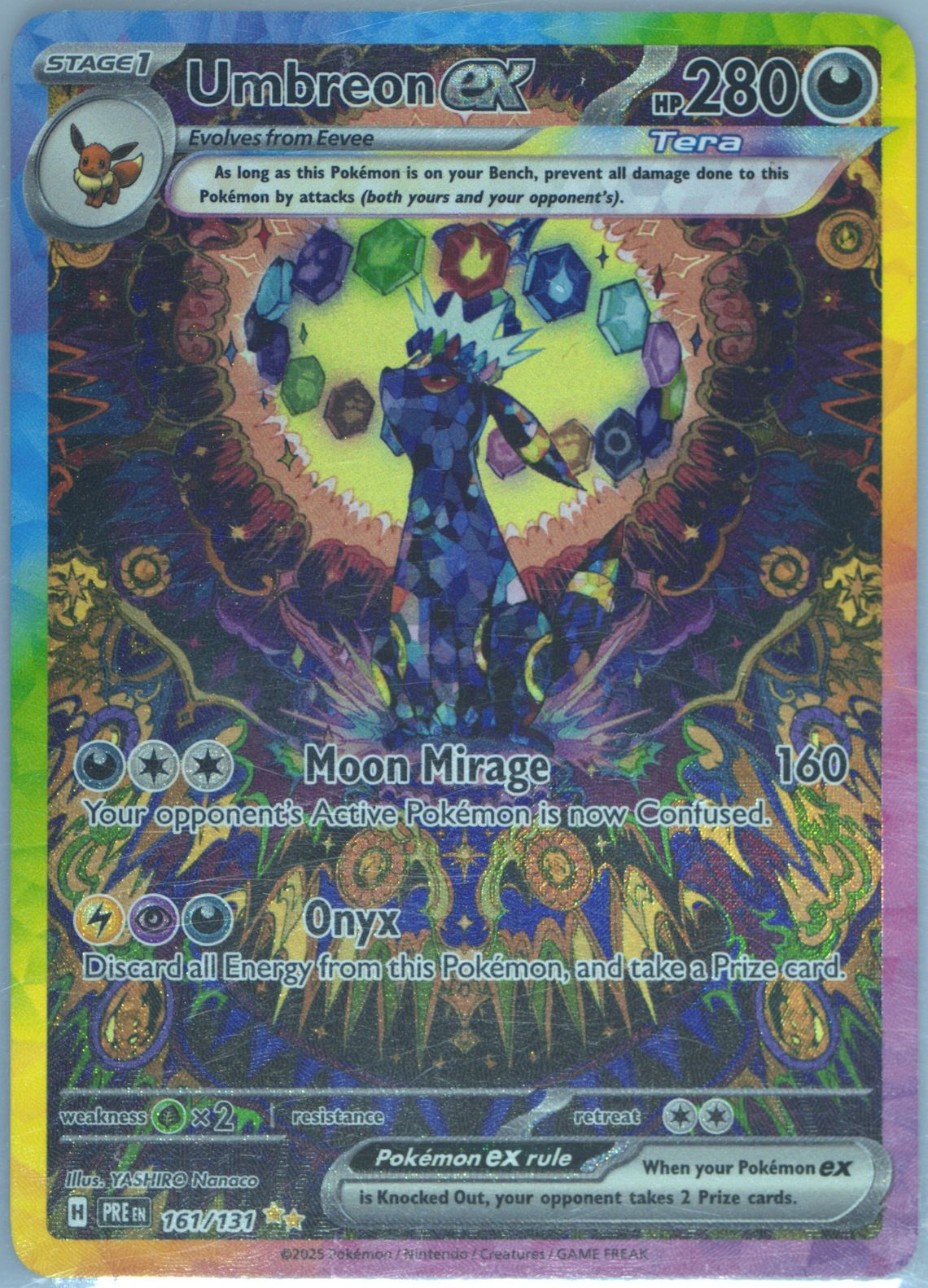
Speed: Depends on the card. A Surging Sparks Pikachu EX SIR or Prismatic Evolutions Umbreon ex SIR will sell within days. More niche cards might take a couple weeks. The bid system helps because buyers can offer below your asking price, keeping things moving.
Where it beats local: On pretty much every card worth $20 or more. Even after fees, the net payout on Misprint is significantly higher than what a local shop will offer. And you don't have to leave your house.
Where local might win: Cards under $5 where the $2.50 shipping base eats into the margin. For those, a local shop or TCGPlayer is more efficient. Check our platform comparison for the full breakdown.
TCGPlayer
What you'll net: On a $100 raw card, about $89.45 after the 10.25% commission and $0.30 transaction fee. Shipping supplies are on you — figure another $0.75-$4.00 depending on PWE vs. tracked.
Speed: Excellent for raw singles. TCGPlayer's buyer pool for Pokemon is massive. Popular cards at competitive prices sell within hours. The Cart Optimizer helps route buyers to your listing even if you aren't the cheapest.
Where it beats local: The sheer efficiency of selling raw singles in volume. If you have 50 cards to sell in the $3-$50 range, TCGPlayer will move them faster and for more money than any local option.
Best for: Raw singles, especially in volume. For more on the TCGPlayer vs eBay vs Facebook debate, read this.
eBay
What you'll net: On a $100 card, about $87 after eBay's ~13% fees. Shipping is on you — $4-$8 for tracked shipping on cards worth enough to sell on eBay.
Speed: Good. The buyer pool is enormous. Auctions on hyped cards can create bidding wars. But listings compete with thousands of others and eBay's search algorithm isn't always friendly to small sellers.
Where it beats local: High-value and rare cards where the auction format can push prices above market value. A rare PSA 10 will almost always sell for more in an eBay auction than in any local setting.
Where local might win: Small-ticket items where the 13% fee plus shipping plus the hassle of dealing with eBay's returns policy makes local cash more appealing.
The Math: Local vs. Online on Real Cards
Let's run the numbers on three real scenarios.
Scenario 1: Raw Card Worth $25
| Method | You Receive | Time to Get Paid |
|---|---|---|
| Local card shop | $10-$15 | Immediately |
| Facebook local sale | $20-$25 | Same day |
| TCGPlayer | ~$21.88 | 3-7 days |
| Misprint | ~$20.50 | 3-7 days |
| eBay | ~$21.75 | 5-10 days |
Verdict: Facebook wins if you have an active local group and can find a buyer. TCGPlayer is the best online option for a raw card at this price point. The card shop offer is brutal — you're leaving $10 on the table.
Scenario 2: Graded Card Worth $200
| Method | You Receive | Time to Get Paid |
|---|---|---|
| Local card shop | $80-$120 | Immediately |
| Card show | $150-$170 | Same day (show day) |
| Facebook local sale | $170-$190 | Same day if local |
| Misprint | ~$179 | 3-14 days |
| eBay | ~$174 | 5-14 days |
Verdict: Misprint edges out eBay on net payout thanks to lower fees. The card shop is painful — you're giving up $60-$100. A card show is respectable if there's one nearby this weekend.
Scenario 3: High-Value Graded Card Worth $1,000
| Method | You Receive | Time to Get Paid |
|---|---|---|
| Local card shop | $400-$600 | Immediately |
| Card show | $750-$850 | Same day (show day) |
| Facebook local sale | $850-$950 | Same day if local |
| Misprint | ~$915 | 7-21 days |
| eBay | ~$870 | 7-21 days |
| eBay auction | $870-$1,100+ | 7-14 days |
Verdict: For a $1,000 card, the difference between a shop ($500) and online ($915) is staggering. That's $415 you'd be leaving behind for the convenience of walking out with cash today. eBay auction is the wild card — if the right buyers show up, auction dynamics can push the price above market value, but that's not guaranteed. If you want to learn more about maximizing value on rare cards, read our guide.
The Decision Framework
Ask yourself three questions:
1. How much is the card worth?
Under $10: Local or TCGPlayer. The math doesn't favor premium online platforms at this price point, and the effort of listing, photographing, and shipping a $7 card needs to be factored in. Check whether your cards are even worth selling individually.
$10-$50: Online platforms win. The fee savings over a local shop more than cover the shipping cost and wait time. TCGPlayer for raw, Misprint for graded.
$50-$500: Online, period. The dollar gap between local and online payouts is too large to ignore. Use Misprint or eBay.
$500+: Online, and consider using both Misprint and eBay to see where you get more traction. For cards at this level, read our guide on how Pokemon card pricing works so you can price with confidence.
2. How fast do you need the money?
Today: Local card shop. Accept the hit and move on. If you can wait until tomorrow, try a local Facebook group first.
This week: Facebook local group or online platforms. Misprint and TCGPlayer can move popular cards within a few days.
No rush: Online platform with a firm asking price. Let the bid system work. Time is on your side. For a speed-focused breakdown, see our fast-selling guide.
3. How many cards are you selling?
1-5 cards: Whatever platform gives the best payout for their value range. Not worth setting up shop at a card show for five cards.
5-50 cards: TCGPlayer or Misprint depending on raw vs. graded. Consider a card show if there's one coming up soon.
50+ cards: TCGPlayer for raw in volume, Misprint for graded in volume. A card show could work but you'll need to price everything and bring supplies. For bulk (commons, uncommons, low-value stuff), see our bulk selling guide.
When Local Genuinely Wins
We don't want to make this sound like local selling is always a bad deal. Here are real situations where we'd choose local:
You inherited a collection and don't want to deal with it. Walking into a local card shop with a box of 500 cards and walking out with $150 is a perfectly reasonable choice if the alternative is spending 40 hours listing things online. Your time has value.
You're building relationships. Your local card shop is part of the community. Selling to them regularly means they'll call you when something interesting comes in, give you better offers over time, and maybe hold stuff for you. That relationship has intangible value that an online marketplace can't replicate.
The card is worth under $5 and you have 200 of them. At this price point, the per-card effort of online selling makes no sense. Bring them to a shop or sell as a lot locally. Check what your bulk cards are worth before you do.
You're at a card show already. If you're attending a show as a buyer, bringing a few cards to sell or trade while you're there costs you nothing extra. The incremental effort is zero.
The Bottom Line
Local selling offers speed and simplicity. Online selling offers more money. For most cards worth $20 or more, the extra money from selling online is substantial enough that it's worth the extra day or two of waiting.
Our actual recommendation: use both. Sell your valuable graded cards and higher-end singles online through Misprint or eBay. Sell your bulk, your sub-$5 cards, and your "I just want this gone" pile at a local shop or through a local Facebook group. And if you enjoy the hobby side of things — card shows are genuinely a blast, even if they aren't the most efficient way to sell.
The best place to sell Pokemon cards near you is whichever option puts the most money in your pocket for the least amount of effort. For most people, that's online for the valuable stuff and local for everything else.


