What Are Bulk Pokemon Cards Worth in 2026?
Those shoeboxes of commons might actually be worth something.
By Misprint Editorial | Published Feb 26, 2026 | 11 min read

The value isn't zero. It's just not what you were hoping.
Let's get one thing straight right away: bulk Pokemon cards are not worthless. They're also not worth a fortune. Every week we see people online asking "I have 5,000 Pokemon cards, what are they worth?" and the answers range from wildly optimistic ($500! $1,000!) to dismissive ($5, if you're lucky). The real answer, as always, is somewhere in the middle and depends entirely on what's in those 5,000 cards.
We buy and sell a lot of bulk. Like, a genuinely absurd amount. We process thousands of cards per week across the Misprint team, and we've developed a pretty detailed understanding of what bulk is actually worth in 2026 — not what people wish it was worth, and not what a sketchy Facebook listing claims. Real rates based on real transactions.
Here's the breakdown.
Current Bulk Rates (March 2026)
These are the rates you can realistically expect when selling bulk Pokemon cards in 2026. We're showing two numbers for each category: what bulk buyers (shops, resellers, online buyers) typically pay, and what you might get selling direct to collectors on platforms like Misprint, TCGPlayer, or eBay.
Commons and Uncommons
Bulk buyer rate: $15-25 per 1,000 cards Direct to collector rate: $25-40 per 1,000 cards (if sorted by set or era)
This is the bread and butter of bulk. The individual cards are worth fractions of a penny, but in quantity they add up. A shoebox of 2,000 commons and uncommons is worth roughly $30-50 to a bulk buyer. Not life-changing money, but not nothing either.
The rate varies based on era. Vintage commons (Base Set through Neo era) command a premium — we've seen vintage commons go for $40-80 per 1,000 because set builders need them to complete their collections. Modern Scarlet & Violet era commons are at the low end of the range.
Energy cards are a special case. Basic energy cards are essentially worthless — maybe $5-10 per 1,000 if you can find a buyer at all. Special energy cards from specific sets can be worth $0.25-1.00 each.
Rares (Non-Holo)
Bulk buyer rate: $0.05-0.10 per card ($50-100 per 1,000) Direct to collector rate: $0.10-0.25 per card
Non-holo rares are the cards with the star rarity symbol but no holographic treatment. Most are worth very little individually, but in bulk they're worth roughly 3-5x what commons bring. Some non-holo rares from popular sets or featuring popular Pokemon can be worth $0.50-2.00 individually — worth pulling out and selling separately.
Reverse Holos
Bulk buyer rate: $0.05-0.15 per card Direct to collector rate: $0.10-0.50 per card
Reverse holos are an interesting category because their value varies wildly by set. Reverse holos from most modern sets are barely worth more than commons. But reverse holos from certain older sets — particularly EX-era sets like EX Dragon, EX Sandstorm, and EX Team Rocket Returns — can be worth $2-15+ each because they're genuinely hard to find.
If you're sorting bulk and come across reverse holos from sets before the Diamond & Pearl era, set them aside and look them up individually. They're often worth more than people realize.
Holo Rares
Bulk buyer rate: $0.15-0.50 per card Direct to collector rate: $0.25-2.00 per card
Holo rares — the cards with the holographic artwork — are worth sorting out of your bulk every time. Even modern holo rares from recent sets are worth $0.25-0.50 each to bulk buyers, which is significantly more than the per-card rate for commons.
Vintage holo rares from WOTC-era sets (Base Set through Skyridge) are a completely different story. Even in played condition, many vintage holos are worth $5-50+ individually. A played condition Base Set Charizard is still worth hundreds of dollars. Don't lump these in with bulk — look them up individually.

V, EX, and GX Cards
Bulk buyer rate: $0.25-1.00 per card Direct to collector rate: $0.50-5.00 per card
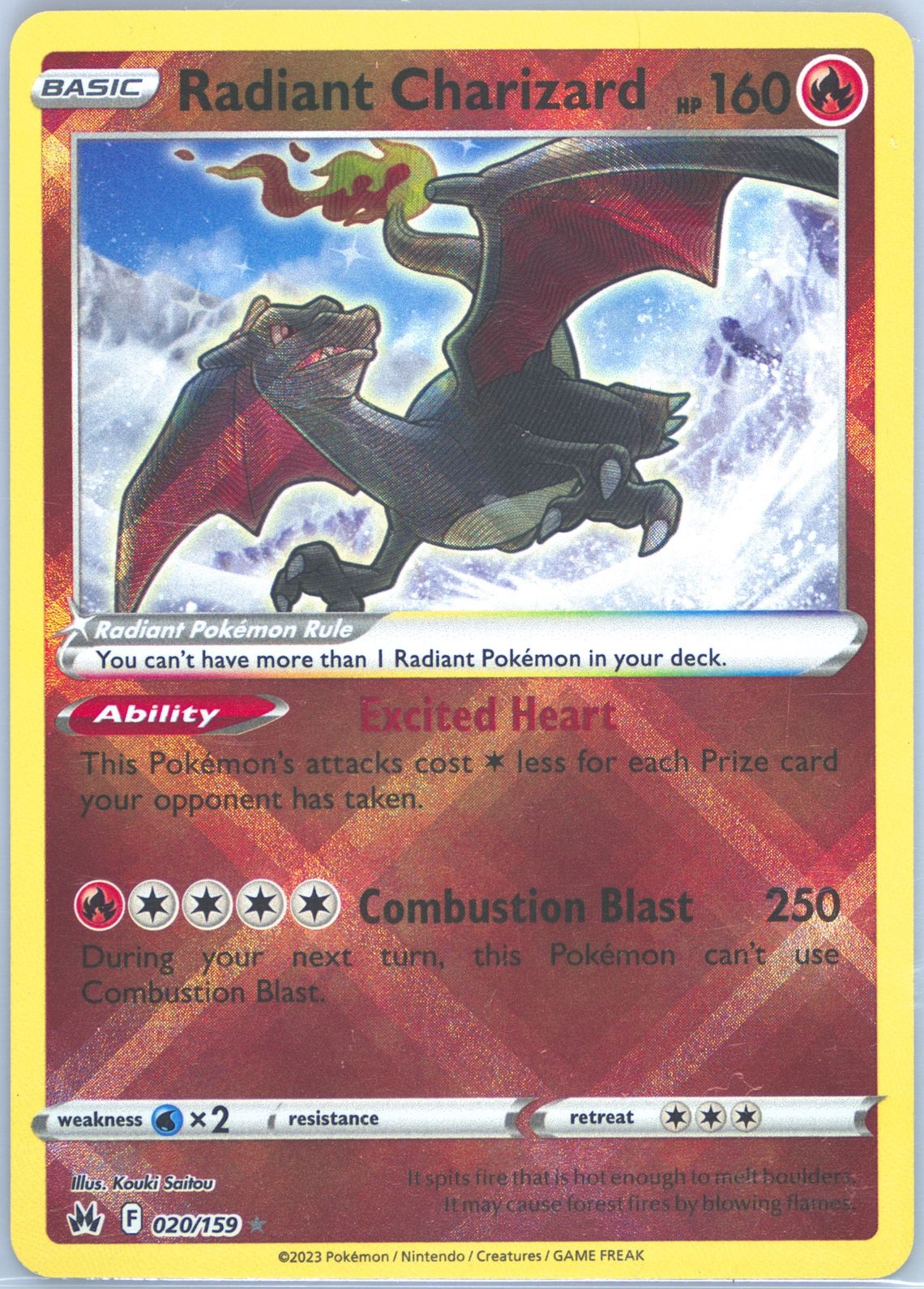
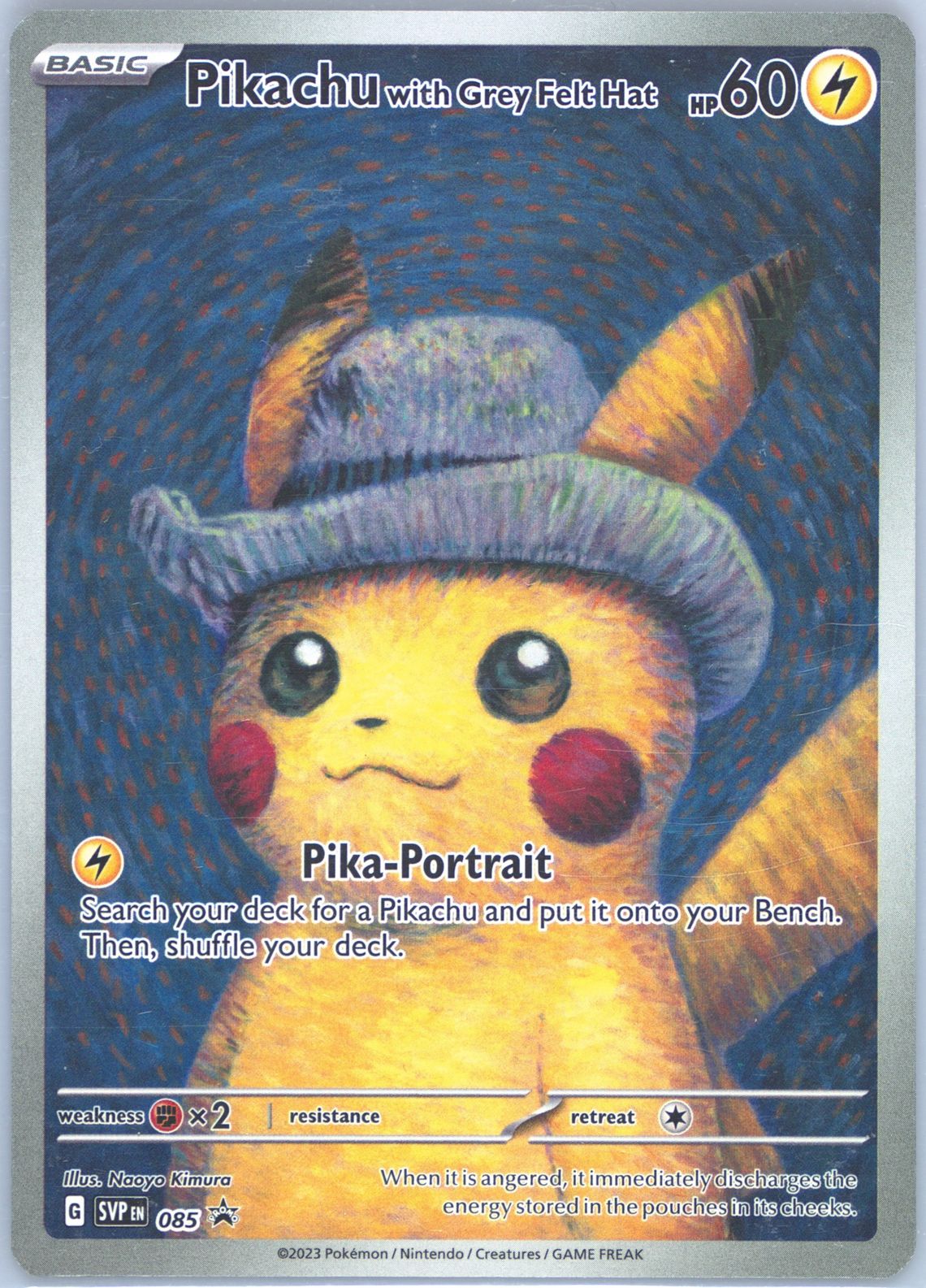
The ultra rare tier of bulk — cards that look impressive and feature the big V, EX, or GX attacks, but are from sets with high print runs and aren't particularly rare. Most modern EX cards from Scarlet & Violet sets fall into this range. They're worth pulling from bulk and selling separately if you have the time, or selling as a lot of "EX/V cards" which attracts buyer attention.
Notable exceptions that are worth significantly more:
- Alt art V and VMAX cards: $10-100+
- Special illustration rare EX cards: $5-200+ depending on the card
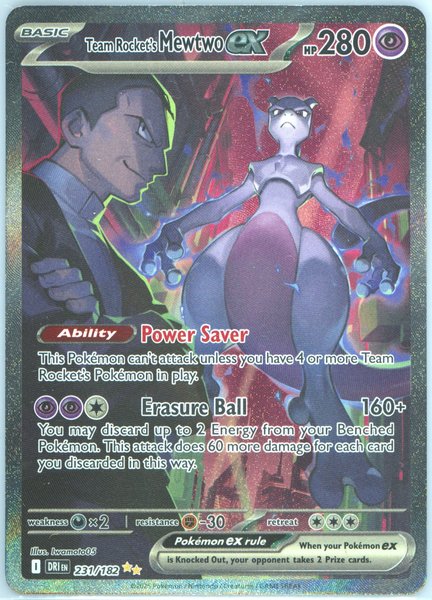
- Popular Pokemon (Charizard, Pikachu, Umbreon, Mewtwo): Often worth 2-3x what a comparable card featuring a less popular Pokemon would be
Full Art and Ultra Rare Cards
Bulk buyer rate: $1-5 per card (depends heavily on specific card) Direct to collector rate: $2-50+ per card
Full art trainers, full art Pokemon, and ultra rares shouldn't really be treated as "bulk" — they should be looked up and priced individually. But we include them here because people often have a handful mixed into their bulk and don't realize they're there.
A full art trainer supporter from a recent set might be worth $3-8. A full art Surging Sparks Pikachu EX SIR is worth considerably more. The point is: always pull full arts out of bulk and check them.
Trainer Gallery and Special Set Cards
Bulk buyer rate: $0.50-2.00 per card Direct to collector rate: $1-10+ per card
Trainer Gallery cards (the special subset of character rares found in sets like Brilliant Stars, Astral Radiance, and Lost Origin) have held their value surprisingly well. Collectors love these cards because of the unique artwork featuring Pokemon with their trainers. Character rares from newer sets like Crown Zenith and Paldea Evolved also fall in this category.
Secret Rares and Gold Cards
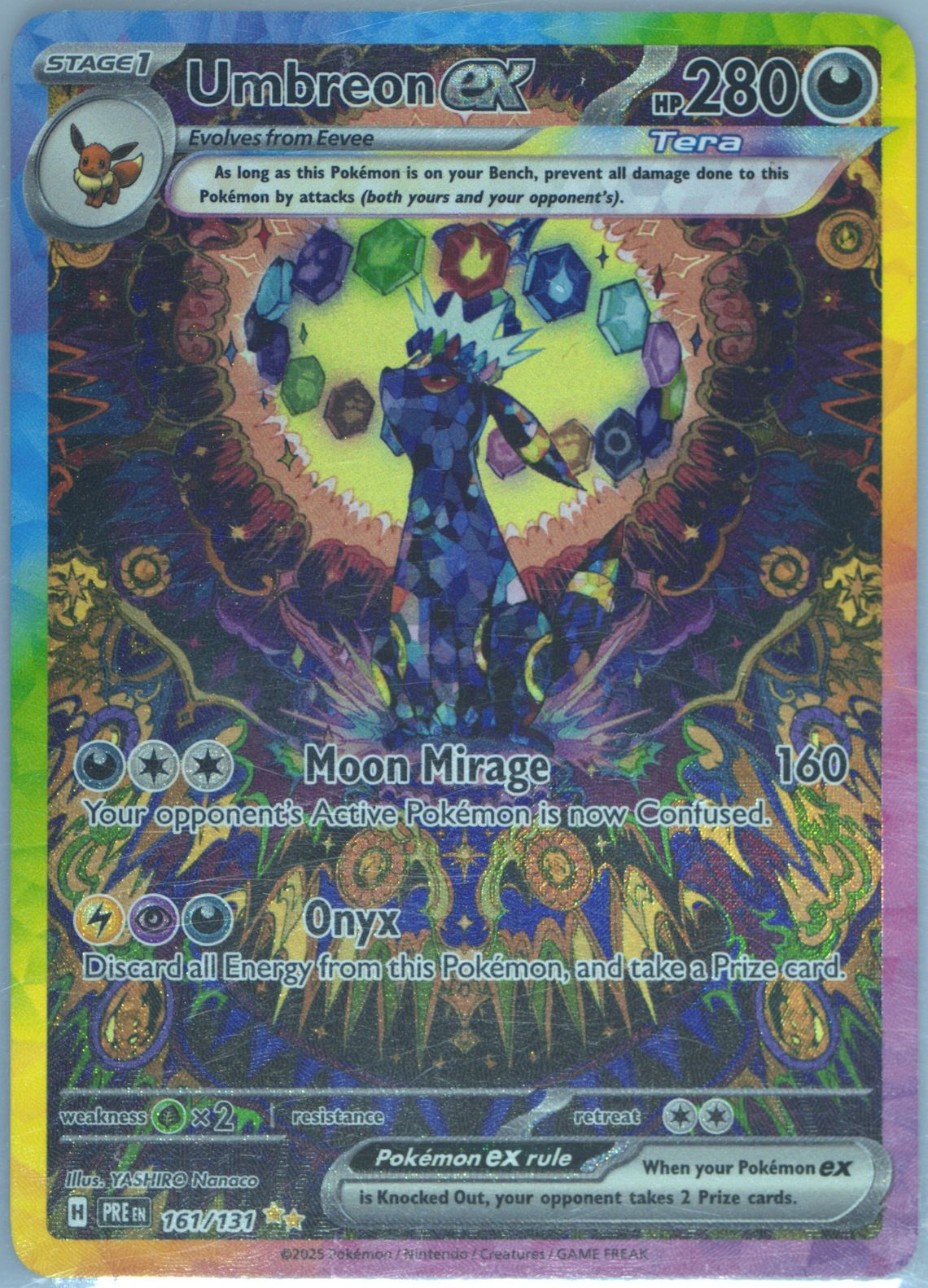
Don't sell these as bulk. Look them up individually. Secret rare gold cards and rainbow rares can be worth $5-50+ each. The Prismatic Evolutions Umbreon ex SIR is an extreme example, but even "common" secret rares from recent sets are worth checking. Our rarity guide can help you identify what you have.
Who Buys Bulk Pokemon Cards (and Why)
Understanding who's buying bulk helps you understand pricing and find the right buyers.
Card Shops and Resellers
Local game stores and online resellers buy bulk because they sell it. Some repackage it into mystery packs, bundle it with sealed product, or sell it by the pound at conventions. They need to buy at a steep discount to make a profit, which is why shop bulk rates are lower than what you'd get selling directly to collectors.
Card shops typically pay at the lower end of our ranges above. The upside is they buy in any quantity, they pay immediately, and there's no shipping hassle for local sales.
Set Builders
People trying to complete specific sets need commons, uncommons, and non-holo rares from those sets. They'll pay a premium for sorted bulk — a complete common/uncommon set from a specific expansion can be worth $10-25 on its own, even though the individual cards are worth pennies.
If you have the time to sort your bulk by set, you can sell "common/uncommon complete sets" or "near-complete sets" at a significant markup over unsorted bulk rates.
Content Creators
YouTubers, TikTokers, and live streamers buy bulk for content — "opening" videos where they sort through lots looking for valuable cards, pack-opening simulations, giveaways, and mystery packs. They're buying the experience and the content, not the card value, which means they'll sometimes pay above-market rates for lots that have visual appeal (binders, tins, diverse eras).
Collectors Who Want Binder Filler
Some collectors just like having cards. They fill binders by type (all Fire Pokemon, all Pikachu cards, all cards from a specific generation) and bulk is the most cost-effective way to do that. These buyers tend to buy on platforms like eBay, Mercari, and Facebook groups.
International Buyers
Pokemon cards are significantly more expensive in some countries due to distribution differences. Bulk that seems like a bad deal in the US can be attractive to international buyers, though shipping costs often eat into the margins.
How to Calculate What Your Bulk Is Worth
Here's a practical method for estimating your bulk's value before you start selling.
Step 1: Sort Into Tiers
Go through your cards and sort them into these piles:
- Pile A: Anything obviously valuable — holos, ultra rares, full arts, vintage, cards you recognize as popular
- Pile B: Reverse holos, non-holo rares, trainer gallery cards, V/EX/GX cards
- Pile C: Commons, uncommons, basic energy, regular trainers
Step 2: Price Pile A Individually
Scan each card in Pile A with a scanner app (we recommend Misprint or TCGPlayer — see our scanner guide). These cards should be sold individually or in small lots, not as bulk. Pile A is where most of your collection's value lives.
Step 3: Estimate Pile B
Count the cards in Pile B. Multiply by the applicable rate from our table above. For a rough estimate, $0.25 per card is a reasonable average across the mixed Pile B categories. So 200 Pile B cards is roughly $50.
Step 4: Estimate Pile C
Count (or estimate) the cards in Pile C. Divide by 1,000 and multiply by $20 for a conservative estimate or $30 for a moderate estimate. So 3,000 Pile C cards is roughly $60-90.
Step 5: Add It Up
Your collection's estimated bulk value is Pile A (individual prices) + Pile B (per-card estimate) + Pile C (per-thousand estimate). This gives you a realistic baseline. You might get more with patience and strategic selling, or less if you sell everything in one lot to a bulk buyer.
Where to Sell Bulk Pokemon Cards
Local Card Shops
Pros: Immediate payment, no shipping, no platform fees Cons: Lowest rates, may not want large quantities, no negotiation leverage
Walk in with your bulk sorted into tiers. Most shops will offer you a bulk rate for commons/uncommons and cherry-pick anything from Piles A and B that they want. Expect to get 60-70% of what you'd get selling online.
eBay
Pros: Largest audience, competitive bidding on attractive lots, international reach Cons: 13% fees, shipping costs, buyer protection disputes, time investment
eBay works best for mid-size lots (100-500 cards) sorted by set, era, or theme. "Complete common/uncommon set" listings and "lot of 50 holo rares" listings tend to do well. Unsorted dumps of 5,000 random cards don't sell for much because buyers assume the valuable cards have been picked out.
TCGPlayer
Pros: Established marketplace, card-specific listings, good for Pile A cards Cons: Fees, not great for actual bulk (commons/uncommons), requires individual listings
TCGPlayer is better for selling individual cards and small lots than for true bulk. If you're listing commons at $0.05 each, the time investment per listing doesn't make sense. Use it for Pile A and higher-value Pile B cards.
Misprint
Pros: Pokemon-focused marketplace, aggregated pricing data, graded card support Cons: Marketplace is newer than TCGPlayer/eBay
Misprint is strong for singles and valuable cards from Piles A and B. Our marketplace is built specifically for Pokemon cards, and the pricing tools help you set competitive prices based on actual market data.
Facebook Groups
Pros: No fees, direct negotiation, community pricing Cons: Scam risk, limited buyer protection, requires building reputation
Pokemon buy/sell/trade groups on Facebook are excellent for bulk sales. You can post photos of your sorted bulk and negotiate directly with buyers. The no-fee aspect means you keep more of the sale price. Just use PayPal Goods & Services or another protected payment method — never accept Venmo, Zelle, or Cash App for sales to strangers.
Bulk Buyers (Online)
Several online buyers specialize in bulk Pokemon cards. Companies like Safari Zone, Full Grip Games, and others post their bulk rates publicly and accept shipments. The rates are the lowest you'll find, but the process is dead simple: ship your cards, they count and verify, they pay you.
Pros: Easy, accepts any quantity, no listing work Cons: Lowest rates, shipping costs (sometimes covered), wait time for payment
For more options, our guide on the best places to sell Pokemon cards covers the full landscape.
Vintage Bulk: A Special Case
We need to talk about vintage bulk specifically because it operates under different rules. Any card from the WOTC era (1999-2003) — including commons and uncommons — is worth more than its modern equivalent. Vintage commons sell for $0.25-1.00+ each to the right buyer, compared to $0.01-0.03 for modern commons.
The reason is simple: these cards are 25+ years old and the supply is fixed. They're not being reprinted. Every year, some get damaged, lost, or thrown away. Meanwhile, nostalgia-driven demand from adults who grew up with these cards keeps increasing.
If you have vintage bulk, do NOT sell it at modern bulk rates. Sort it by set, list it on eBay or in Facebook groups, and price it at vintage premiums. A complete common/uncommon set of Base Set in played condition can sell for $50-100. A complete common/uncommon set of Gym Heroes or Gym Challenge can sell for even more.
The same logic applies to EX-era bulk (2003-2007) to a lesser extent. These cards are old enough to command a vintage premium but not as universally demanded as WOTC-era cards.
How Bulk Rates Have Changed Over Time
For context, here's how bulk rates have shifted over the past few years:
2023: Common/uncommon bulk was at its lowest — $8-15 per 1,000. The market was flooded with opened product from the 2020-2021 hype cycle.
2024: Rates began recovering as supply normalized. $12-20 per 1,000 for commons.
2025: Vintage bulk premiums exploded as nostalgia collecting hit full stride. Modern bulk stabilized at $15-22 per 1,000.
2026 (current): Modern bulk has ticked up slightly to $15-25 per 1,000. Vintage premiums continue to grow. The Destined Rivals and Prismatic Evolutions sets have pushed new ultra rare bulk values slightly higher due to collector demand.
The trend is generally upward for bulk rates, driven by the growing collector base and the finite (and shrinking) supply of older cards. Modern bulk rates are more tied to sealed product prices and print run volume, which fluctuate with each set release.
Sorting Tips for Maximum Value
The single biggest factor in how much you get for bulk is how well you sort it. Unsorted bulk sells for the lowest rates. Well-sorted bulk can sell for 2-3x more.
The One Dollar Rule
Any card that scans or looks up at $1 or more should be pulled from bulk and sold individually or in a separate lot. This sounds tedious, but it's where the money is. A stack of 50 cards worth $1-5 each is worth $50-250 total, which might be more than the remaining 4,950 commons combined.
Sort by Era
Buyers pay more for era-specific lots. "1,000 WOTC-era commons" sells for significantly more than "1,000 random Pokemon cards." If you're sorting anyway, keeping eras separate takes minimal extra effort.
Sort by Set (If You Have Time)
This is the most time-intensive but also the most profitable sorting method. Complete or near-complete common/uncommon sets sell at a premium because set builders want them. Our set symbol guide can help you identify which set a card belongs to.
Keep Things in Reasonable Condition
Don't throw bulk in a loose box where it gets shuffled and dinged up. Keep it in rows (BCW boxes are cheap and perfect for this) or bundled with rubber bands (though rubber bands can leave marks over time — wrap in paper first). Buyers pay more for bulk that arrives in decent shape.
The Bottom Line
Bulk Pokemon cards aren't going to make you rich, but they're worth more than most people think — especially if you sort them properly. The difference between dumping 5,000 unsorted cards on a bulk buyer for $50 and sorting them into tiers and selling strategically over a few weeks could easily be $200-400 or more.
If you're looking at a stack of bulk cards and trying to figure out your next move, start by pulling out the valuable singles using a scanner app, then decide whether you want quick money (sell everything to a bulk buyer) or maximum money (sort and sell strategically). Either way, now you know what the numbers actually look like.
For the complete guide on maximizing your payout when selling bulk, check out our companion article on how to sell bulk Pokemon cards for the most money. And if you're on the buying side, our guide on how to buy Pokemon cards in bulk covers that angle.


