Top 10 Most Expensive Team Rocket Cards
The dark side of the Pokemon TCG — ranked by value.
By Misprint Editorial | Published Dec 12, 2025 | 20 min read
Updated pricing as of March 2026
Team Rocket was a set that changed the flavor of the Pokemon TCG in a way that no expansion before it had even attempted. Released in April 2000 as the fifth English-language expansion, it introduced the concept of "Dark" Pokemon, cards that represented creatures trained through the sinister methods of the villainous Team Rocket organization. The artwork was moodier, the flavor text was more menacing, and the entire aesthetic shifted from the bright, cheerful world of Base Set and Jungle into something genuinely darker and more threatening. For a lot of collectors who were kids in 2000, Team Rocket was the first time the Pokemon TCG felt dangerous, the first time the cards carried a weight and intensity that went beyond cute monsters and friendly battles. That impression has lasted more than two decades, and it is one of the main reasons the set remains so collectible today.
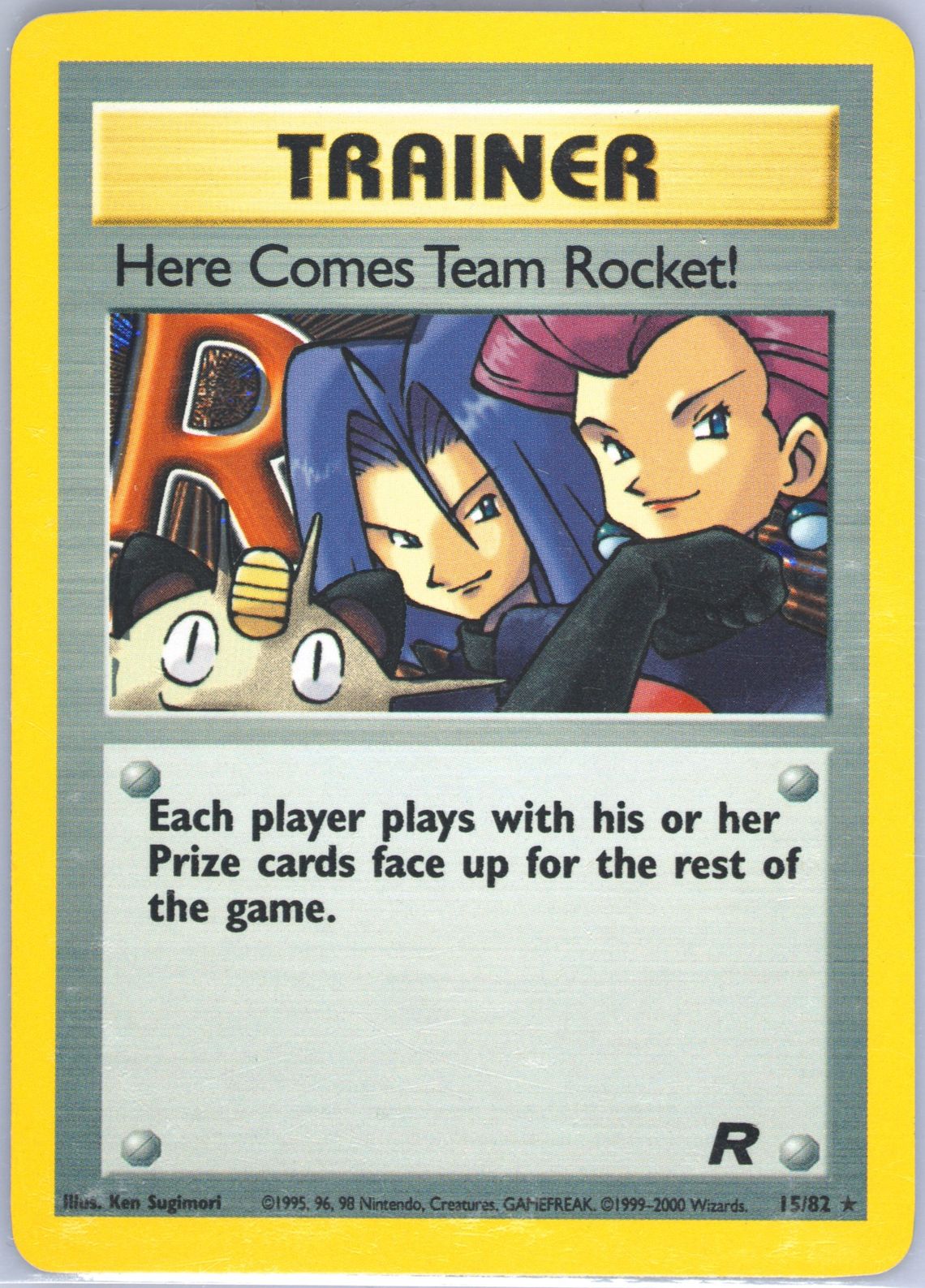
The mechanical hook of the Dark Pokemon was straightforward but effective. Dark Pokemon generally had higher attack power but lower HP compared to their standard counterparts, reflecting the idea that Team Rocket's training methods prioritized raw aggression over the well-being of the Pokemon themselves. This trade-off created interesting deck-building decisions for competitive players and added a narrative layer to the gameplay that resonated with fans of the anime and games. The set also introduced several iconic Trainer cards tied to Team Rocket's operations, including Rocket's Sneak Attack, The Boss's Way, and the unforgettable Here Comes Team Rocket, a holographic Trainer card featuring Jessie and James in their signature pose that became one of the most recognizable cards from the WOTC era.
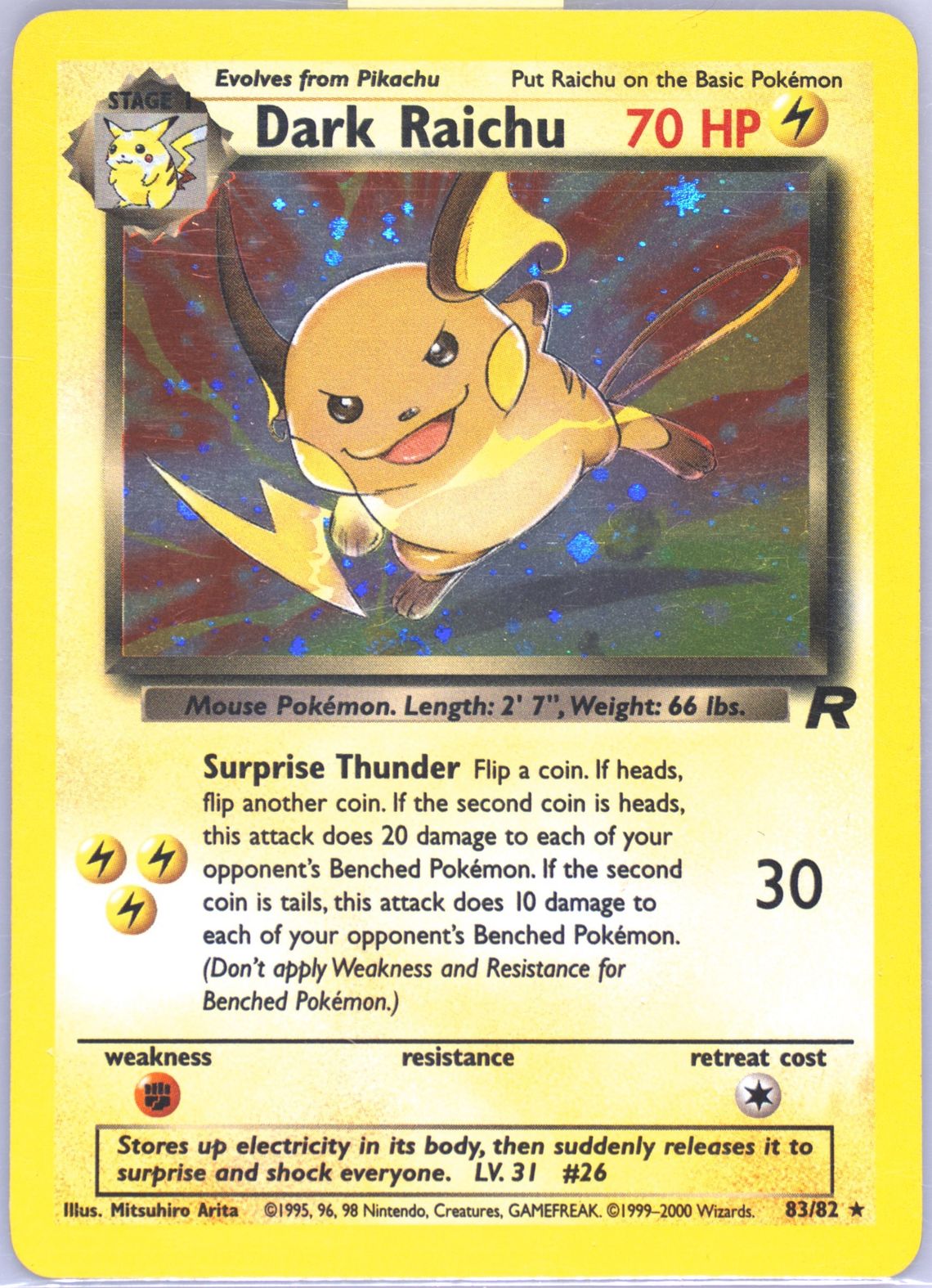
The set contains 83 cards in its Unlimited printing and is built around the Dark mechanic, where every evolved Pokemon carries the "Dark" prefix to indicate its allegiance to Team Rocket. The holos in this set are stunning, featuring unique artwork that emphasizes shadows, aggression, and the corrupting influence of Giovanni's organization. The holographic patterns on the original WOTC prints are particularly beautiful on the Team Rocket cards, with the shimmering effect interacting with the darker color palettes to create visual depth that the brighter, more saturated Base Set and Jungle holos cannot quite achieve. Team Rocket also introduced the first secret rare card in the English TCG, the legendary Dark Raichu (numbered 83/82), which was not listed on the set's official checklist and had to be discovered by players who were paying very close attention to the card numbering.
From a market perspective, Team Rocket is one of the most stratified sets in the WOTC era. The gap between Unlimited and 1st Edition printings is enormous, especially for the holo rares. A 1st Edition holo from Team Rocket in high grade can be worth ten or twenty times what the same card in Unlimited condition commands, and in some cases the multiplier is even higher. This dynamic reflects the relatively limited print run of the 1st Edition wave and the enduring demand from collectors who view the 1st Edition stamp as the gold standard of WOTC-era provenance. The Unlimited printing is much more common and provides an accessible entry point for collectors who want genuine vintage cards without the premium, but the real money in Team Rocket lives squarely in the 1st Edition space. This list focuses on the holo rares that define the set's value hierarchy, and the rankings reflect the combined market performance of both printings, with 1st Edition values driving the upper end of the range.
Beyond the holo rares, Team Rocket also contains a roster of non-holo rare cards that carry their own collector significance. Non-holo versions of Dark Charizard, Dark Blastoise, Dark Dragonite, and other key Pokemon exist in the set, identifiable by their regular (non-holographic) card surfaces and different card numbers than their holo counterparts. These non-holo rares are often overlooked in value discussions that focus exclusively on the shiny, attention-grabbing holos, but they represent a fascinating niche of the WOTC collecting market. In many cases, 1st Edition non-holo rares from Team Rocket carry prices that would surprise collectors who assume only holographic cards have significant value. The non-holo Dark Charizard in 1st Edition, for example, has become a popular and affordable alternative to its holographic counterpart, offering the same iconic Pokemon and the same Team Rocket aesthetic in a more budget-friendly format.
The Trainer cards from Team Rocket also hold a special place in the set's identity and collector appeal. Cards like Rocket's Sneak Attack, The Boss's Way, Challenge!, and Imposter Oak's Revenge gave Team Rocket a mechanical identity that complemented the Dark Pokemon theme, creating strategies that felt thematically cohesive with the villainous organization they represented. These Trainer cards are not the most expensive cards in the set, but they add depth and completeness to any Team Rocket collection and carry their own nostalgic value for players who remember building decks around Team Rocket's scheming strategies.
Honorable Mentions
A few cards that did not quite crack the top 10 but still deserve recognition for their collector appeal and consistent secondary market performance. These are all genuine WOTC-era holographic rares with real value and interesting stories behind them.
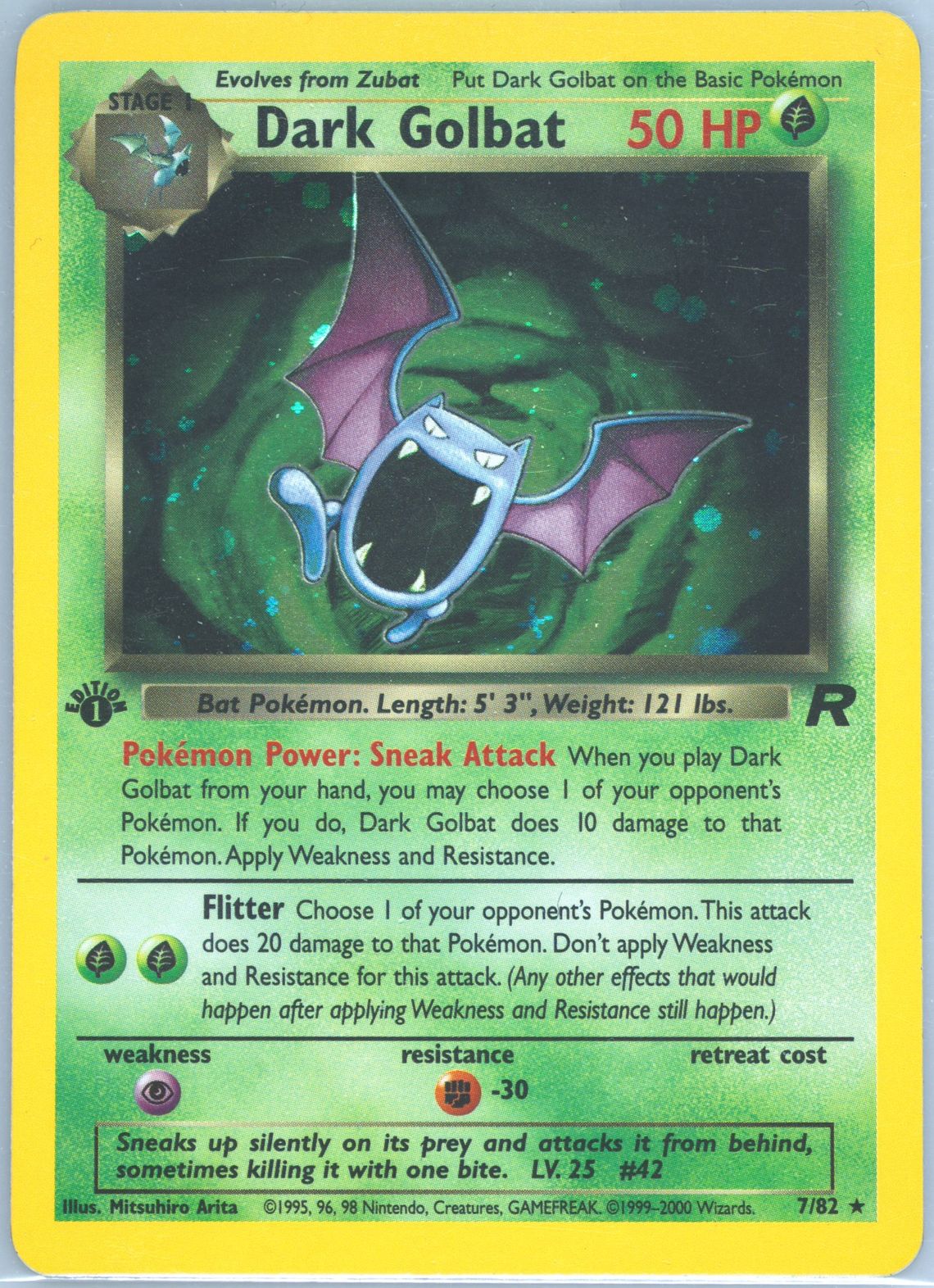
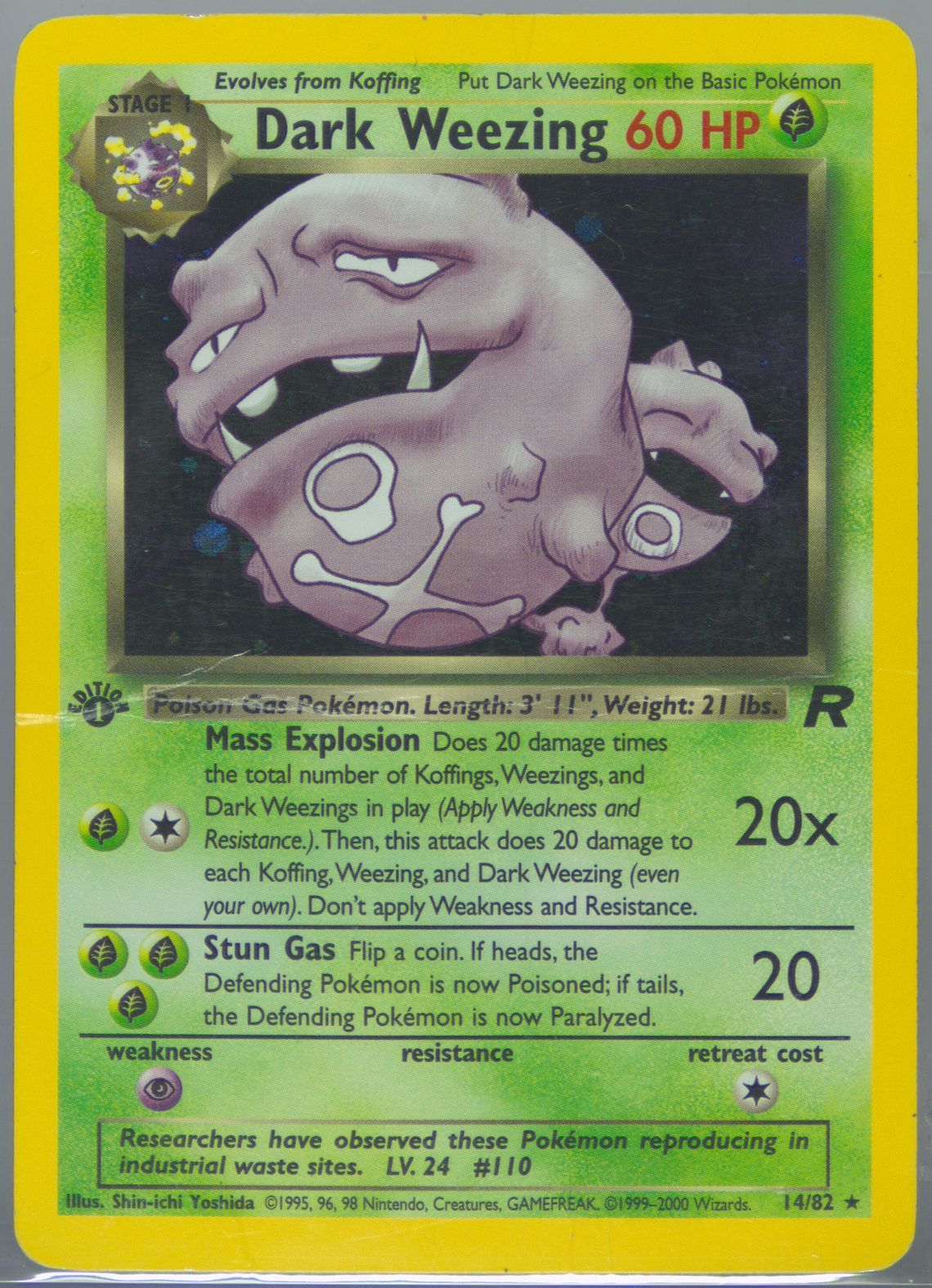
Dark Golbat (Holo, 1st Edition) is one of those cards that flies under the radar, literally and figuratively. The artwork is dynamic and menacing, featuring the Poison/Flying-type swooping in from the shadows with fangs bared, and 1st Edition copies have quietly appreciated over the years as the vintage market has matured. Golbat's evolution into Crobat in Generation 2 gave the line additional relevance, and collectors who appreciate the Poison-type aesthetic have kept demand for this card steady. Dark Weezing (Holo) brings the Koffing evolution line's industrial aesthetic to life with appropriately grimy artwork that makes you feel like you can smell the toxic fumes. Competitive players from the era remember it as a surprisingly functional card with disruptive attacks, and the holographic treatment on the dark clouds of gas is genuinely striking.
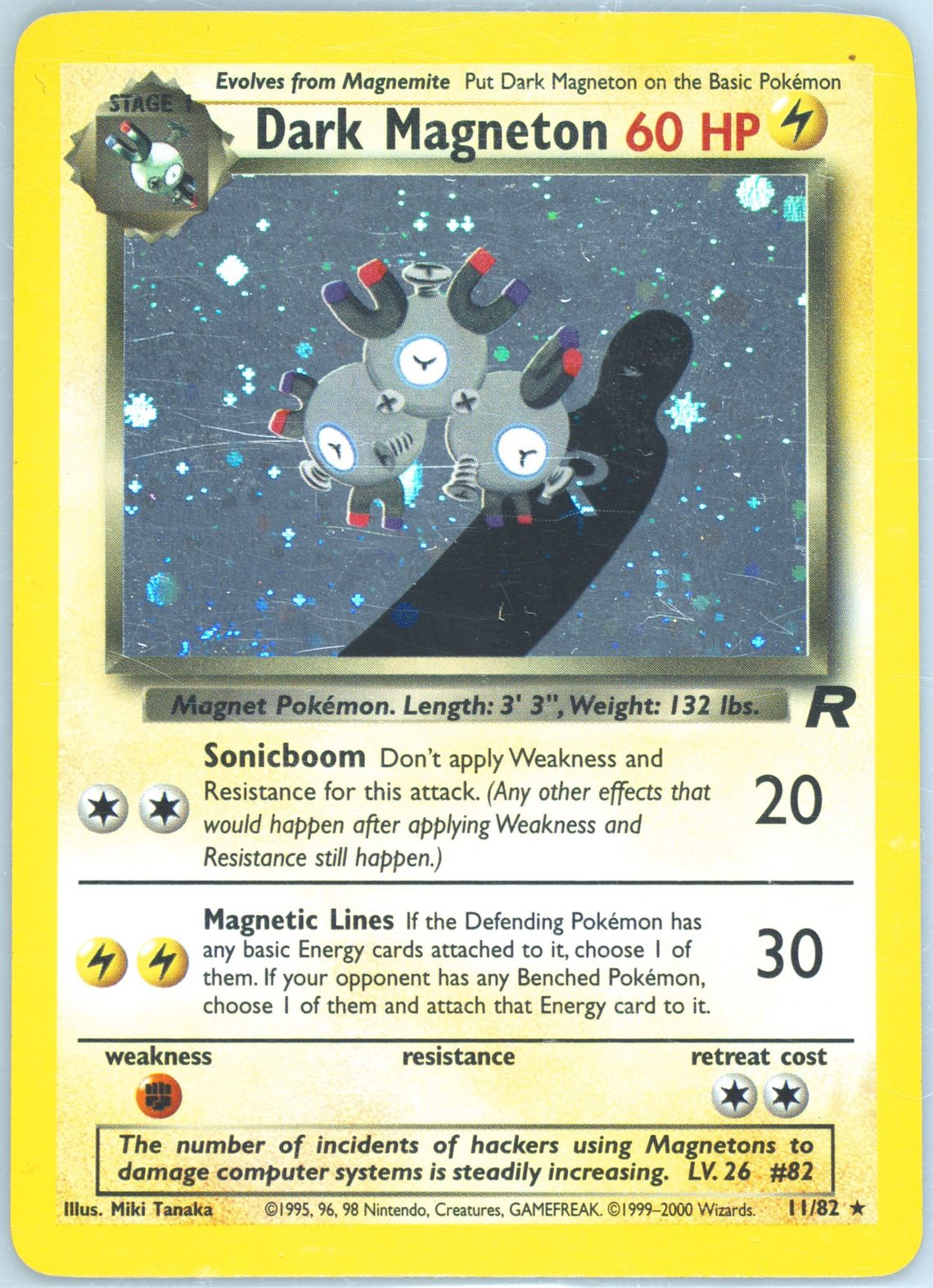
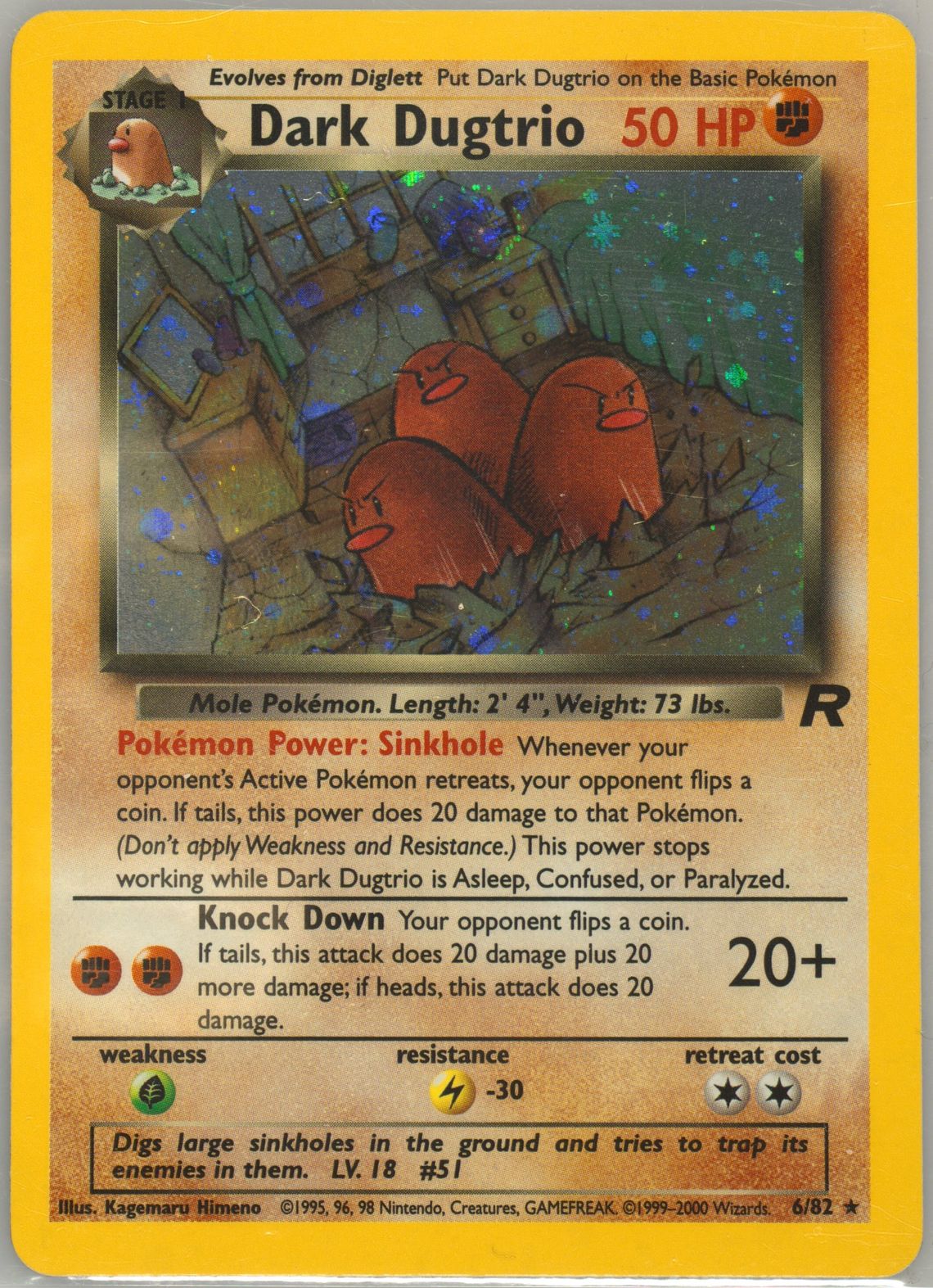
Dark Magneton (Holo) and Dark Dugtrio (Holo) round out the honorable mentions as solid mid-tier holos with reliable collector demand. Dark Magneton benefits from the inherent coolness of the Steel/Electric design and an artwork composition that makes the three connected Magnemite look genuinely threatening under Team Rocket's influence. Dark Dugtrio's artwork perfectly captures the unsettling energy of three angry moles emerging from cracked earth in a shadowy cavern, and the holographic treatment adds an underground glow that makes the card feel appropriately subterranean. Both trade steadily in the secondary market and represent solid entry points into the Team Rocket holo collection for anyone who wants to start building out the set without immediately going after the headliners.
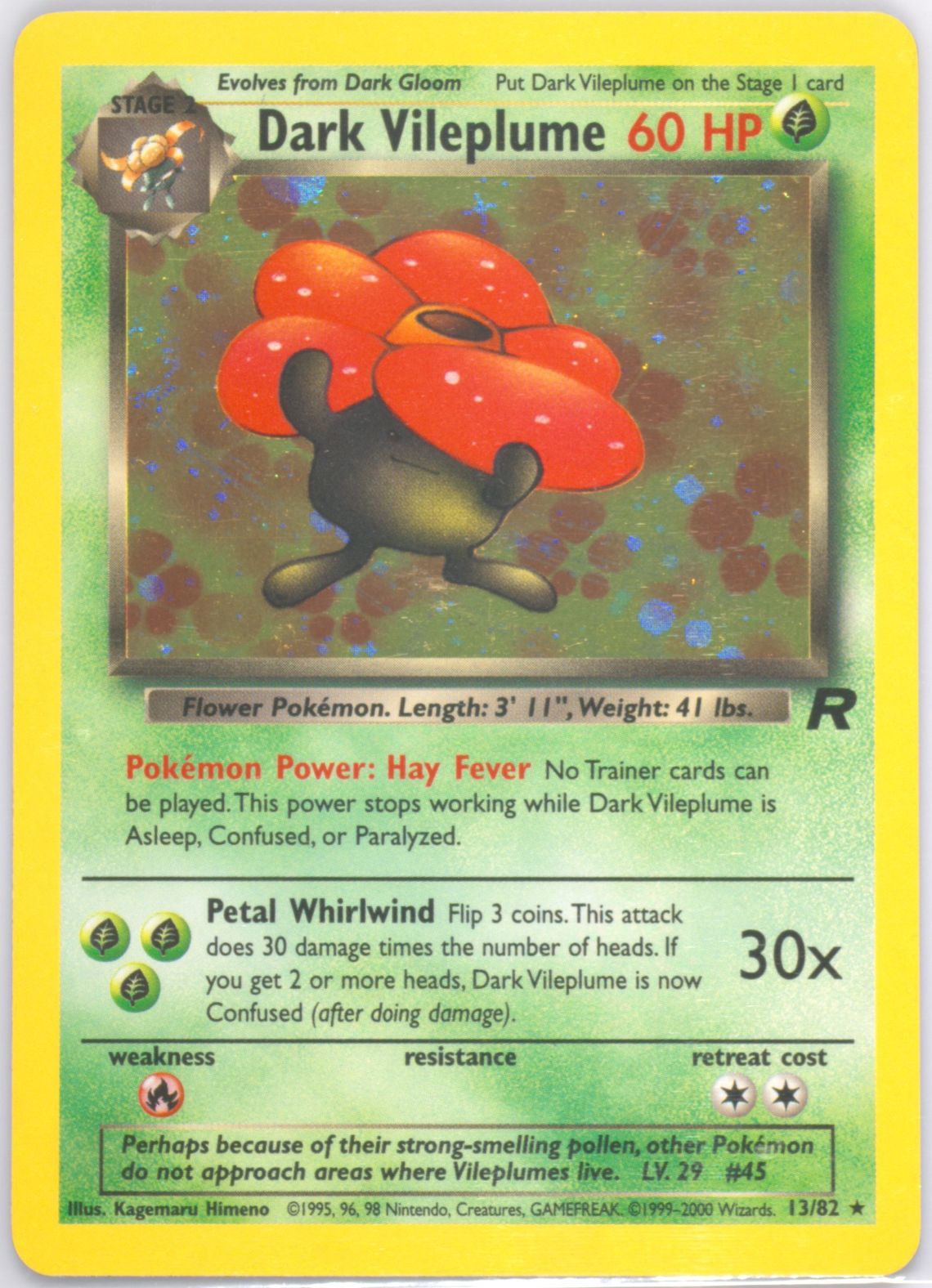
#10 -- Dark Vileplume (Holo)
Dark Vileplume might not be the first card that comes to mind when people think of Team Rocket, but it has quietly maintained a spot among the set's most valuable holos through a combination of competitive legacy and surprisingly strong collector demand. The artwork features the Grass/Poison-type looming ominously with its signature flower cap releasing a cloud of toxic spores into the darkness, and the holographic treatment makes the dark purples and greens shimmer in a way that is genuinely unsettling and beautiful at the same time. The composition is one of the moodier pieces in the entire Team Rocket holo lineup, with shadows creeping across the card in a way that perfectly captures the corrupted nature of a Dark Pokemon.
But what truly sets Dark Vileplume apart is its competitive history. Vileplume was a competitively relevant card in its era thanks to its Hay Fever Pokemon Power, which prevented all players from playing Trainer cards as long as Vileplume was active. This created one of the first true lock strategies in the game's history, shutting down the powerful Trainer-based engines that defined early competitive Pokemon and forcing opponents into awkward positions where their hands full of Bill, Professor Oak, and Computer Search were completely dead. The Hay Fever lock became a beloved and feared archetype, and players who remember building their decks around it have a sentimental attachment to Dark Vileplume that keeps demand strong. Combined with the general scarcity of high-grade Team Rocket holos, this card trades at a premium that surprises people who only associate Team Rocket value with the set's headliner names like Charizard and Blastoise.
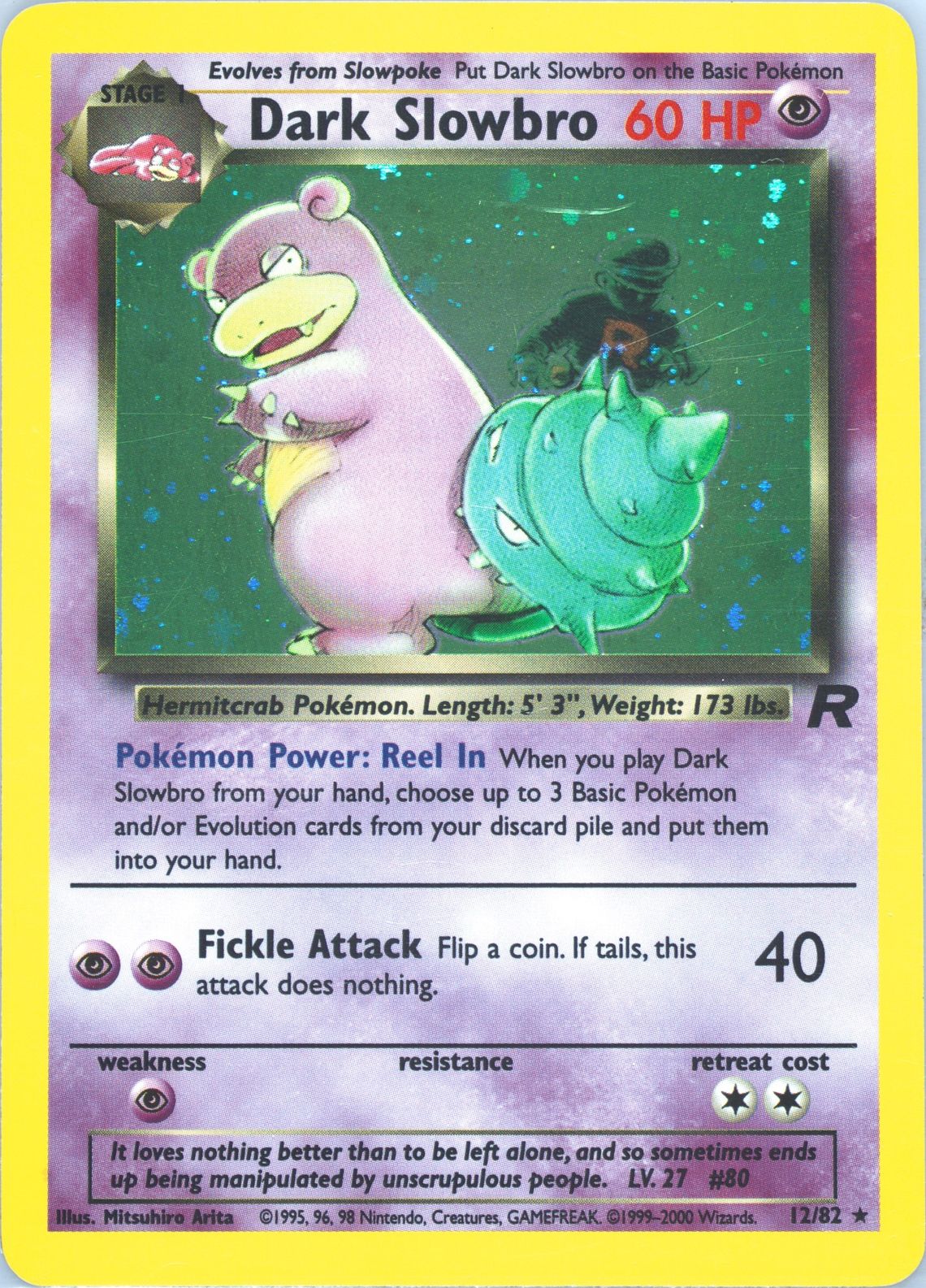
#9 -- Dark Slowbro (Holo)
Dark Slowbro is one of the most underrated holos in the entire WOTC era, a card that combines unexpectedly cool artwork with genuine competitive significance in a way that has kept it trading at a premium for over two decades. The artwork captures the absurdity of Slowbro's design with a darker twist: a dopey-looking creature with a Shellder permanently clamped onto its tail, rendered in Team Rocket's signature dark aesthetic with shadows that add a layer of menace to what is normally one of the goofiest Pokemon in the franchise. The holographic pattern interacts with the water and shadow elements of the illustration in a way that gives the card visual depth, and the overall composition is deceptively appealing for what many people assume would be a throwaway holo.
What makes Dark Slowbro interesting from a competitive standpoint is its Strange Behavior Pokemon Power, which allowed players to move damage counters from any of their other Pokemon onto Slowbro. This effectively turned Slowbro into a damage sponge that could absorb punishment intended for more fragile but strategically important Pokemon, creating a defensive engine that was ahead of its time in the early metagame. Combined with healing strategies and Pokemon Center, Dark Slowbro enabled a tank-and-heal playstyle that some players found deeply satisfying. Collectors who remember piloting Slowbro decks at local tournaments and kitchen table battles have a sentimental attachment that keeps demand strong. The card has appreciated steadily as vintage WOTC holos continue their long-term upward trend, and its unique combination of competitive nostalgia and surprisingly charming artwork makes it one of the more distinctive entries in the Team Rocket top 10.
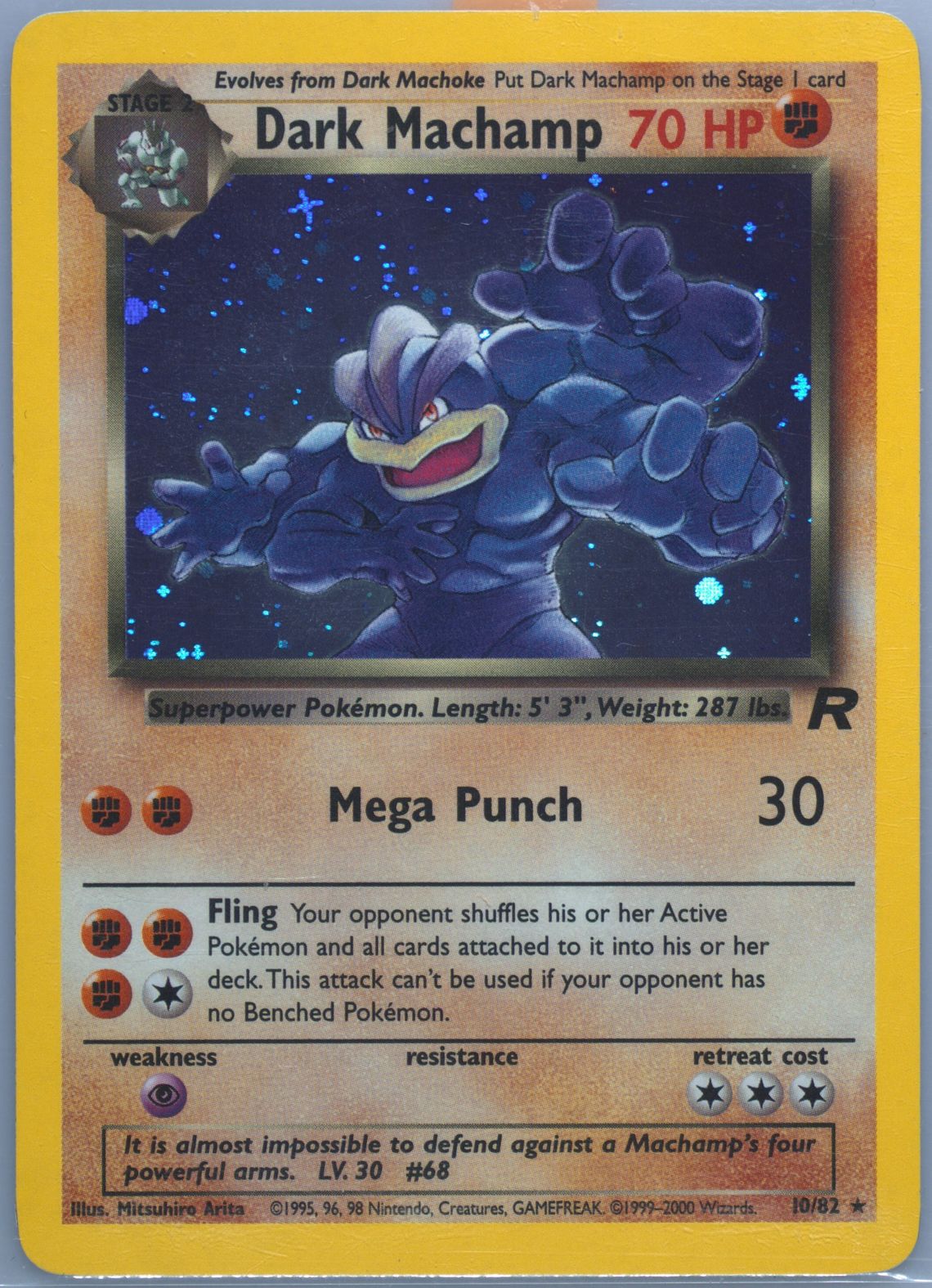
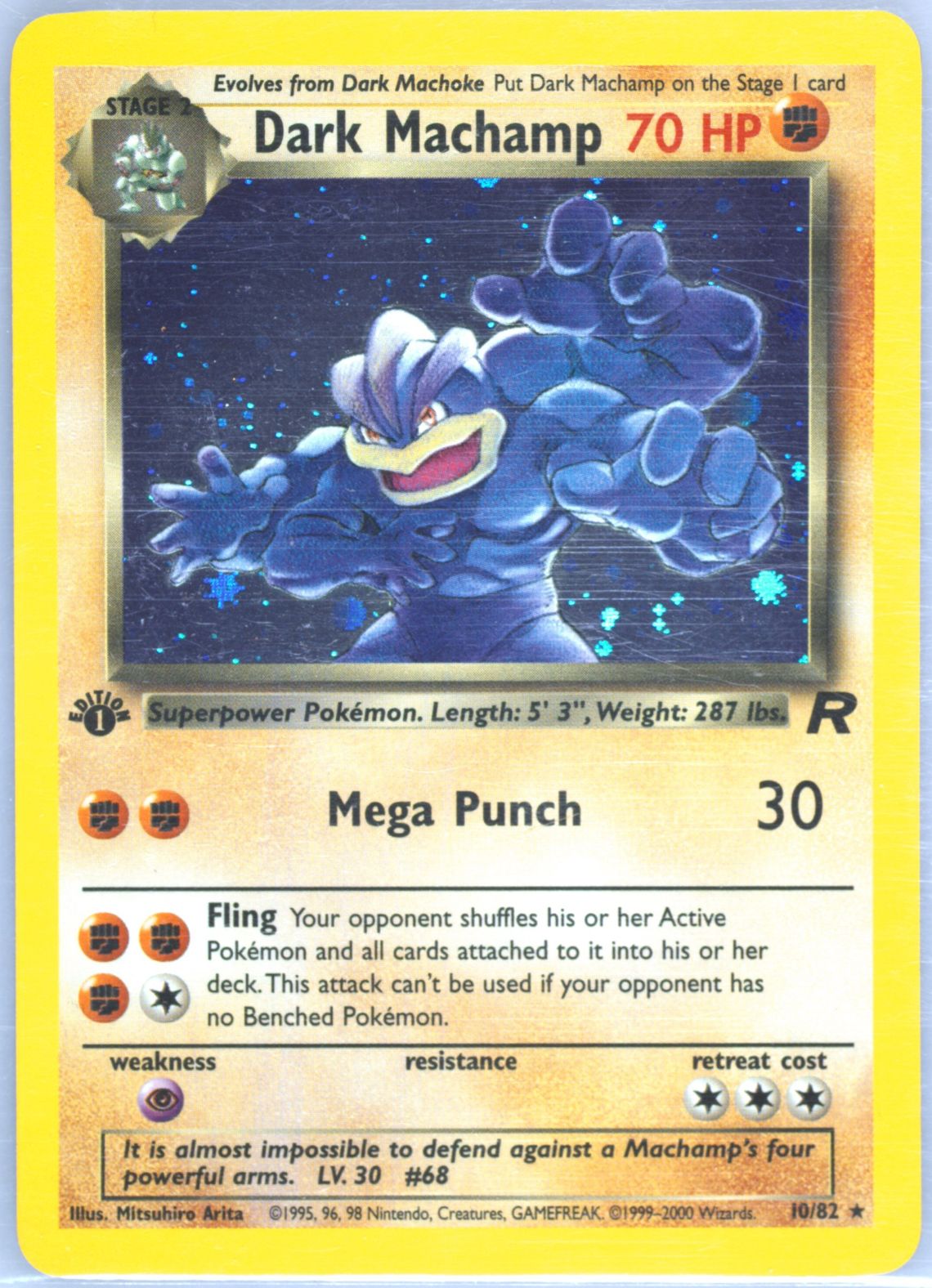
#8 -- Dark Machamp (Holo)
The Fighting-type powerhouse of Team Rocket, Dark Machamp brings raw aggression to the holo lineup in a way that perfectly captures what the Dark mechanic was all about. The artwork shows Machamp in full battle mode, four fists clenched and muscles bulging with barely contained fury, surrounded by a shadowy energy that makes it clear this is not the noble martial artist from Base Set. This is a Machamp that fights dirty, a brawler trained by Team Rocket to maximize damage output at any cost. The holographic treatment amplifies the aggressive energy of the composition, with the shimmering effect giving the dark aura around Machamp a pulsing, living quality that looks stunning in person.
Dark Machamp was a solid competitive card in its day, offering the big damage output and respectable HP that Fighting-type Pokemon were known for. Its Fling attack could deal significant damage while also switching the defending Pokemon, creating tactical options that competitive players appreciated. Machamp has always been one of the more popular Generation 1 Fighting-types, benefiting from its prominent role in the original games as the trade evolution that every kid either had or desperately wanted, and the Dark version adds the Team Rocket aesthetic that elevates the card's collector appeal. High-grade 1st Edition copies are scarce on the market, and the combination of Fighting-type popularity, aggressive artwork, and WOTC-era provenance has kept this card trading in the upper tier of Team Rocket singles. It is a card that looks impressive in any binder and carries a price tag that reflects its status as one of the set's signature holos.
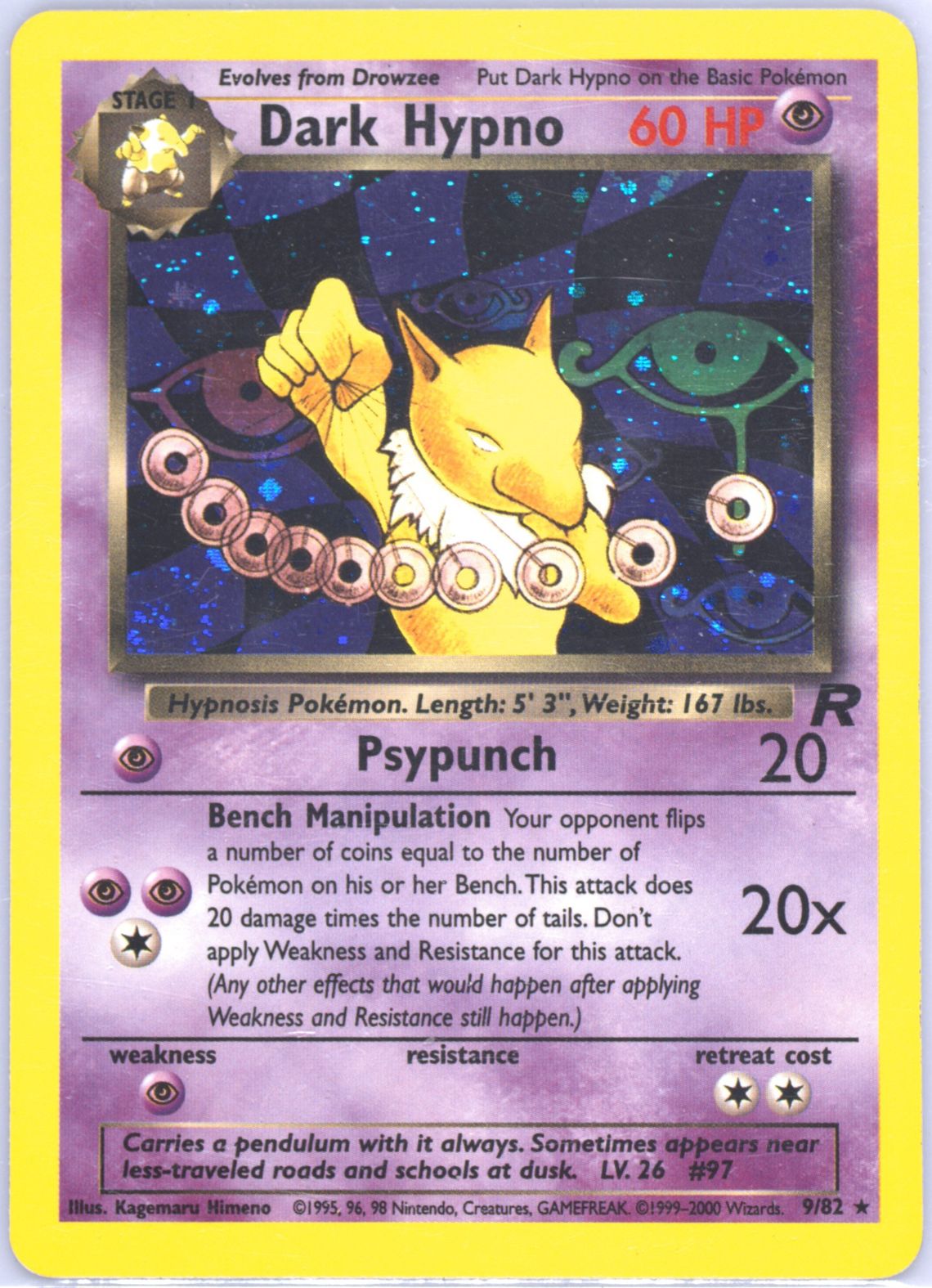
#7 -- Dark Hypno (Holo)
Dark Hypno is a card that benefits enormously from the dark aesthetic of the Team Rocket set, taking an already slightly unsettling Pokemon and amplifying its creepy factor to eleven. Hypno was always one of the more sinister designs in Generation 1, a Psychic-type hypnotist that puts opponents to sleep by swinging a pendulum back and forth, and the Dark treatment transforms that unsettling quality into something genuinely menacing. The artwork features Hypno swinging its pendulum with an intensity that feels almost predatory, its eyes glowing with a hypnotic energy that the holographic pattern enhances to eerie effect. The shadows around Hypno seem to writhe and pulse in the holographic light, creating one of the most atmospheric cards in the entire set.
From a competitive perspective, Dark Hypno was a popular choice in the early metagame thanks to its combination of Psychic typing and disruptive attacks. The Psychic typing gave it natural advantages against the Poison-type Pokemon that were prevalent in many decks, and its ability to put opposing Pokemon to sleep created frustrating board states for opponents. The Psychic typing has a dedicated collector following in the WOTC era, with fans gravitating toward the mysterious and supernatural elements that Psychic-type Pokemon represent. Dark Hypno sits comfortably in the intersection of competitive nostalgia, aesthetic appeal, and the general appreciation for darker, moodier Pokemon designs that has driven the Team Rocket set's enduring popularity. The card is particularly impressive in high grade, where the holographic elements are fully intact and the pendulum seems to genuinely glow.
#6 -- Here Comes Team Rocket! (Holo)
Here Comes Team Rocket! is the signature Trainer card of the set, and it holds the distinction of being one of the very few holographic Trainer cards in the entire WOTC era. This alone makes it a collector's item, as holographic treatments were almost exclusively reserved for Pokemon cards during the early years of the game. The artwork features Jessie and James from the anime in their iconic pose, the dynamic duo of Team Rocket striking a dramatic stance that any fan of the series would instantly recognize. The holographic sheen on a Trainer card was genuinely unusual and exciting for the time, and pulling this card from a pack felt like discovering something secret and special, a feeling that the card has retained in the secondary market ever since.
The card's in-game effect turned all face-down Prize cards face up for both players, which was a thematic home run that perfectly captured Team Rocket's scheming nature. The effect was situationally powerful in competitive play, allowing both players to see exactly what rewards remained and plan accordingly, but its real value was always in the flavor and presentation rather than raw competitive power. Collectors value this card for multiple overlapping reasons: the extreme rarity of a holographic Trainer card in the WOTC era, the iconic Jessie and James artwork that connects the TCG to the anime in a way that few other cards achieve, and the deep nostalgia that the anime characters evoke for anyone who grew up watching the show. The card has held its value remarkably well over the past two decades, and 1st Edition copies in high grade command prices that rival or exceed many of the Pokemon holos in the set. It is one of the most recognizable and emotionally resonant cards in the entire Team Rocket expansion.
#5 -- Dark Alakazam (Holo)
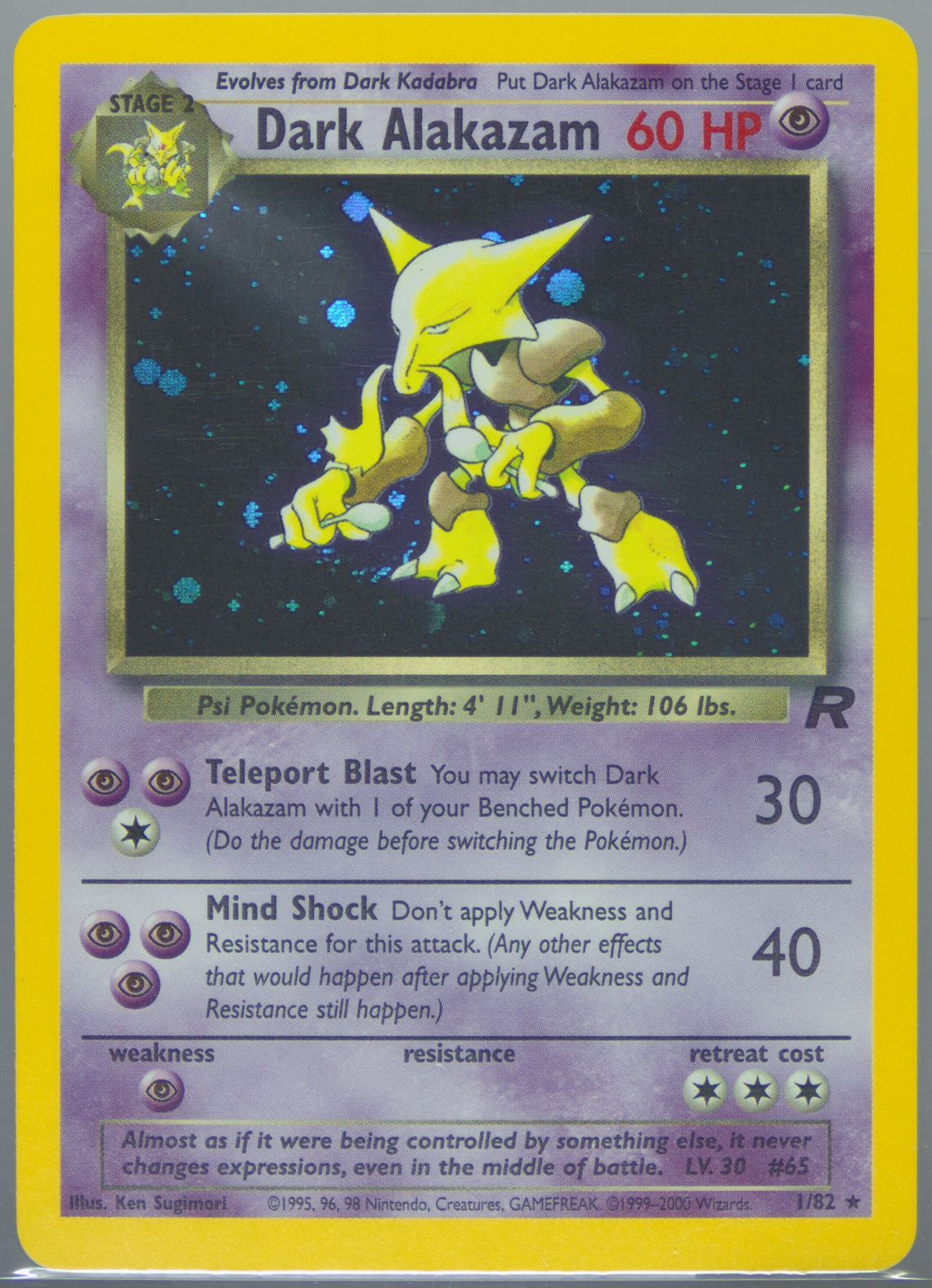
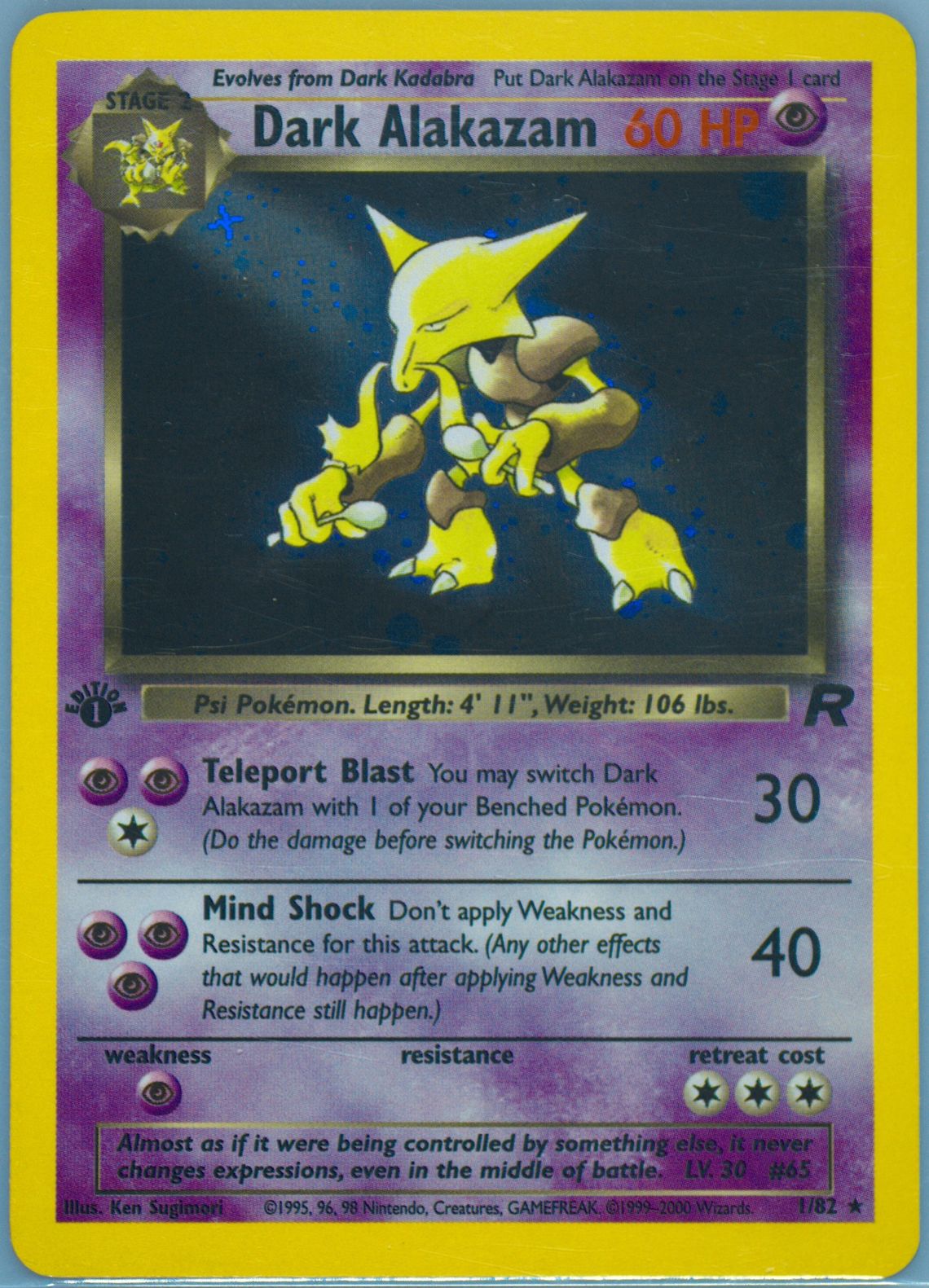
Dark Alakazam is the Psychic-type headliner of Team Rocket, and it delivers exactly the kind of dark, cerebral energy you would expect from a corrupted version of one of the most intelligent Pokemon in the franchise. The artwork shows Alakazam channeling psychic energy through its dual spoons, surrounded by a shadowy aura that crackles with power and malice. Where the standard Alakazam from Base Set felt like a wise sage, Dark Alakazam feels like a schemer, a psychic mastermind using its incredible intelligence for Team Rocket's villainous purposes. The holographic treatment is particularly effective on this card, with the psychic energy effects shimmering and pulsing in a way that gives the card a sense of contained power that could be unleashed at any moment.
Alakazam was already one of the most sought-after Pokemon from Base Set, carrying a premium that reflected its popularity among competitive players and its status as one of the trade evolution headliners that not every player could obtain. The Dark version adds a collector premium that reflects both the card's artwork quality and its competitive history in the early metagame. Dark Alakazam's Teleport Blast attack was powerful for its era, and the card saw real tournament play from players who appreciated its combination of damage output and the disruption potential of its other attacks. High-grade 1st Edition copies are especially scarce, which has pushed prices steadily upward as the vintage market continues to mature and more collectors compete for a finite supply of high-quality vintage cards. Dark Alakazam rewards patient collectors who are willing to hunt for clean copies, and the satisfaction of adding one to a collection is well worth the effort.
#4 -- Dark Raichu (Holo, Secret Rare)
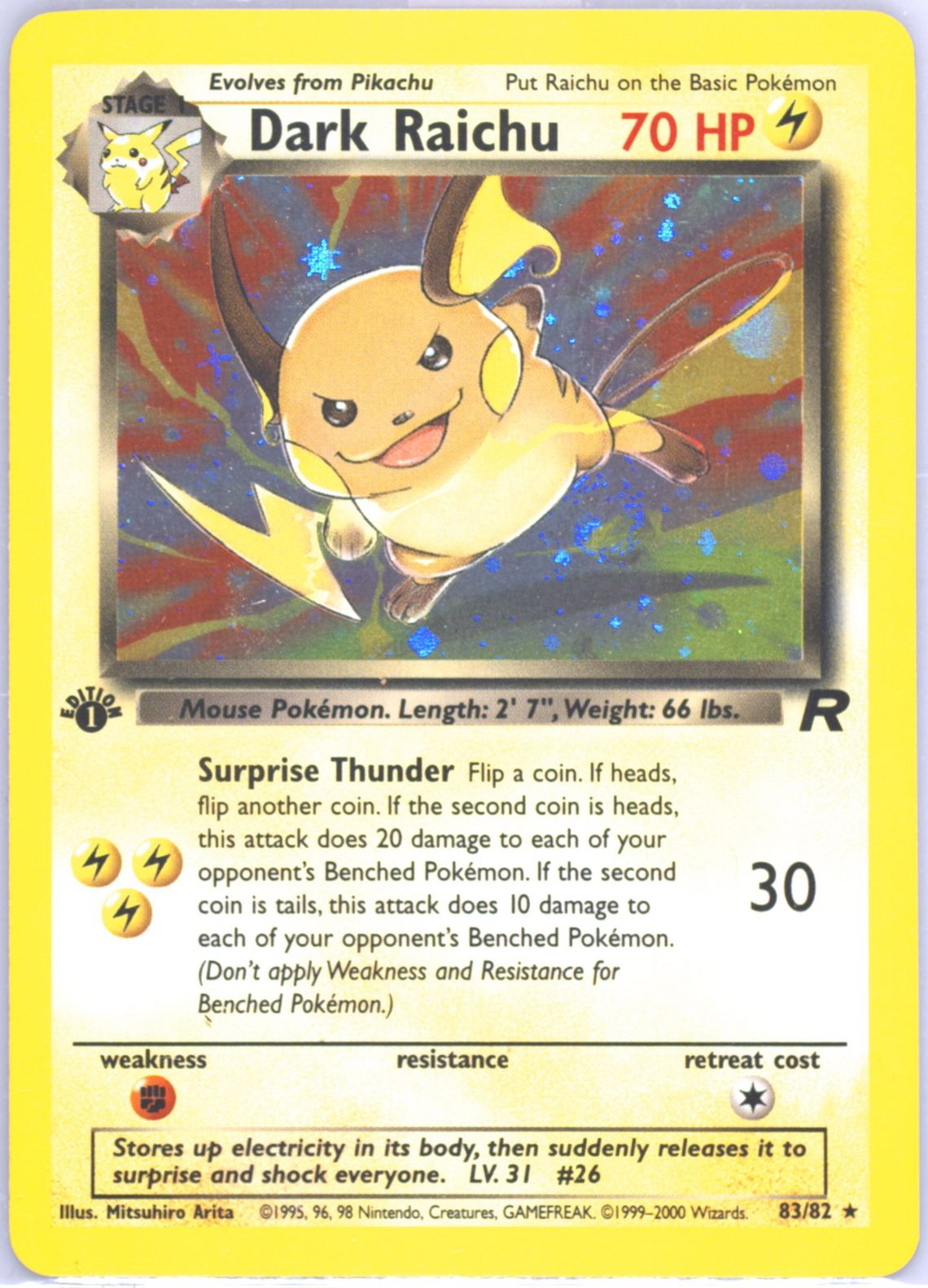
Dark Raichu holds a unique and historically significant place in Pokemon TCG history as the first English-language secret rare. It was not listed on the set's official checklist, was not included in the official card count of 82 cards, and had to be discovered by observant players who noticed the mysterious 83/82 numbering at the bottom of the card. That discovery sparked one of the first genuine collecting frenzies in the game's history, as players and collectors scrambled to confirm the card's existence and then to pull one for themselves. The mythology around Dark Raichu's discovery has only grown over the years, and the card carries a historical weight that goes far beyond its actual rarity or gameplay function.
The artwork features a menacing Raichu crackling with dark electrical energy, its typically cheerful demeanor replaced with a fierce, aggressive stance that makes it clear this Raichu is channeling its power for Team Rocket. The holographic treatment on this card is particularly striking, with the electrical energy effects shimmering across the card surface in bright yellows and oranges that contrast dramatically with the dark background. Beyond its historical significance as a first-of-its-kind secret rare, Dark Raichu benefits from the perennial premium that Pikachu-line cards command in the Pokemon TCG market. Pikachu, Raichu, and every member of the Electric Mouse family carry collector value that transcends their competitive viability, and the combination of secret rare status, first-of-its-kind collector appeal, and the Pikachu family connection makes Dark Raichu one of the most iconic and historically important cards in the entire WOTC era. 1st Edition copies are the crown jewels of Team Rocket collecting, and even Unlimited versions trade at prices that reflect the card's legendary status.
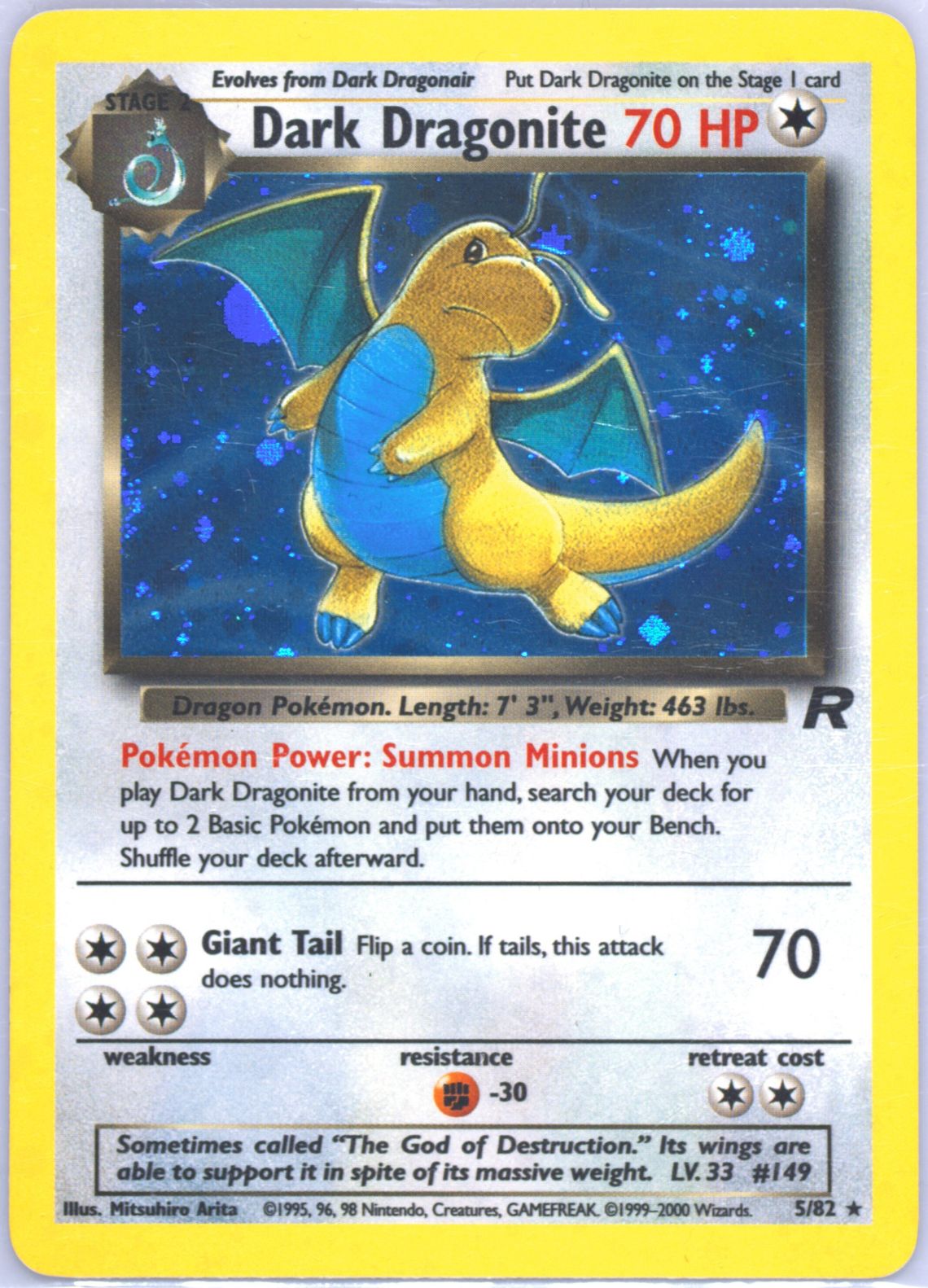
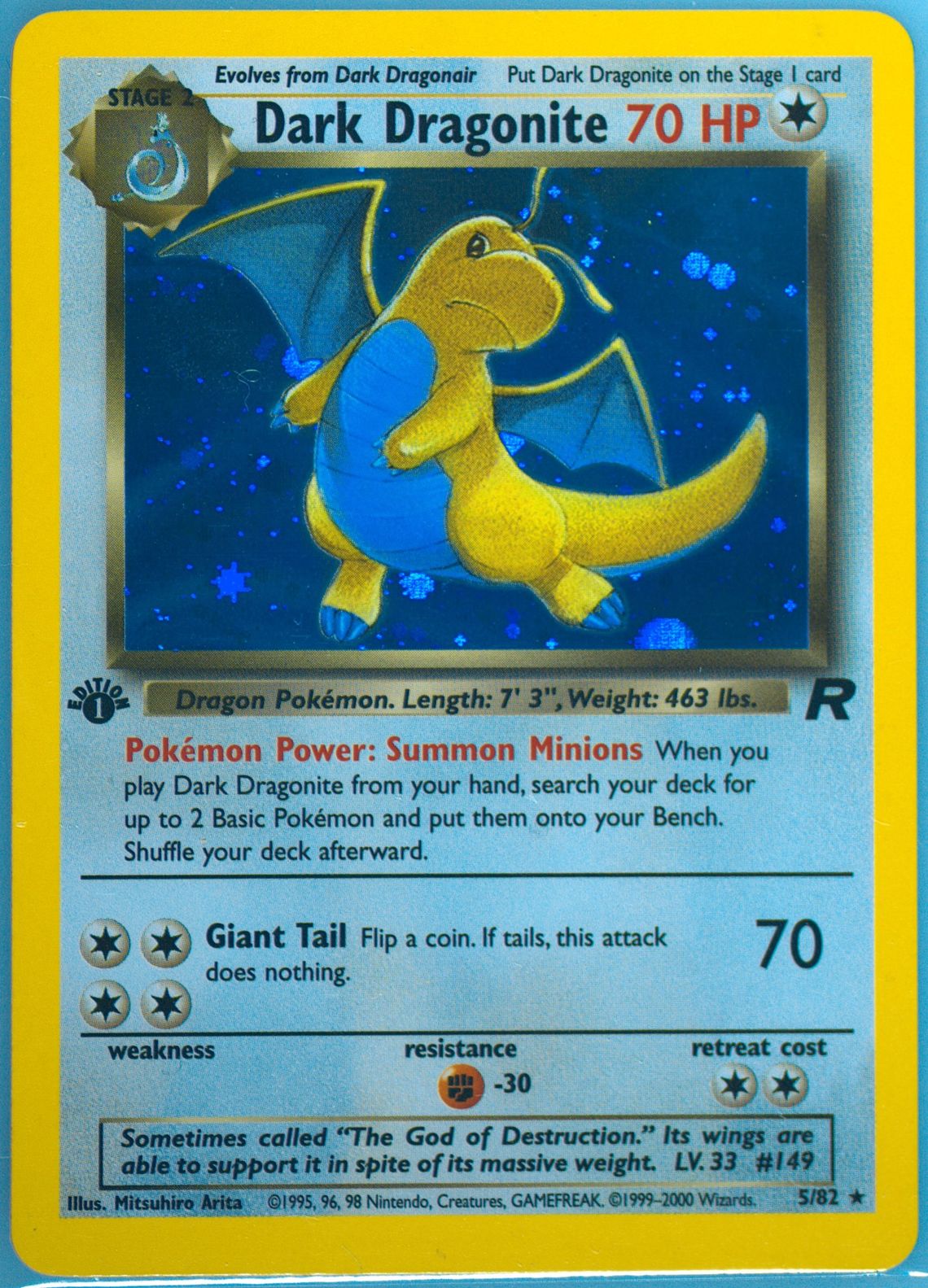
#3 -- Dark Dragonite (Holo)
Dark Dragonite is a card that carries enormous value from multiple angles, each of which independently would be enough to make it a sought-after collectible. Dragonite has been one of the most beloved Pokemon since the original 151, the friendly, mailman-like pseudo-legendary that won hearts through the anime and became one of the most desirable Pokemon in the original games. The Dark version offers a dramatically different interpretation, presenting a moodier, more aggressive take on the typically gentle dragon. The artwork shows Dragonite soaring through stormy skies with an intensity and ferocity that contrasts sharply with the friendly mail carrier image that most fans associate with the character. The wings are spread wide, the mouth is open in what could be a roar or a blast of energy, and the dark storm clouds behind the dragon give the card a sense of power and danger that is completely absent from the standard Dragonite cards.
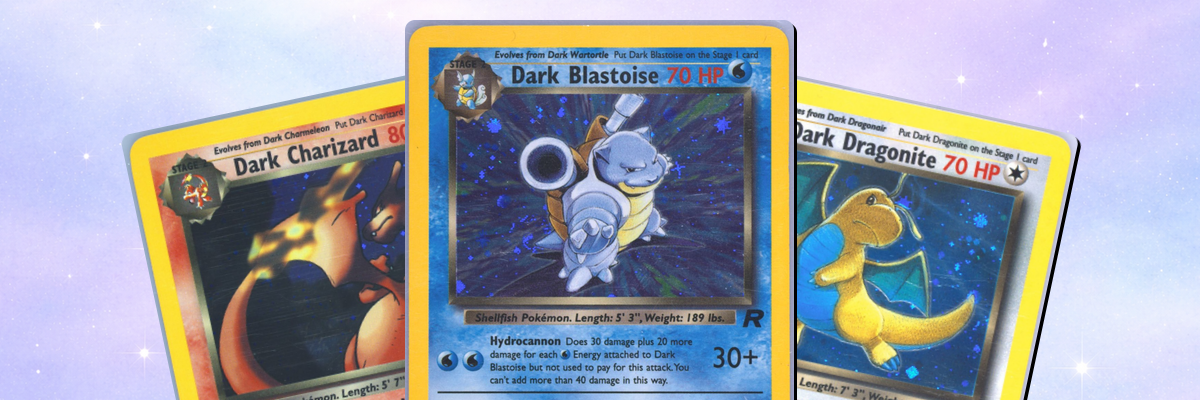
From a competitive standpoint, Dark Dragonite's Summon Storm Pokemon Power was one of the most entertaining and unpredictable mechanics in the early TCG. The power let players flip a coin, and if heads, they could play a card from the top of their deck. This created moments of incredible luck and spectacular failure that made Dark Dragonite games inherently exciting and memorable. The combination of Dragonite's enduring popularity across every generation of Pokemon fan, the competitive nostalgia from the Summon Storm mechanic, and the consistently strong demand for Dragon-type chase cards in the secondary market has kept Dark Dragonite firmly in the top tier of Team Rocket values. The holographic treatment on the stormy background is one of the best in the set, and high-grade 1st Edition copies are among the most desirable Team Rocket cards on the market.
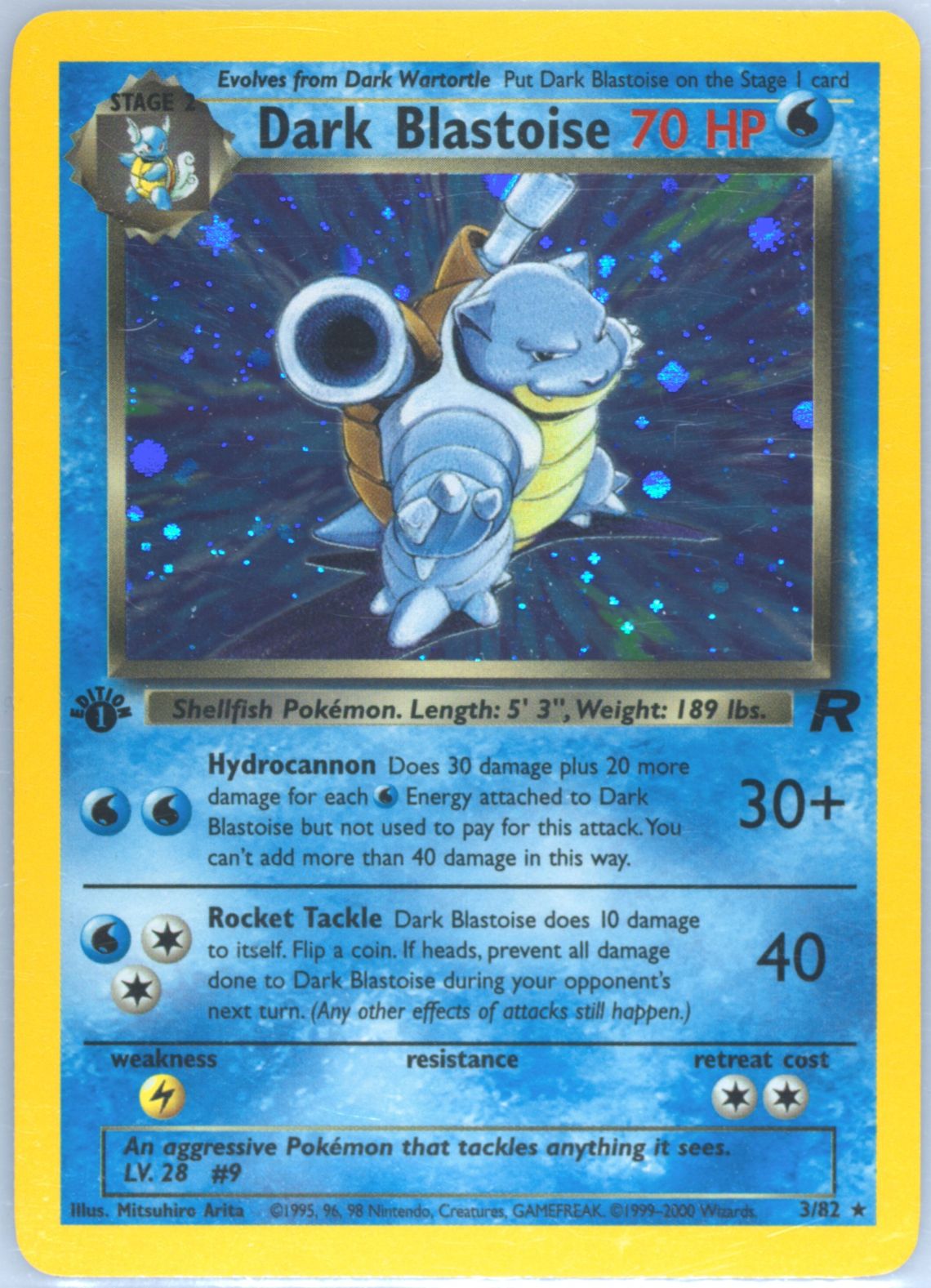
#2 -- Dark Blastoise (Holo)
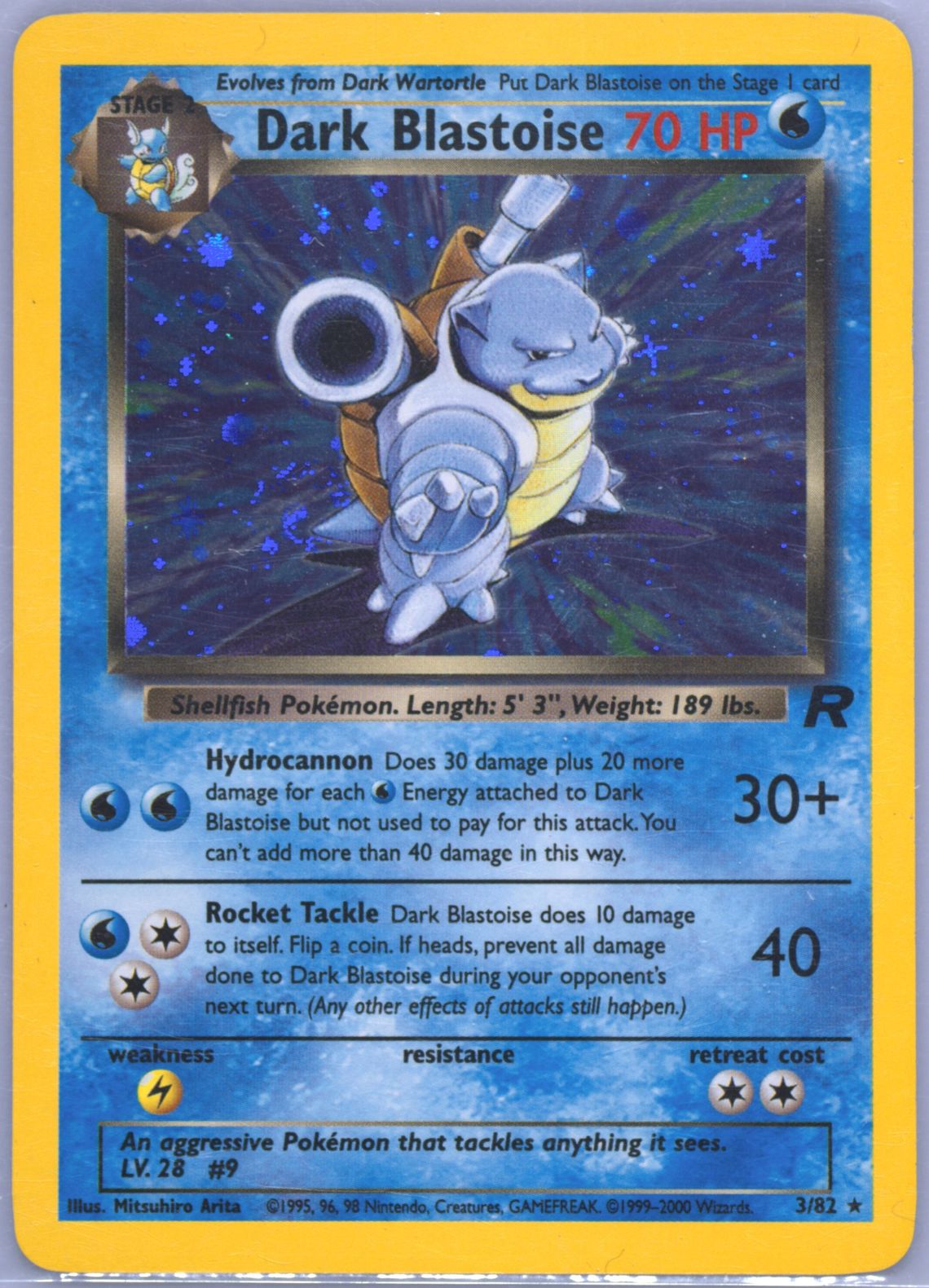
Dark Blastoise is the second most valuable holo in Team Rocket, and it earns that position through the sheer force of Generation 1 starter nostalgia combined with genuinely impressive artwork and competitive history. Blastoise was one of the original three chase cards from Base Set, one of the three starter Pokemon that every player had to choose between at the beginning of their Pokemon journey, and the emotional connection that Squirtle-line fans have to Blastoise is deep and enduring. The Dark version provides a dramatically different take on the Water-type tank, with artwork that features Blastoise with its cannons fully deployed and an aggressive, forward-leaning stance that makes it clear this is not the same protective, steadfast creature that appeared on the cover of Pokemon Blue. This Blastoise means business, and the dark shadows around its form suggest a controlled fury that Team Rocket's training has brought to the surface.
The holographic treatment on Dark Blastoise is one of the most visually appealing in the entire Team Rocket set, with the water effects and metallic cannon elements catching the light in a way that gives the card genuine depth and dimensionality. Dark Blastoise was a competitive staple as well, with its Hydro Cannon attack dealing massive damage for the era and its interactions with other Team Rocket cards giving it additional synergy in dedicated dark decks. High-grade 1st Edition copies are among the most valuable Team Rocket cards on the market, commanding prices that reflect both the Blastoise name's enduring premium and the scarcity of well-preserved vintage holos. If you chose Squirtle as your starter back in 1996 or 1998 or whenever you first picked up a Pokemon game, Dark Blastoise is the Team Rocket card that speaks directly to your nostalgia, and the market pricing reflects the millions of collectors who feel exactly that way.
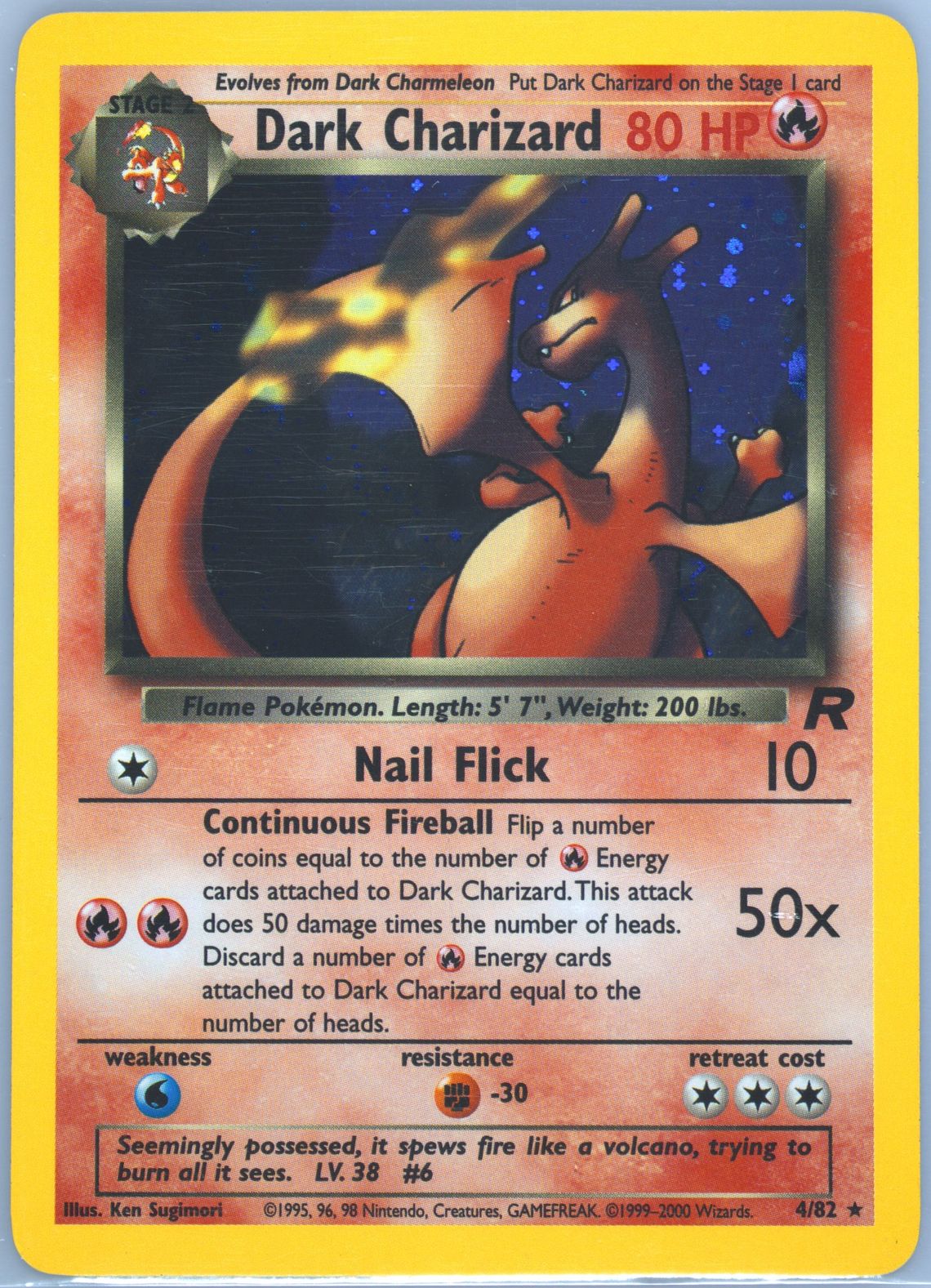
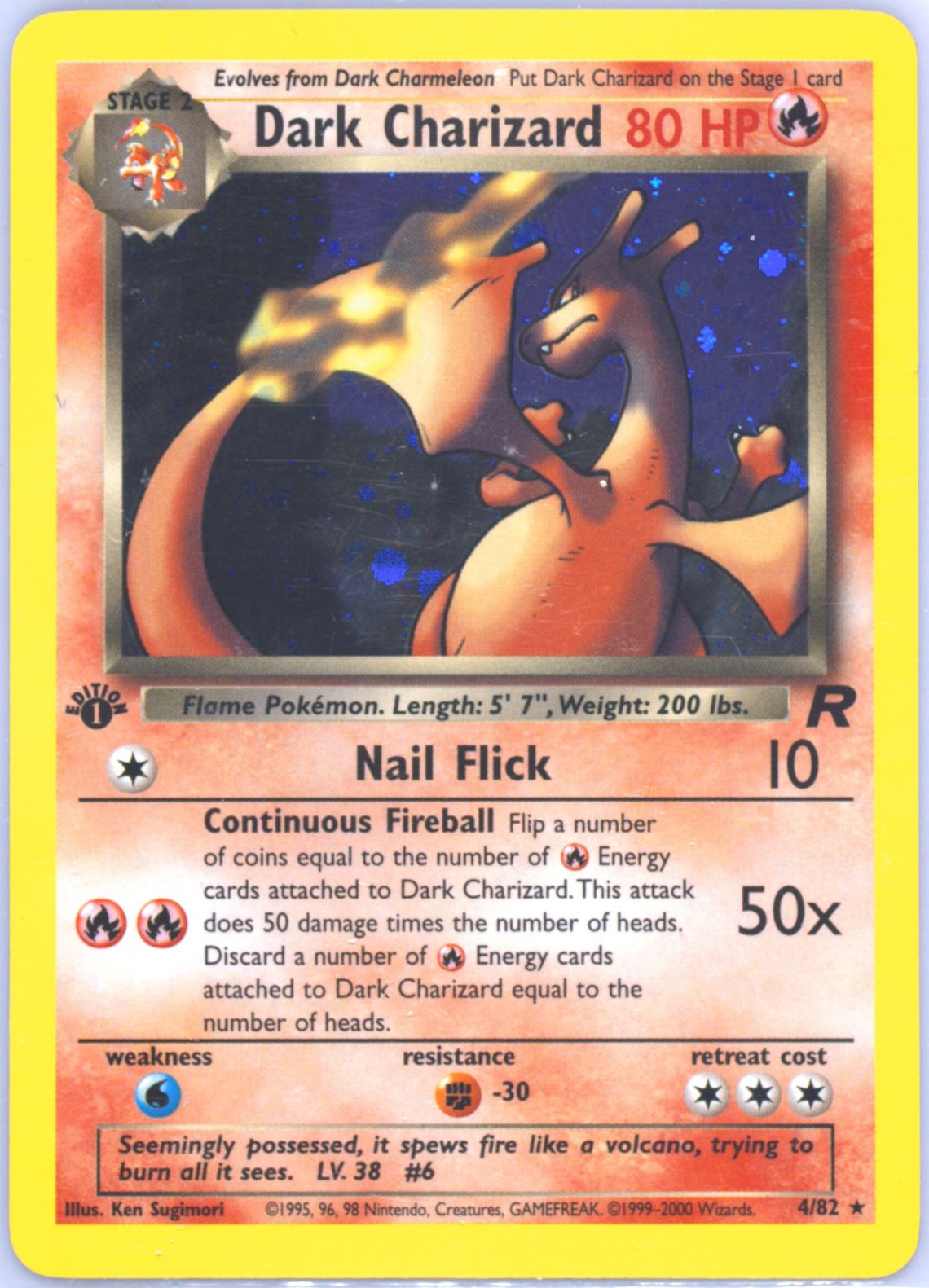
#1 -- Dark Charizard (Holo)
There was never any doubt about the number one spot. Dark Charizard is the most expensive card in Team Rocket, one of the most iconic holographic cards in the WOTC era, and a card that every serious vintage collector either owns or wants to own. The artwork is spectacular: Charizard fully engulfed in dark flames, wings spread wide, mouth open in a furious roar that fills the entire card with raw, aggressive energy. It is one of the most visually powerful renditions of Charizard ever put to cardboard, and the holographic treatment makes those dark flames dance and shimmer in a way that demands attention from across any room. The composition is unforgettable, with the shadows and fire creating a sense of barely contained destruction that perfectly captures what it would mean for the most powerful Fire-type in the franchise to be under Team Rocket's corrupting influence.
From a market standpoint, Dark Charizard operates on two very different levels that reflect the broader stratification of the Team Rocket set. Unlimited copies are among the more accessible Charizard holos from the WOTC era, trading at prices that most dedicated collectors can work with and making them a popular entry point for anyone who wants a genuine vintage Charizard without the five-figure price tag. The Unlimited Dark Charizard is one of our most recommended cards for collectors who want to start their vintage Charizard collection with a piece that is both beautiful and attainable. But 1st Edition copies are a completely different story. A PSA 10 1st Edition Dark Charizard Holo is a legitimate grail card, trading at prices that put it in the same conversation as some of the most valuable cards in the entire hobby. The Charizard premium is the most powerful force in the Pokemon TCG market, and when you combine it with the dark aesthetic of Team Rocket, a holographic treatment that is genuinely beautiful, and the scarcity of high-grade 1st Edition copies, you get a card that has consistently been one of the best-performing assets in the vintage Pokemon space. Dark Charizard is the crown jewel of Team Rocket, the card that defines the set, and a permanent fixture at the top of any value ranking.
Collecting and Grading Team Rocket
For collectors looking to build out a Team Rocket collection, understanding the print run dynamics is essential. The set was produced in two distinct waves: 1st Edition, which carries the coveted 1st Edition stamp on each card and was printed in limited quantities during the initial production run, and Unlimited, which was printed in much larger quantities and lacks the edition stamp. The visual differences between the two extend beyond just the stamp. 1st Edition cards tend to have slightly different color saturation and card stock feel compared to their Unlimited counterparts, and experienced collectors can often identify the edition at a glance based on these subtle differences.
The condition sensitivity of WOTC-era cards is something every Team Rocket collector needs to account for. These cards are over 25 years old, and the original card stock used by Wizards of the Coast was not designed with long-term preservation in mind. The holographic foil layer is susceptible to scratching, the edges are prone to whitening from normal handling, and the card backs are notorious for showing wear that can significantly impact professional grades. Finding Team Rocket holos in truly mint condition is increasingly difficult, which is why the spread between raw and graded prices for these cards can be dramatic. A raw Dark Charizard Holo in what appears to be good condition might grade as low as a PSA 7 or 8 due to subtle surface issues that are only visible under professional-grade lighting and magnification. This reality means that raw purchases carry inherent grading risk, while pre-graded purchases at PSA 9 or 10 carry premium prices that reflect the elimination of that risk.
The non-holo rare cards from Team Rocket also deserve attention from collectors building comprehensive sets. The non-holo versions of Dark Charizard, Dark Blastoise, Dark Dragonite, and other evolved Pokemon carry their own collector appeal and trade at prices that, while lower than their holographic counterparts, still reflect genuine vintage demand. These non-holo rares are often overlooked in market discussions that focus exclusively on the holo cards, but they represent some of the best value propositions in WOTC-era collecting for budget-conscious collectors who want to own iconic Team Rocket cards without the holo premium.
The common and uncommon cards from Team Rocket also hold hidden value in certain cases. 1st Edition commons and uncommons from vintage WOTC sets have developed their own collector market, driven by completionists who want every card in the set in its most desirable printing. Cards like Charmander 1st Edition, Eevee 1st Edition, and Magikarp 1st Edition carry premiums that reflect the popularity of their evolved forms and the nostalgia value of the base-stage Pokemon. For collectors who enjoy the hunt, building a complete 1st Edition Team Rocket set from commons through holos is a satisfying long-term project that provides entry points at every budget level while working toward a genuinely impressive completed collection.
The Bottom Line
Team Rocket is a set that perfectly captured the darker side of the Pokemon universe, and more than two decades later, it remains one of the most collectible and emotionally resonant expansions from the WOTC era. The holo rares are the clear drivers of value, with Dark Charizard reigning supreme in a way that should surprise absolutely no one who has spent any time in the Pokemon TCG market. But the depth of quality across the rest of the top 10 is what makes Team Rocket genuinely special as a collector's set. From the secret rare mystique of Dark Raichu to the anime nostalgia of Here Comes Team Rocket!, from the competitive legacy of Dark Vileplume to the pseudo-legendary appeal of Dark Dragonite, every card on this list has a unique story and a compelling reason for its position in the value hierarchy.
The massive gap between Unlimited and 1st Edition values is the defining market characteristic of Team Rocket and the primary factor that determines whether a card is an affordable collectible or a premium investment piece. If you are collecting on a budget, Unlimited copies of these holos offer genuine WOTC-era cards with real artwork quality and historic significance at prices that most collectors can work with. Many of the Team Rocket Unlimited holos are among the best value propositions in vintage Pokemon collecting, offering iconic artwork and genuine provenance at a fraction of what their 1st Edition counterparts command. If you are chasing investment-grade pieces, 1st Edition holos in high professional grades represent some of the strongest long-term value propositions in the vintage Pokemon market, backed by an ever-growing collector base and a supply that is permanently fixed.
Either way, Team Rocket rewards the collector who takes the time to appreciate what made this set so special: the audacity to take the cheerful, colorful world of Pokemon and turn it on its head, creating something darker, more complex, and ultimately more interesting than what came before.
Prices referenced are approximate market values as of March 2026 and will fluctuate. Check current listings on Misprint for the latest prices.