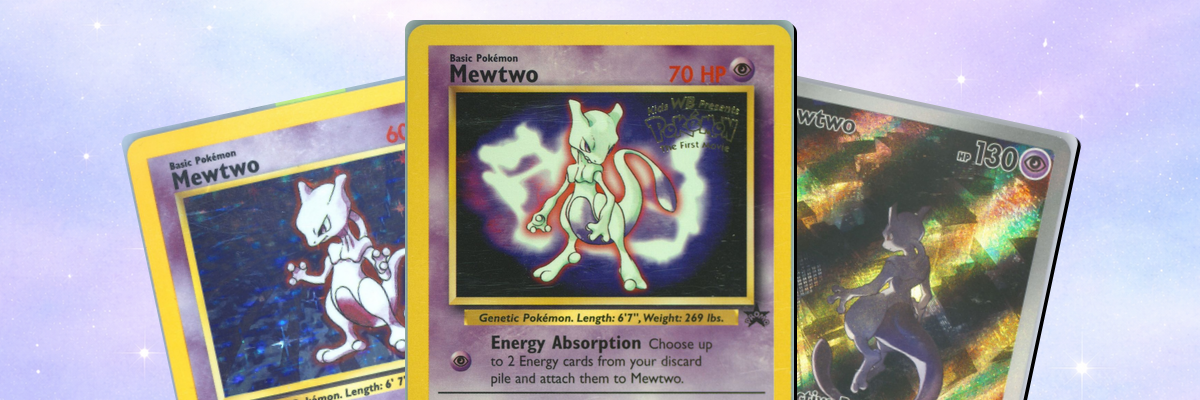
Top 10 Most Expensive Charizard Cards of All Time
The king of Pokemon cards, ranked from 10 to 1.
By Misprint Editorial | Published Jan 22, 2026 | 21 min read
Updated pricing as of March 2026
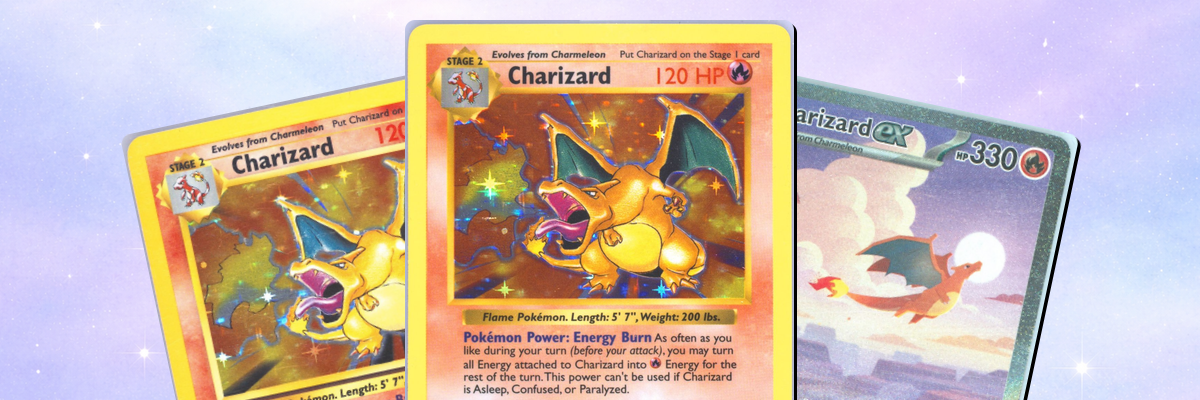
There is no Pokemon card more iconic, more sought-after, or more valuable across the entire history of the Trading Card Game than Charizard. Since the very first booster pack of Base Set was ripped open in 1999, the Fire/Flying-type final evolution of the Kanto starter Charmander has been the single most important name in the hobby. Charizard cards have driven more sealed product sales, more pack openings, more grading submissions, and more headline-grabbing auction results than any other Pokemon in the franchise, and it is not even close. The Charizard premium is the most powerful and persistent market force in the entire TCG, a gravitational constant that has shaped collecting behavior, investment strategies, and set design for over a quarter century. When a new set includes a premium Charizard card, it sells more product. When a vintage Charizard surfaces at auction in high grade, it makes national news. When a collector describes their grail card, it is almost always some version of Charizard.
What makes the Charizard phenomenon so enduring and so resistant to the boom-and-bust cycles that affect other collectibles is the way it operates across every era, format, and demographic of the game. Vintage collectors chase Base Set and WOTC-era Charizards as the foundational pieces of the hobby, the cards that defined what Pokemon collecting meant before the term "investing" was ever applied to trading cards. Modern collectors hunt for Special Illustration Rares, alternate art treatments, and Hyper Rares, viewing each new generation's premium Charizard as the flagship card of its era. Competitive players have built decks around Charizard in virtually every format it has been legal, from the original Base Set days through the EX era, the Mega era, the GX era, the VMAX era, and now the modern ex era. And casual fans who do not collect anything else, who may not even know the difference between a holo and a non-holo, will still drop serious money on a single Charizard card for their shelf, their display case, or their memory box. That cross-demographic appeal is what separates Charizard from every other Pokemon in the market: it is not just popular with one type of collector, it is popular with all of them simultaneously.
The reason for this universal appeal is not difficult to understand. Charizard is a fire-breathing dragon, one of the most primal and universally resonant creature archetypes in human storytelling. It was the final reward for choosing the most difficult starter in the original games, a challenge that made the eventual evolution feel earned and special. It graced the cover of Pokemon Red, the version that outsold Blue in most markets, making it the default image that an entire generation associated with the Pokemon franchise. It starred in some of the anime's most memorable episodes. And most importantly, it was the hardest card to pull from Base Set packs, creating a scarcity dynamic in 1999 that embedded the idea of "Charizard = treasure" into the minds of millions of children who are now adults with disposable income and a powerful nostalgia itch to scratch.
Ranking the top 10 most expensive Charizard cards of all time is an exercise in navigating through decades of Pokemon history, from the 1999 Base Set that launched the hobby through the EX, Diamond and Pearl, Black and White, XY, Sun and Moon, Sword and Shield, and Scarlet and Violet generations. Every era has produced at least one Charizard card that defined its moment in the market, and the best of those cards have appreciated into five-figure, six-figure, and in the most extreme cases seven-figure territory in high professional grades. This list focuses on the most valuable Charizard cards by current market value, considering both raw and graded sales across the full spectrum of the hobby. These are the 10 cards that sit at the very peak of the Charizard market in March 2026.
Honorable Mentions
Before we get into the main countdown, several Charizard cards deserve recognition for sitting just outside the all-time top 10. These are premium Charizard pieces that would be the crown jewel of most collections even if they do not quite reach the heights of the cards on the main list. The fact that a card can be a highly desirable, expensive Charizard and still not make the top 10 tells you everything about just how deep the Charizard market really is.
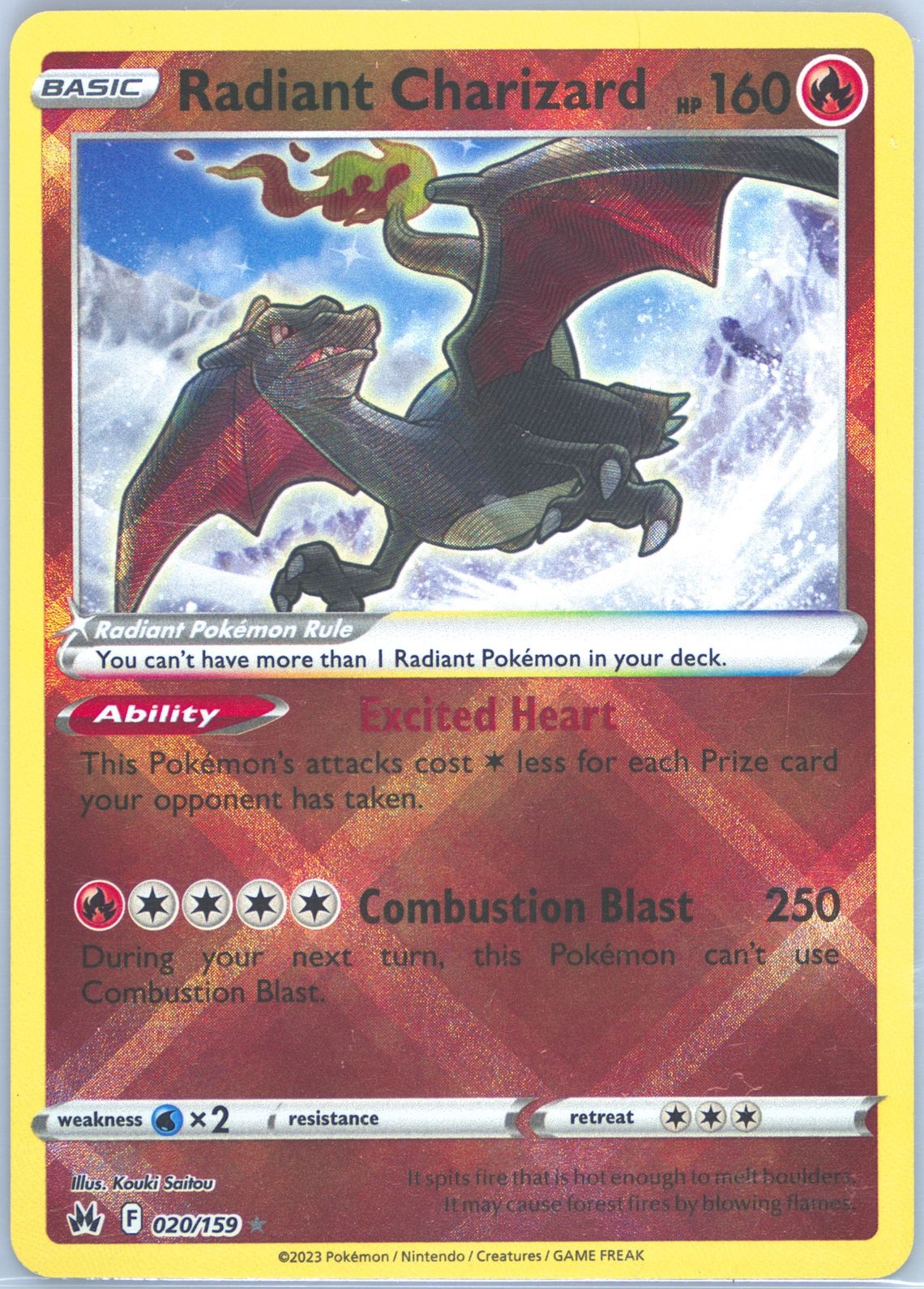
Radiant Charizard (Crown Zenith) is one of the most accessible premium Charizards in the hobby and an excellent gateway card for newer collectors. The Radiant treatment gives the card a unique holographic pattern that features an alternate-color Charizard, connecting it to the shiny Pokemon tradition that has produced some of the most valuable cards in history. Crown Zenith's wide distribution means that raw copies are available at reasonable price points, making this one of the most commonly recommended Charizard cards for collectors who want a premium piece without a premium price tag. The artwork is clean and impactful, and the Radiant rarity ensures that the card feels special despite its relative accessibility.
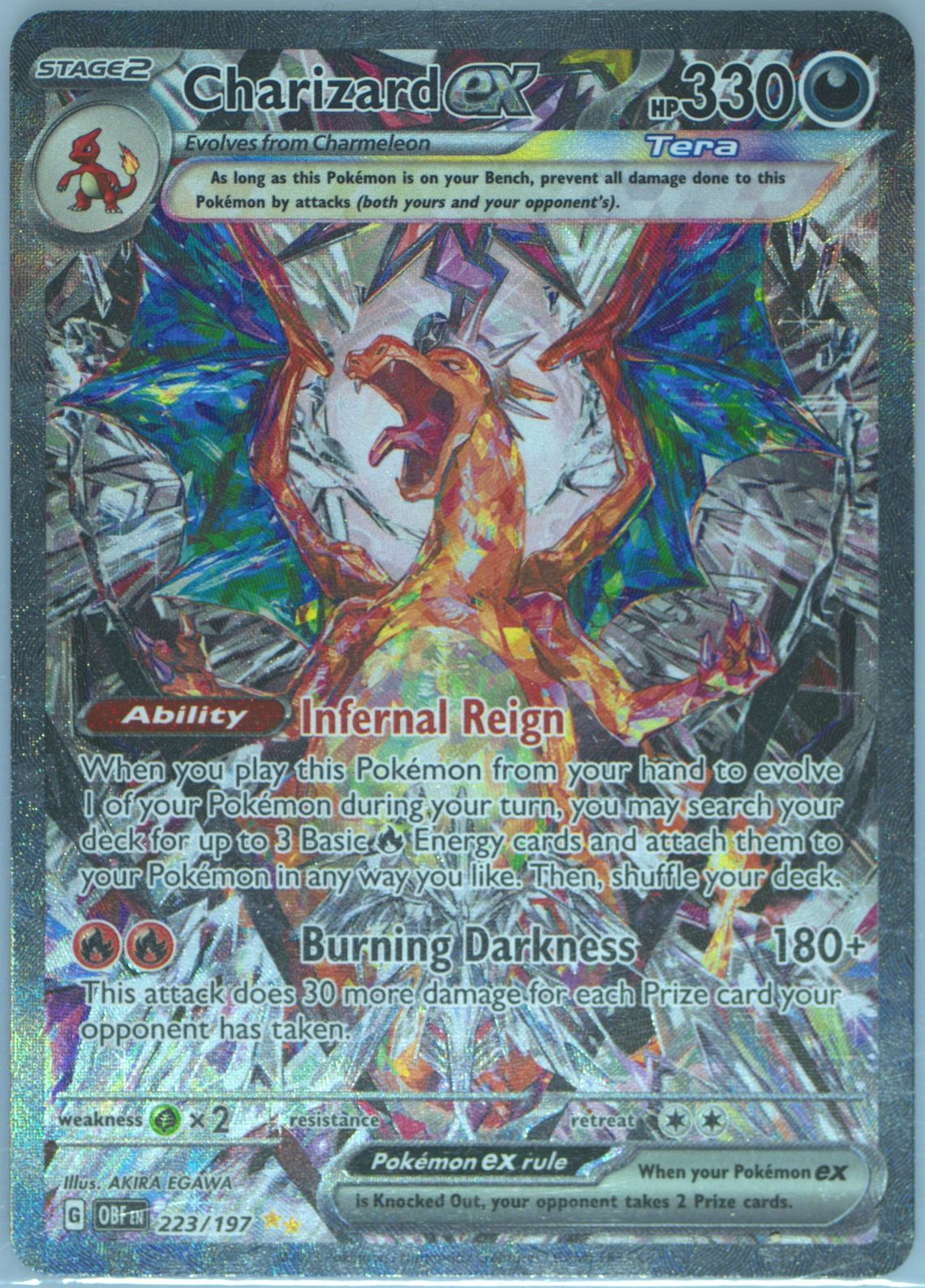
Charizard EX Special Illustration Rare (Obsidian Flames) brought the SIR treatment to Charizard in one of the earlier Scarlet and Violet sets, establishing the pattern of premium Charizard SIRs that would become a defining feature of the generation. The artwork is dramatic and visually striking, featuring the Fire-type in full battle mode against a backdrop of flames and destruction that showcases the SIR art style at a high level. The card has held strong value as one of the defining pulls from the Obsidian Flames expansion and serves as a measuring stick for subsequent Charizard SIRs.
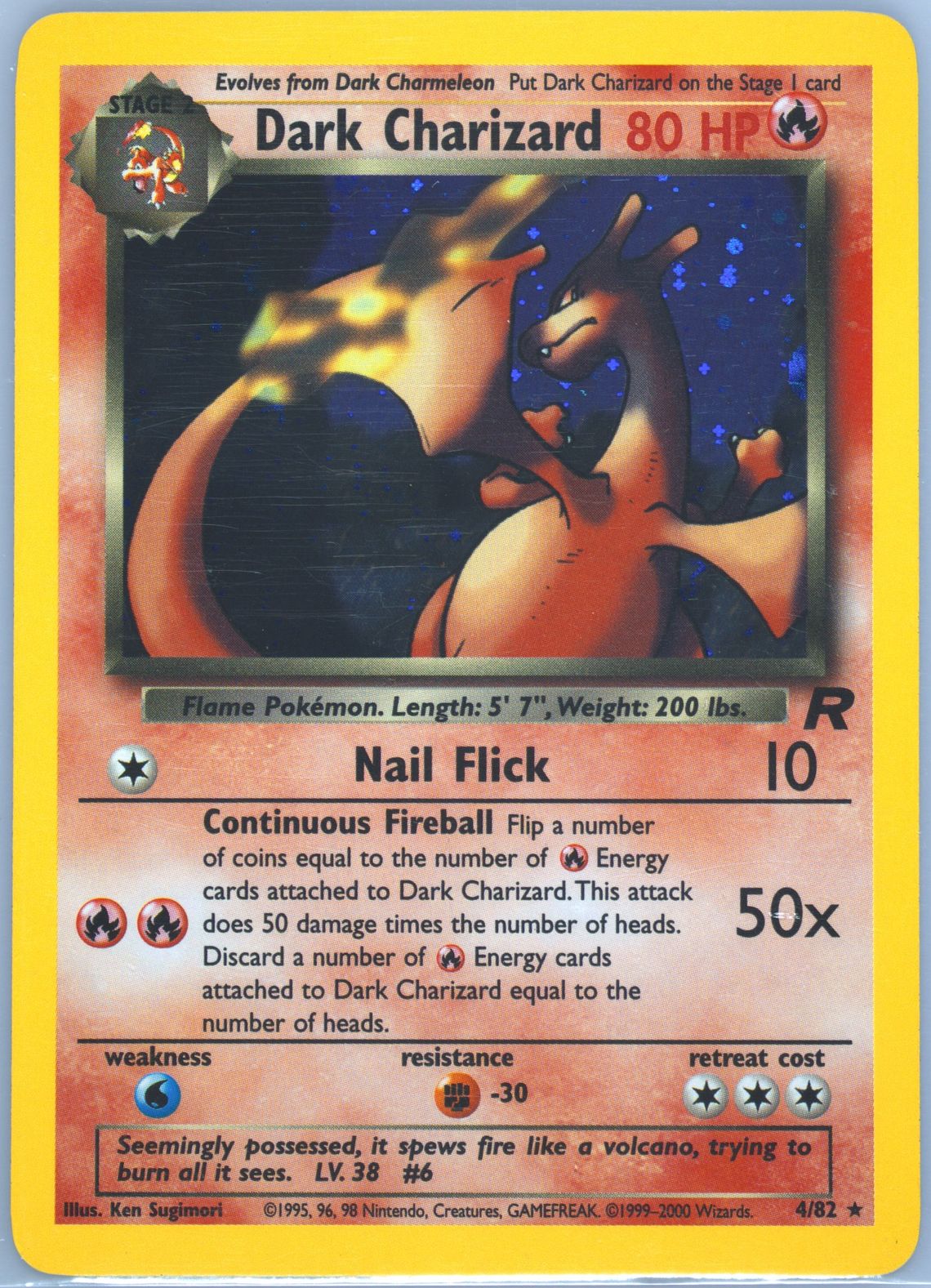
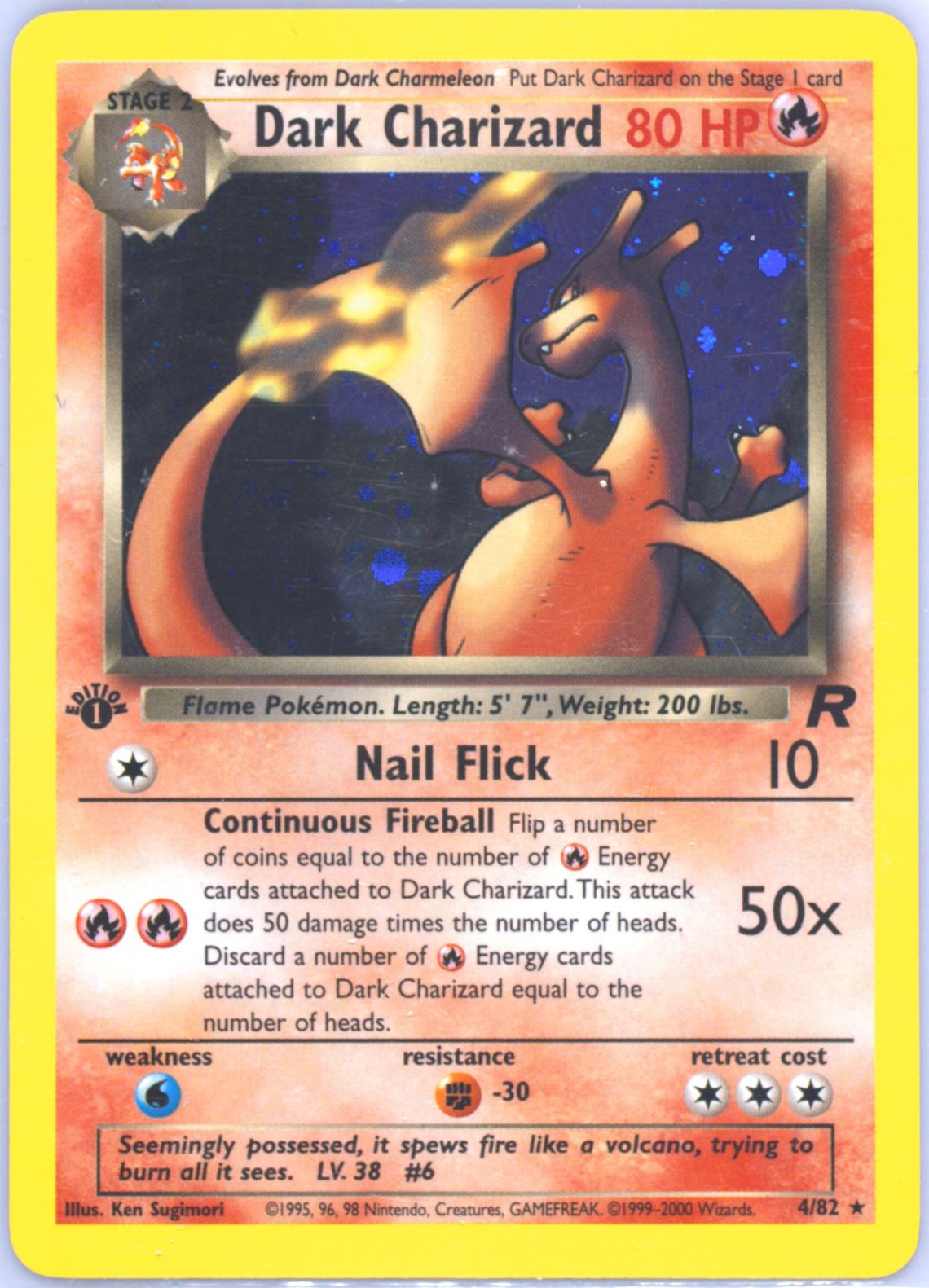
Dark Charizard (Holo, Team Rocket) is the menacing WOTC-era variant that features Charizard under Team Rocket's influence, with artwork showing the fire dragon engulfed in dark flames that represent the corruption of Giovanni's organization. It is the crown jewel of the Team Rocket expansion and one of the most visually striking Charizard holos from the vintage era. The Unlimited version is particularly popular as an attainable vintage Charizard with real WOTC-era provenance, while 1st Edition copies command prices that reflect the intense demand for premium vintage Charizard cards.
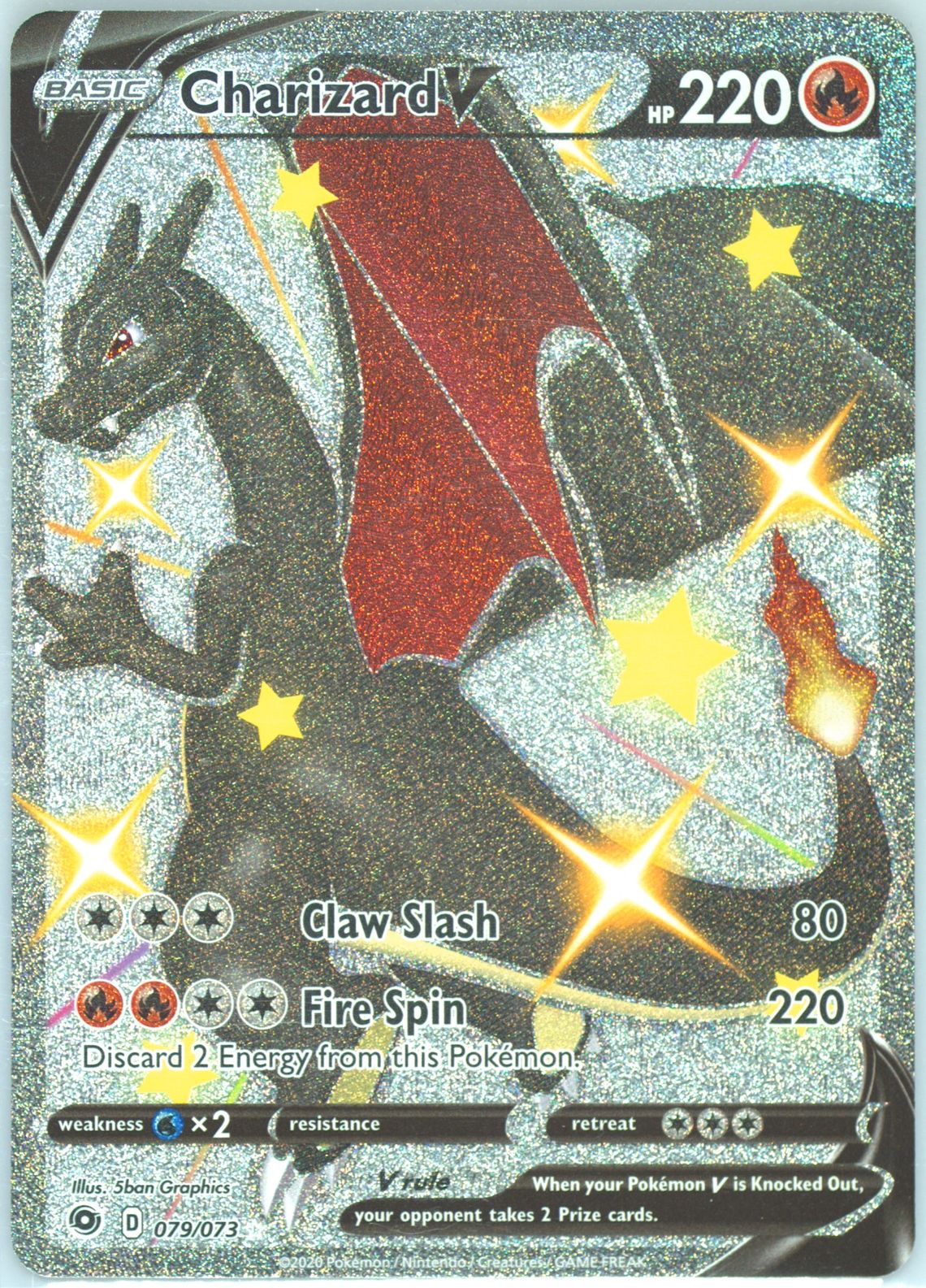
Charizard V (Secret Rare, Champion's Path) deserves mention as the full-art partner to the VMAX that appears on the main list. The card features a dynamic illustration of Charizard V that showcases the character's aggressive battle stance, and it has maintained solid value as a secondary chase card from one of the most Charizard-focused sets in modern memory.
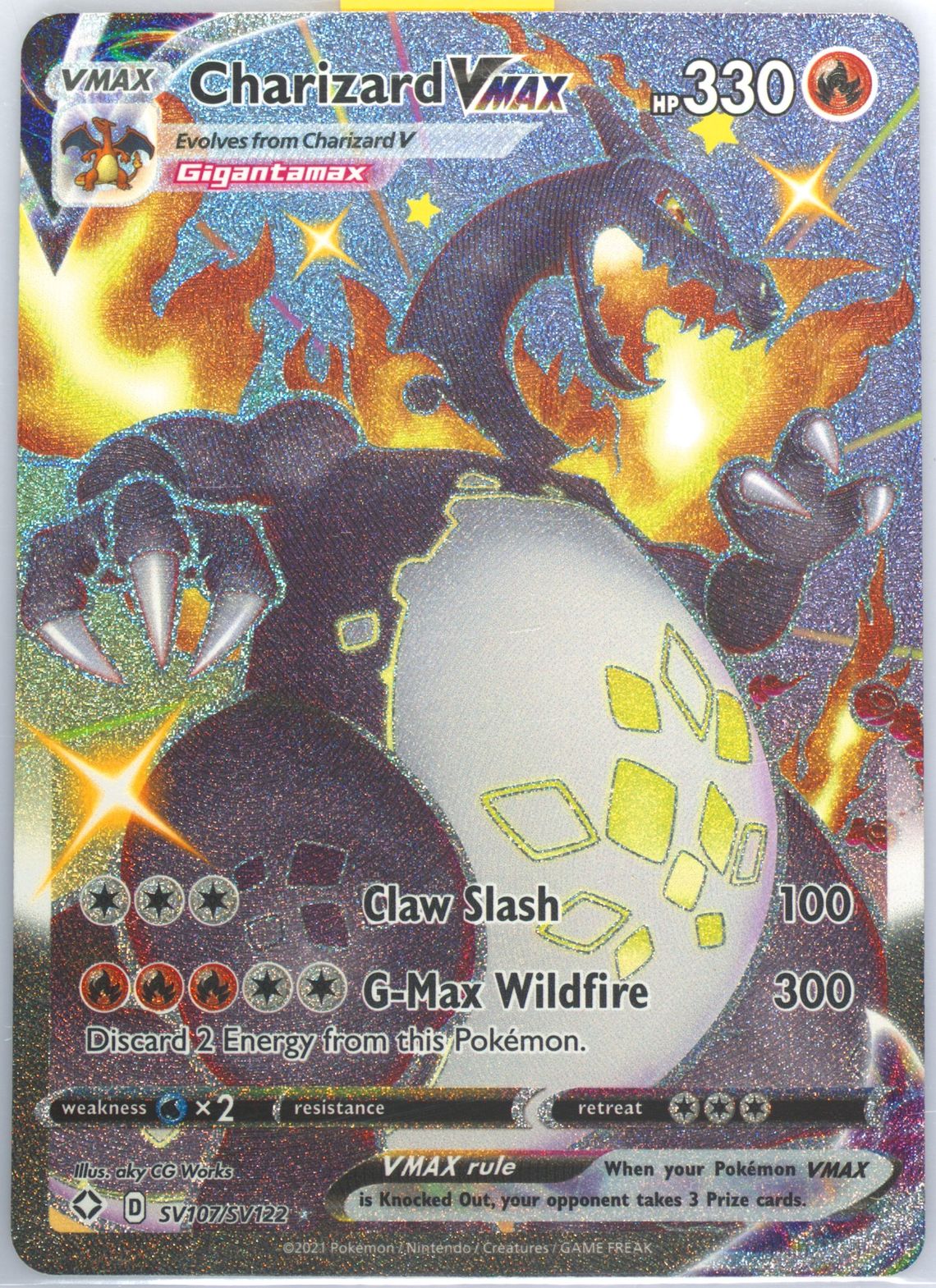
#10 -- Charizard VMAX (Shiny, Shining Fates)
Shining Fates was one of the most hyped sets of the Sword and Shield era, generating an excitement level that rivaled the pandemic-era frenzy of 2020-2021, and the Shiny Charizard VMAX was its undisputed chase card from the moment the set was announced. The artwork features a black-skinned Charizard VMAX in its Gigantamax form, and the shiny coloration transforms the familiar orange-and-red design into something dramatically, strikingly different. Black Charizard cards occupy a special place in the collecting hierarchy, carrying a premium that transcends the normal value curves of the sets they appear in. From the original Shining Charizard in Neo Destiny to the Shiny Vault Charizard GX in Hidden Fates, every black Charizard card has become an instant classic, and the Shining Fates version continues that tradition with the modern twist of the Gigantamax form.
The Gigantamax design adds scale and spectacle to the shiny aesthetic, with the enormous Charizard towering over the card surface in a pose that radiates power and dominance. The contrast between the black shiny coloration and the fiery energy effects creates a visual drama that is particularly effective on this card, and the Shiny Vault treatment ensures that the card stands out from the standard set in both appearance and collectability. Despite the relatively high print run of Shining Fates, which was reprinted multiple times to meet extraordinary demand, the Shiny Charizard VMAX has maintained its position as one of the most valuable modern Charizard cards. This sustained value is supported by strong demand from multiple collector demographics: shiny Pokemon enthusiasts, Charizard completionists, Sword and Shield era collectors, and investors who view it as a spiritual successor to the legendary shiny Charizards of previous generations. It is a card that bridges the gap between the WOTC-era shiny Charizard tradition and the modern market, and that bridge position gives it enduring appeal.
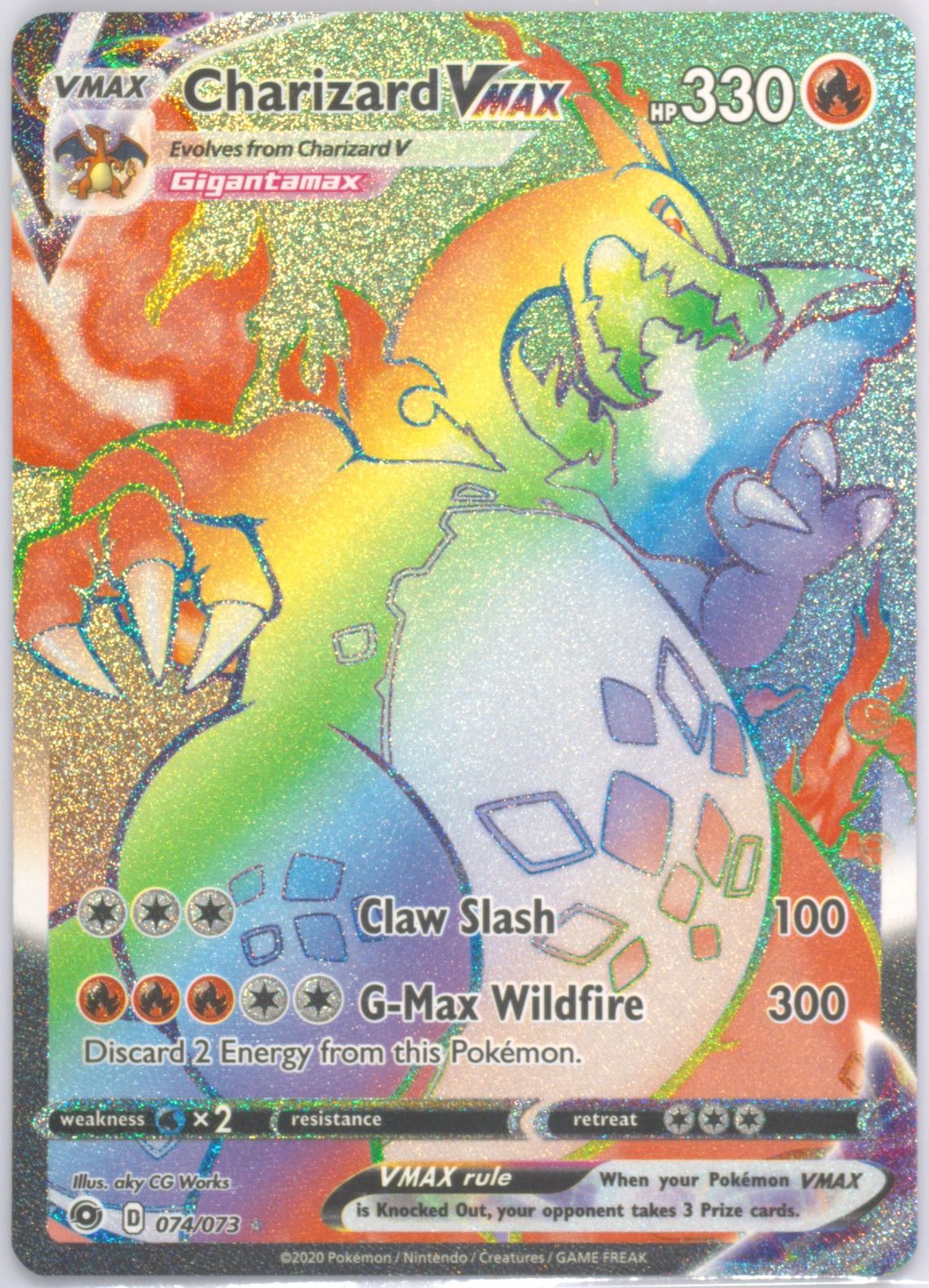
#9 -- Charizard VMAX (Secret Rare, Champion's Path)
Champion's Path was a set built almost entirely around a single card, and that card was the Charizard VMAX Secret Rare that defined the collecting landscape of late 2020 and early 2021. The rainbow-tinged artwork features Gigantamax Charizard in all its enormous, flame-wreathed glory, and the secret rare treatment gives the card a premium, iridescent quality that set it apart from everything else in the expansion. When Champion's Path launched in September 2020, in the middle of the most explosive period of Pokemon card speculation in the hobby's history, this Charizard was at the absolute center of one of the biggest collecting frenzies the market had ever seen. ETBs were selling for three, four, five times their MSRP. The secondary market for the Charizard VMAX Secret Rare was white-hot, with prices spiking to levels that seemed unsustainable at the time and, in retrospect, were.
Prices have normalized significantly since those pandemic-era peaks as the supply of graded copies has increased and the speculative fever of 2020-2021 has given way to a more mature market. But the card remains a landmark piece from the Sword and Shield generation, carrying historical significance as the card that introduced many new collectors and investors to the modern Pokemon market. For thousands of people, the Champion's Path Charizard VMAX was their first premium Pokemon card purchase, and that personal significance keeps demand strong among a generation of collectors who associate this specific card with the beginning of their hobby journey. It is also a genuinely impressive piece of card art, with the rainbow treatment and Gigantamax scale creating a visual that is hard to look away from in any binder or display.
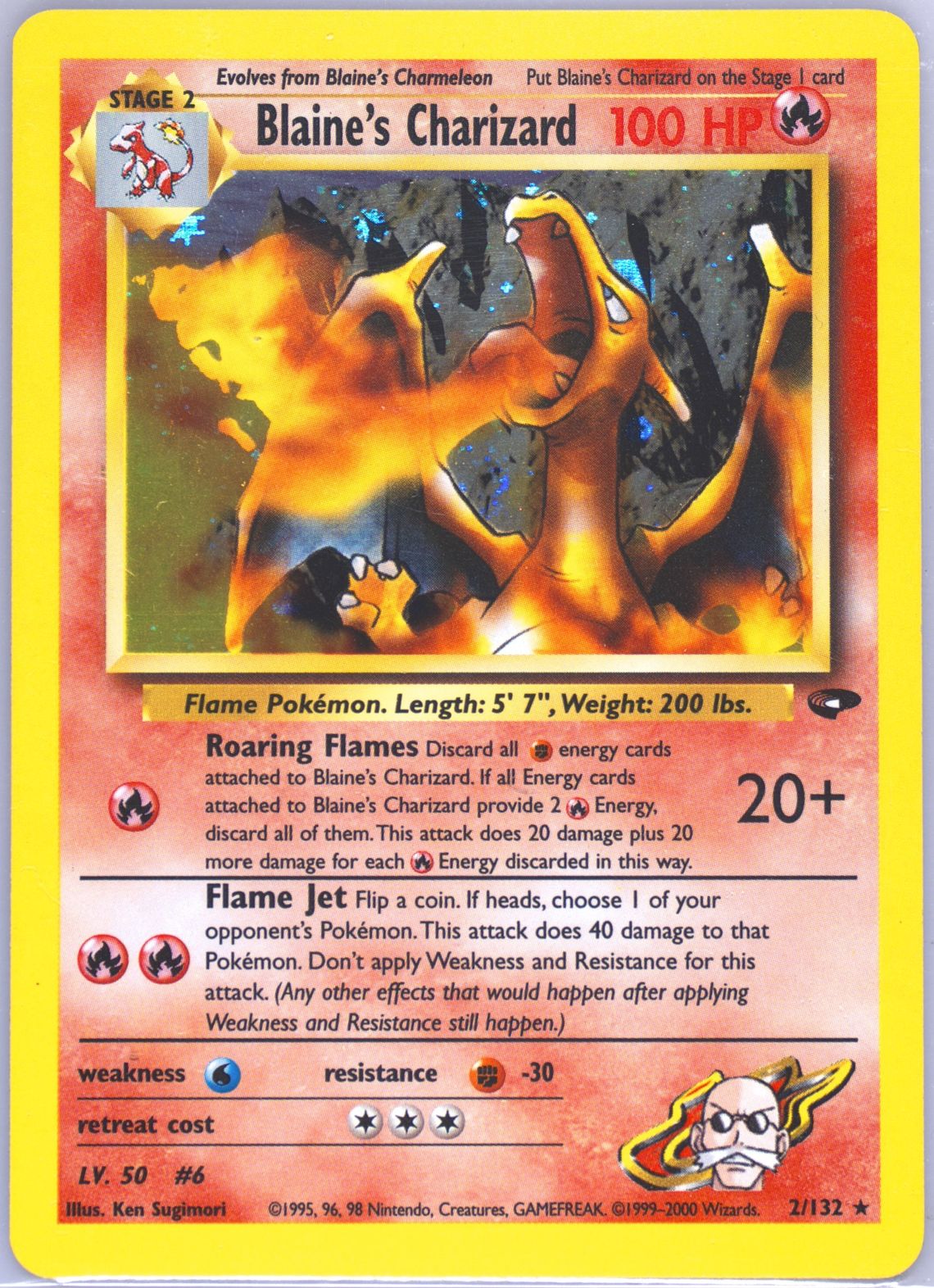
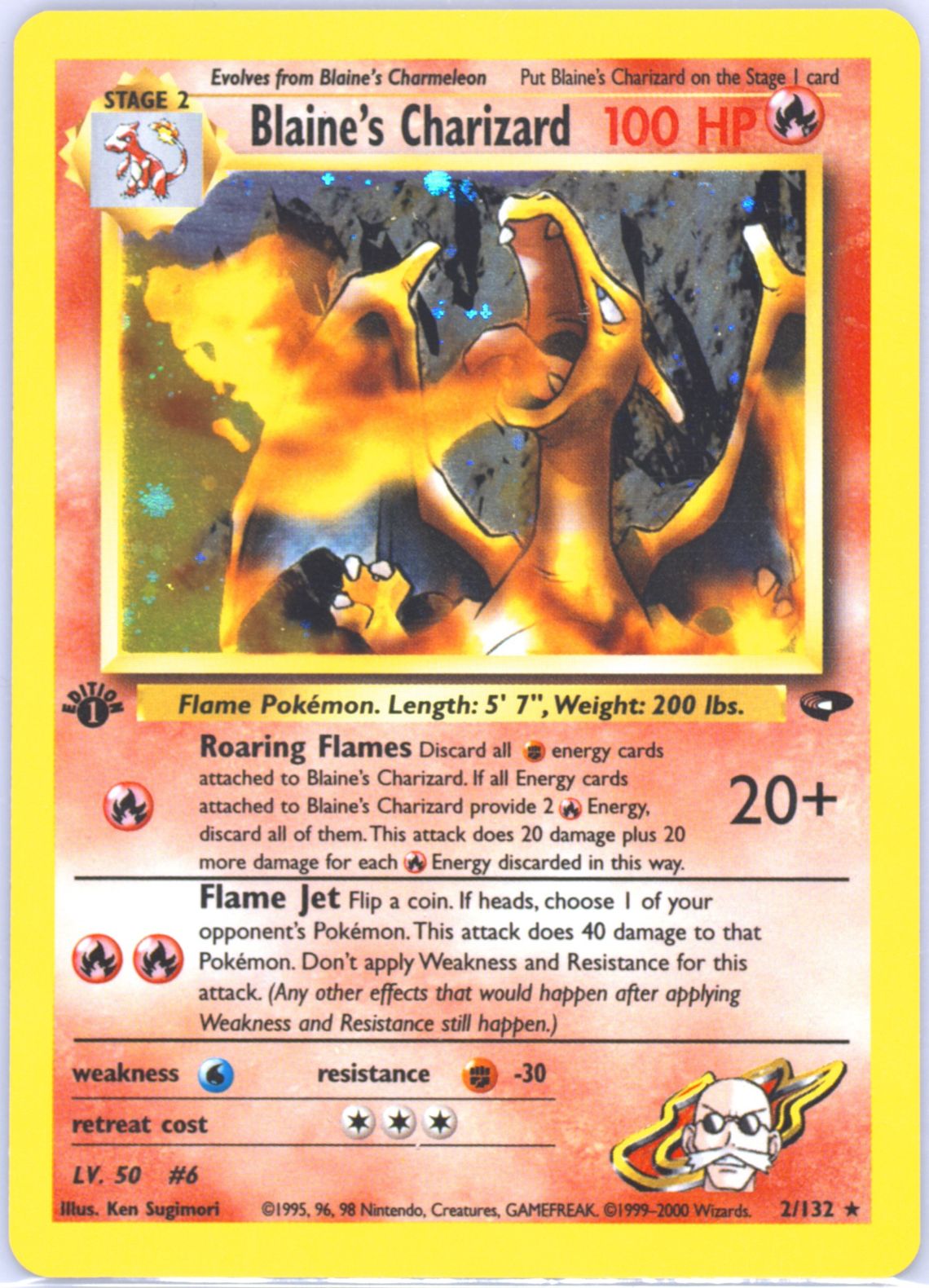
#8 -- Blaine's Charizard (Holo, Gym Challenge)
Blaine's Charizard is the crown jewel of the Gym Challenge expansion and one of the most beloved WOTC-era Charizard variants in the entire hobby. The artwork features Charizard bathed in Blaine's volcanic flames, with the Cinnabar Island Gym Leader's fiery influence adding a narrative richness and thematic depth that sets this card apart from generic Charizard prints. This is not just Charizard being powerful; this is Charizard channeling the volcanic energy of one of the most memorable locations in the Kanto region, trained by a Gym Leader whose personality and gym design are defined by fire and intensity. The holographic treatment makes the flames shimmer and dance in a way that perfectly captures the intensity of a Fire-type battle in a volcanic gym, and the card looks genuinely spectacular when it catches the light at the right angles.
Blaine's Charizard sits at a unique intersection of multiple collector demand drivers that have kept its value strong and steadily appreciating for over two decades. The Charizard premium provides the foundational demand that elevates any card bearing the name. The Gym Leader connection adds character nostalgia that resonates with fans who remember Blaine's gym as one of the highlights of their Pokemon journey. And the WOTC-era provenance gives the card vintage credibility that modern cards cannot replicate. 1st Edition copies are especially valuable, representing one of the more attainable WOTC-era Charizard grails for collectors who want genuine vintage provenance without the astronomical prices of Base Set. Even Unlimited copies hold their value exceptionally well, making Blaine's Charizard one of the most recommended vintage Charizard purchases for collectors at every budget level.
#7 -- Charizard EX Special Illustration Rare (Pokemon 151)
The Pokemon 151 expansion was a nostalgia bomb of extraordinary proportions, reimagining the original 151 Pokemon through the modern Scarlet and Violet card design language, and the Charizard EX Special Illustration Rare was its most valuable card by a significant margin that no other card in the set could seriously challenge. The artwork is a masterpiece of modern TCG design, featuring Charizard in a dynamic, painterly composition that bridges the gap between vintage nostalgia and contemporary art direction with remarkable skill. The SIR texture adds depth and dimension that photographs and online listings cannot fully capture, and the card has become one of the defining pulls of the entire Scarlet and Violet era, a modern classic that collectors identify as a flagship card of the generation.
Pokemon 151 was one of the most popular and commercially successful sets in recent memory, driven largely by the irresistible combination of original 151 nostalgia and modern production quality. The Charizard SIR was the card that drove the majority of that demand, the card that everyone hoped to pull when they opened their packs, and the card that commanded the highest prices on the secondary market from day one. The artwork pays respect to Charizard's legacy while pushing the visual possibilities of the SIR format to new heights, creating a card that feels both familiar and fresh in a way that perfectly captures the appeal of the 151 set as a whole. The card trades consistently at a premium that reflects its status as the flagship card from a flagship set, and its long-term value prospects are supported by the deep well of nostalgia that the original 151 Pokemon represent for the collecting community.
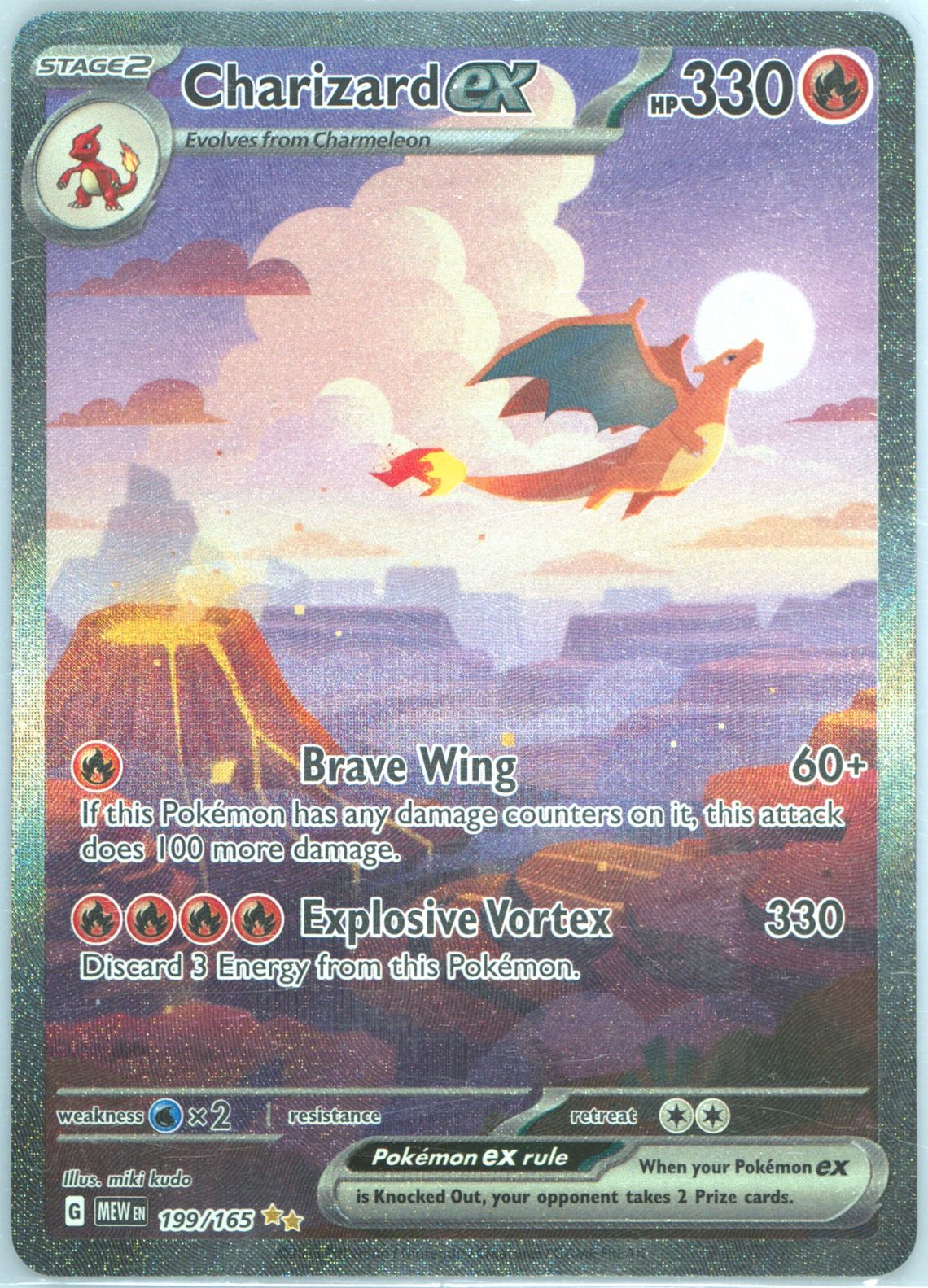
#6 -- Charizard EX Special Illustration Rare (Paldean Fates)
Paldean Fates continued the established tradition of special subset expansions featuring shiny Pokemon with premium treatments, and the Charizard EX SIR was its headline card from the moment the set was announced. The artwork features Charizard in a striking composition that showcases the SIR art style at its finest, with rich, saturated colors and fine detail work that makes the card a showcase piece for any collection. The SIR format gives the illustration a tactile quality that elevates it above a standard card, and the combination of the shiny Pokemon theme with the SIR treatment creates a premium product that appeals to collectors who value both rarity and artistic quality.
Paldean Fates Charizard EX SIR benefits from the convergence of multiple powerful market forces: the Charizard name, which provides baseline demand that no other Pokemon can match; the SIR format's growing popularity among modern collectors, who have increasingly recognized SIRs as the premier collectible cards of the Scarlet and Violet era; and the special set premium that these mid-generation expansions tend to carry, as their limited availability and curated card pools make them feel more exclusive than standard main sets. The card has been one of the strongest performers in the Scarlet and Violet secondary market since its release, and its value reflects the modern collecting community's enthusiasm for premium Charizard cards in the latest design language. For collectors who want a modern Charizard grail that represents the current state of the art in Pokemon card design, the Paldean Fates SIR is one of the strongest candidates available.
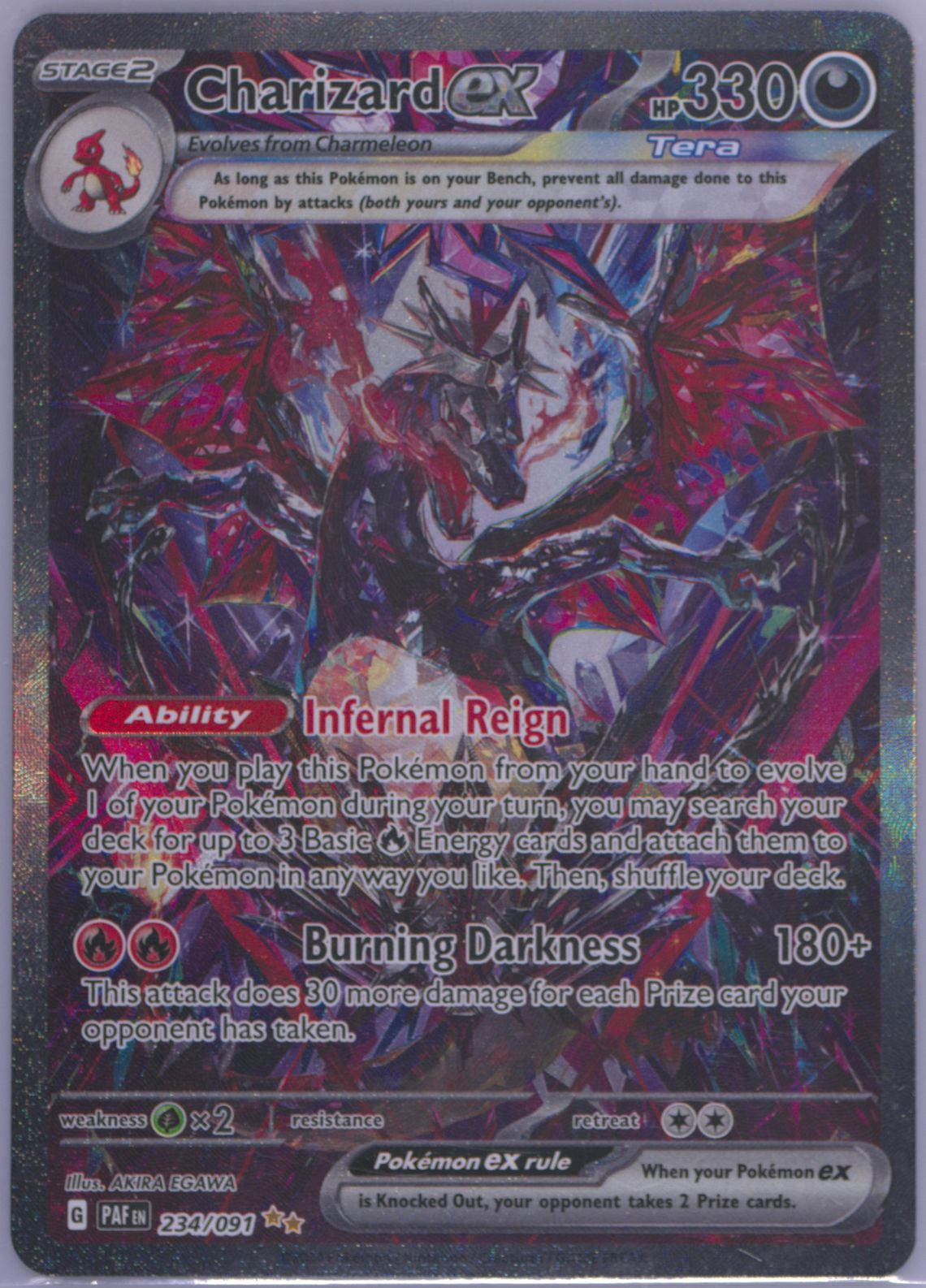
#5 -- Charizard Gold Star (EX Dragon Frontiers)
Charizard Gold Star from EX Dragon Frontiers is one of the most legendary cards from the ex era and one of the rarest Charizard cards ever produced in any era of the Pokemon TCG. Gold Star cards were the chase mechanic of the mid-2000s, featuring alternate-color artwork of popular Pokemon with a distinctive gold star symbol next to the card name that signified extreme rarity. Pull rates for Gold Star cards were vanishingly low, estimated at roughly 1 in 72 packs or worse, and the cards were distributed across sets that did not receive the massive print runs of later Pokemon eras. Charizard Gold Star takes the concept to its logical extreme, presenting a Delta Species version of Charizard as a Dark/Steel-type with artwork that is completely unlike any other Charizard card in the hobby. The alternate typing gives the card a blue-and-metallic color scheme that is immediately recognizable and incredibly striking, transforming the familiar Fire-type into something alien and unexpected.
EX Dragon Frontiers was not a heavily opened set by modern standards, which means the supply of Charizard Gold Star is genuinely limited in a way that is increasingly difficult to find in the modern market where print runs number in the hundreds of millions of packs. High-grade copies are among the most valuable Pokemon cards from the 2000s era, commanding prices that reflect both the extreme rarity and the growing collector appreciation for the ex era as a golden age of card design. The card has appreciated dramatically as collectors have expanded their horizons beyond the WOTC era to recognize the ex era cards as premium collectibles in their own right, and Charizard Gold Star sits at the very top of that recognition. It is a card that combines genuine scarcity, iconic design, the Charizard premium, and a uniqueness of concept that no other card can replicate, and those factors have combined to create one of the most sought-after Charizard cards in the entire hobby.
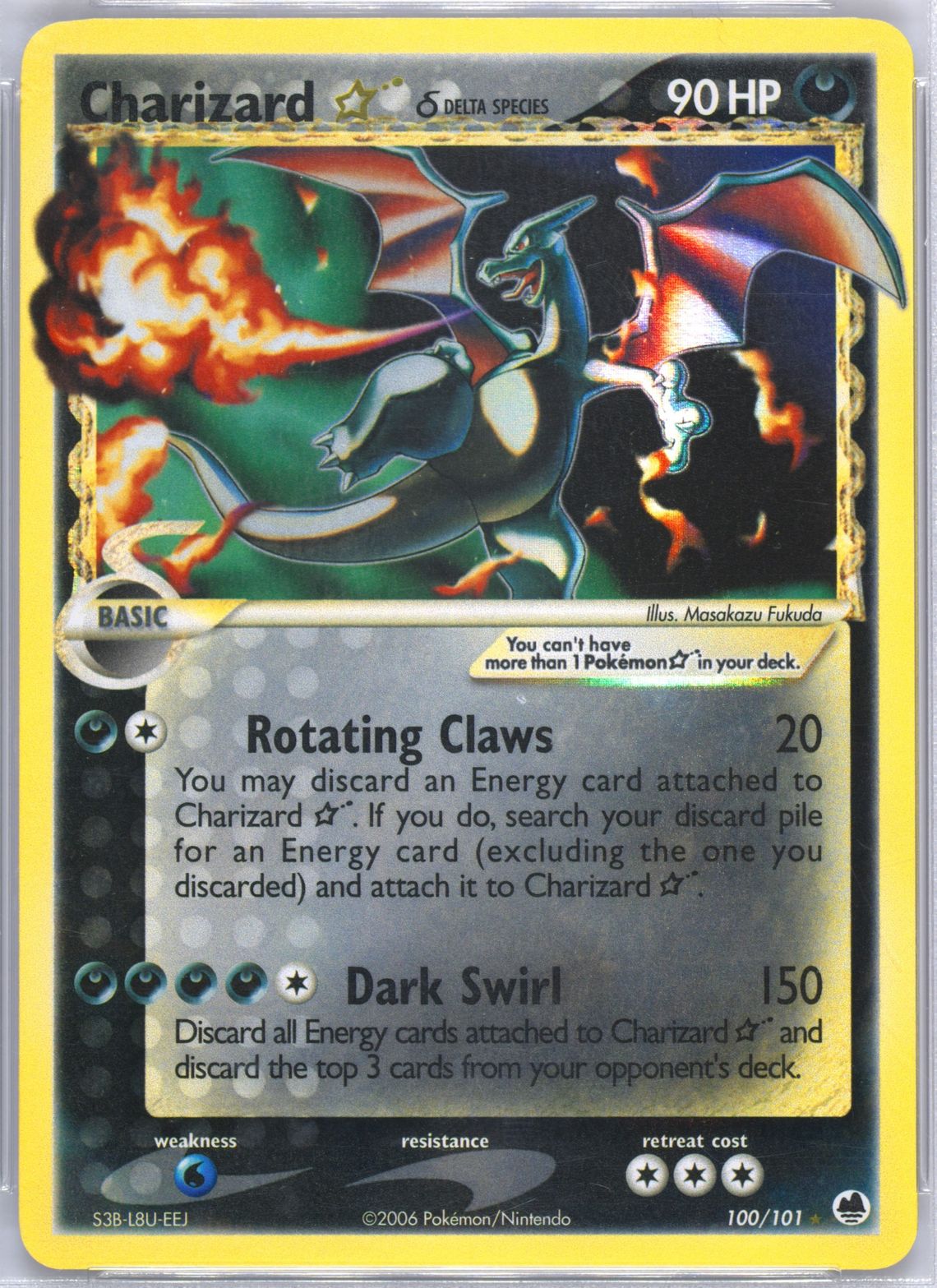
#4 -- Shining Charizard (Neo Destiny)
Shining Charizard from Neo Destiny is the card that sits at the intersection of two of the most powerful collecting forces in the Pokemon TCG hobby: the Charizard premium and the Shining card mystique. Released in February 2002 as part of the final set in the Neo series, Shining Charizard features an alternate-color black Charizard against a full holographic background, and the visual impact is immediate, unforgettable, and unlike anything else in the WOTC era. The black color scheme transforms Charizard into something primal, fierce, and prehistoric, a dragon that looks like it emerged from volcanic ash rather than an open flame. The contrast between the dark body and the holographic background creates a visual depth that makes the card look different from every angle, and the overall effect is one of barely contained power and ancient menace.
The Shining rarity was the WOTC-era predecessor to the modern shiny card mechanic, and the eight Shining cards in Neo Destiny are among the most collectible vintage Pokemon cards in existence. Each one features an alternate-color Pokemon on a full holographic background, and the combination of the unique color treatment with the premium holographic surface created some of the most visually impressive cards of the era. Shining Charizard is the undisputed crown jewel of that group, commanding the highest prices and generating the most collector interest by a significant margin. The card occupies a position in the vintage market that few other cards can match: it is simultaneously a flagship Charizard, a Shining card grail, a Neo Destiny headliner, and a WOTC-era icon, and each of those identities contributes independent demand that supports the card's extraordinary value. 1st Edition copies are exceptionally rare and trade at levels that make them genuine investment-grade assets in the upper echelon of the vintage Pokemon market.
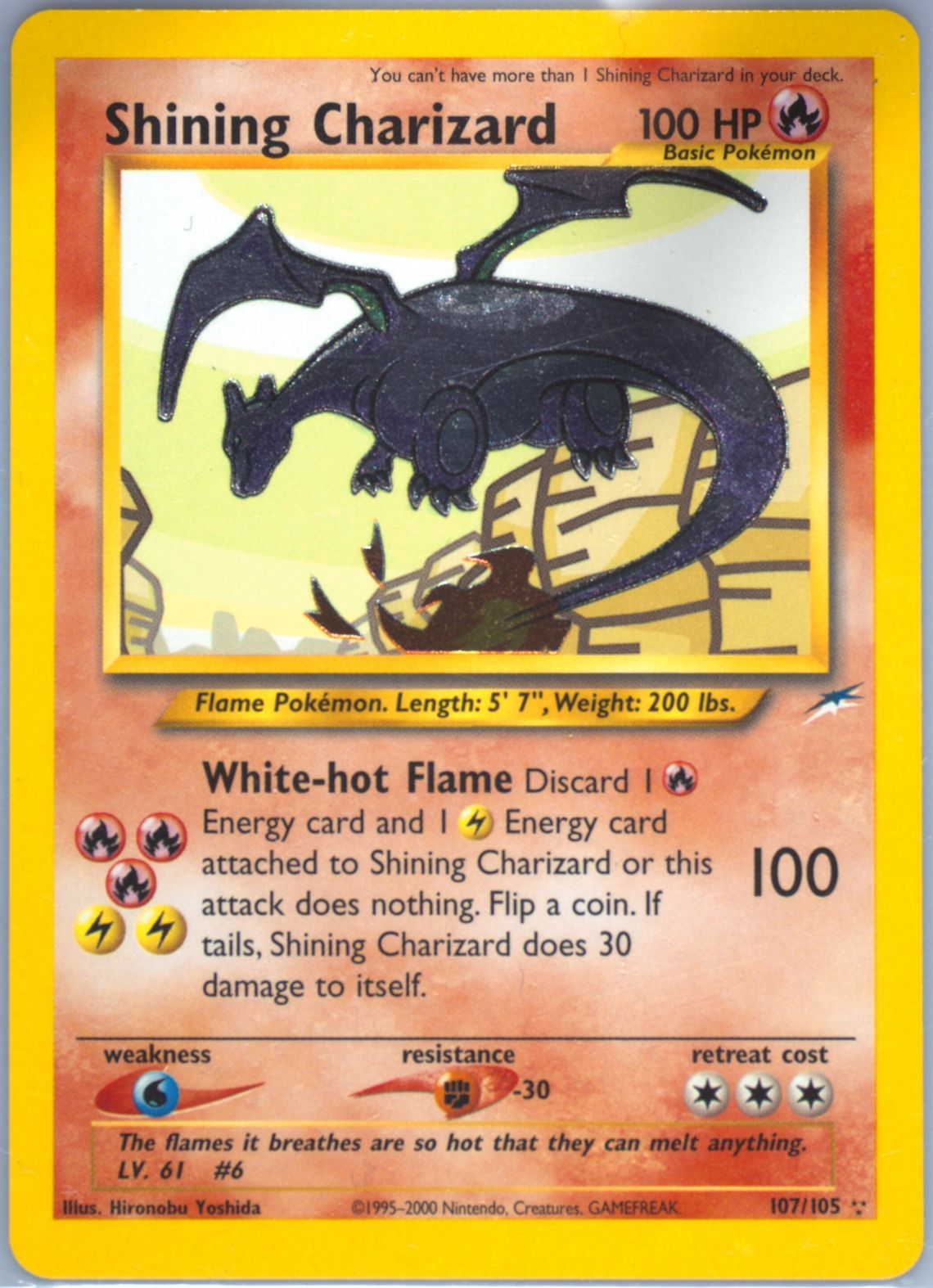

#3 -- Charizard (Holo, Unlimited Base Set)
The Unlimited Base Set Charizard is where it all began, the card that launched a thousand collections and defined what it meant to be a Pokemon card collector for an entire generation. This is the holographic dragon that every kid in 1999 desperately wanted to pull from a booster pack, the card that was worth more than every other card in the set combined in the eyes of schoolyard traders, the card that became synonymous with the Pokemon TCG itself. The artwork, illustrated by Mitsuhiro Arita, shows Charizard in an iconic battle pose with flames erupting from its mouth, and the holographic pattern behind it creates a shimmering, shifting effect that looked like nothing else in the world to a generation of young collectors who had never seen anything like it.
The Unlimited version is distinguished from the Shadowless and 1st Edition printings by its drop shadow around the card border and was printed in significantly larger quantities than its more valuable variants, making it the most common version of the Base Set Charizard in circulation. Despite that relative abundance, Unlimited copies still command impressive prices that reflect the card's status as the single most recognizable Pokemon card ever printed, the one card that transcends the hobby and is known by people who have never collected a Pokemon card in their lives. It is the gateway drug of Pokemon collecting: the card that people remember from childhood, the card that draws lapsed collectors back into the hobby decades later, and the card that new collectors identify as the symbol of what Pokemon cards are all about. High-grade PSA 10 copies have appreciated dramatically over the past decade as the collector market has matured and the supply of gem mint copies has proven to be far smaller than many expected. Even mid-grade copies hold their value better than almost any other card from the era, because the demand for Base Set Charizard is so broad and so deep that it supports pricing across every condition tier.

#2 -- Charizard (Holo, Shadowless Base Set)
The Shadowless Base Set Charizard occupies a unique and increasingly valuable position in the hobby as the middle child of the Base Set printing trio, sitting between the common Unlimited version below it and the legendary 1st Edition above it. Shadowless cards were printed during the initial run of Base Set before the drop shadow was added to the card border in subsequent print runs, making them identifiable by their slightly different border design and, most importantly, the absence of the shadow that gives the variant its name. The visual difference is subtle but unmistakable to anyone who knows what to look for, and that subtlety is part of the Shadowless variant's appeal: it rewards knowledge and attention to detail in a way that the obvious 1st Edition stamp does not.
Shadowless Charizard is significantly rarer than the Unlimited printing but was produced in much larger quantities than the 1st Edition version, placing it in a sweet spot of the market that has proven increasingly attractive to collectors as prices for the 1st Edition have reached levels that exclude all but the wealthiest buyers. What makes Shadowless Charizard so compelling from a market perspective is the value-to-rarity ratio. It offers the visual appeal and vintage provenance of an early Base Set print, the legitimate collectability of a scarce variant, and a price point that, while still substantial, is accessible to a much broader range of serious collectors than the 1st Edition. The card has become the go-to recommendation for collectors who want a genuine premium Charizard with real vintage credentials, a card they can display with pride knowing it represents the earliest era of the hobby. PSA 10 copies have become increasingly scarce on the market as more get absorbed into long-term collections, and prices for high-grade Shadowless Charizards have followed a steady upward trajectory that mirrors the broader appreciation of vintage Pokemon as a mature collectible asset class.
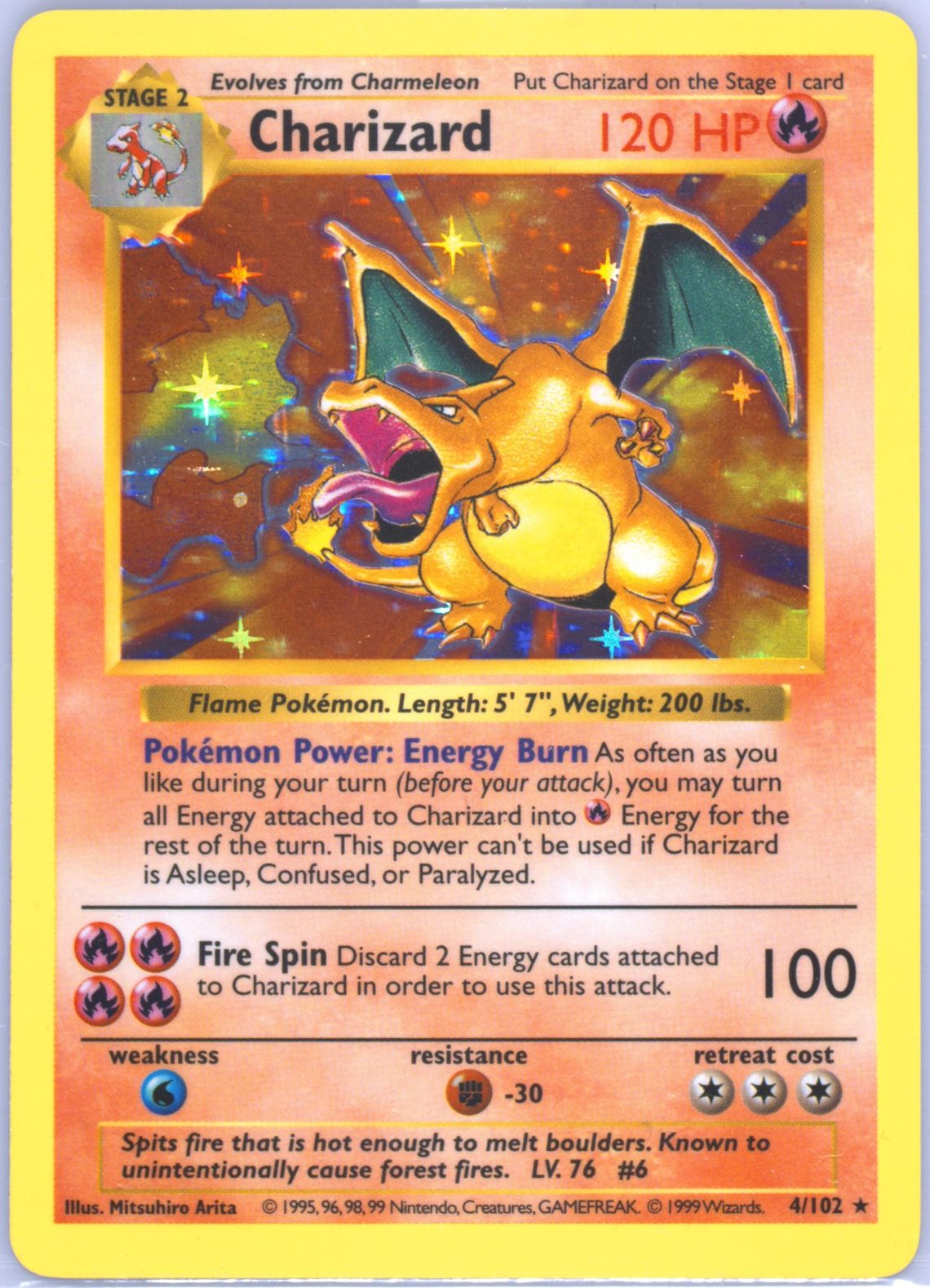
#1 -- Charizard (Holo, 1st Edition Base Set)
There is no debate, no discussion, and no realistic alternative for the number one spot on this list or on any list that attempts to rank the most valuable Pokemon cards ever printed. The 1st Edition Base Set Charizard is the most expensive, most famous, and most culturally significant Pokemon card in existence. It is the undisputed king of the hobby, a card that has transcended the boundaries of the Pokemon TCG to become a recognized cultural artifact that appears in mainstream news coverage, celebrity collections, museum exhibitions, and auction house catalogs alongside fine art, vintage sports memorabilia, and historical documents. When people who have never collected a single card in their lives hear about Pokemon card values, this is the card they picture. It is the standard against which every other Pokemon card is measured.
The 1st Edition stamp on the left side of the card is the difference between a valuable collectible and a life-changing asset. While Unlimited copies are measured in hundreds of dollars and Shadowless copies in thousands, PSA 10 copies of the 1st Edition have sold for over $400,000 at auction, with the most famous example fetching $420,000 in a 2022 sale that made international headlines. The card's value is driven by the perfect storm of factors that no other Pokemon card can fully replicate: it is the most iconic Pokemon rendered in the most iconic card design from the most iconic set, in the rarest and most desirable printing variant, graded at the highest possible condition by the most trusted authority in the hobby. Every element of that equation contributes to a value proposition that is greater than the sum of its parts.
The artwork by Mitsuhiro Arita is the same illustration that appears on the Unlimited and Shadowless versions, but the 1st Edition stamp transforms it from a beautiful piece of card art into a piece of cultural history. The holographic pattern, the fire erupting from Charizard's mouth, the battle-ready pose, and the 1st Edition stamp combine to create an image that is seared into the collective consciousness of an entire generation. Every serious Pokemon card collection is measured, at least in part, by its proximity to this card. Owning a PSA 10 1st Edition Charizard is the ultimate achievement in the hobby, the peak that everything else exists in relation to, and the card's value reflects that singular status with unwavering authority. It is not just the most expensive Charizard card. It is the most expensive Pokemon card, period, and it will likely hold that distinction for as long as the Pokemon franchise exists.

Building a Charizard Collection
For collectors who want to build a comprehensive Charizard collection, the scope of the project is both exciting and daunting. Charizard has appeared in virtually every generation of the Pokemon TCG, across hundreds of different cards in dozens of sets, spanning regular rares, holos, ultra rares, full arts, secret rares, SIRs, Gold Stars, Shining cards, Radiant cards, and promo cards. A truly complete Charizard collection would number in the hundreds of unique cards and require expertise across every era of the game. For most collectors, the practical approach is to focus on a subset of the Charizard universe that aligns with their interests and budget.
The most common approach is to collect one premium Charizard from each era of the game, creating a timeline that tracks the evolution of the Pokemon TCG's design language through the lens of its most iconic character. A collection that includes a Base Set Charizard (in any variant), a Shining Charizard, a Gold Star Charizard, a Charizard LV.X, a Charizard EX from the XY era, a Charizard GX, a Charizard VMAX, and a modern Charizard EX SIR tells a complete visual story of how the TCG has changed over 25-plus years, and it represents a focused, achievable goal that still carries significant prestige and value.
For collectors on a tighter budget, the "gateway Charizards" offer excellent value. Cards like the Unlimited Base Set Charizard, the XY Evolutions Charizard holo, the Radiant Charizard from Crown Zenith or Pokemon GO, and the standard rare Charizard EX from Pokemon 151 provide genuine Charizard cards with real collector appeal at price points that most hobbyists can work with. These cards are not investment-grade pieces in the same way that 1st Edition Base Set or Gold Star specimens are, but they are authentic Charizard cards that look impressive in a binder and carry the emotional weight of the most famous name in the hobby.
Grading is a particularly important consideration for Charizard collectors because the Charizard premium amplifies the grade premium more dramatically than for virtually any other card. The price difference between a PSA 9 and a PSA 10 is significant for any vintage holo, but for Charizard cards, that gap can be enormous. A PSA 9 1st Edition Base Set Charizard might trade at a fraction of the price of a PSA 10 copy, even though the visual difference between the two grades can be imperceptible to the untrained eye. This dynamic makes grading both an opportunity and a risk for Charizard collectors: buying raw cards and submitting them for grading can yield windfall returns if the card achieves a top grade, but it can also result in disappointment if the card grades lower than expected. For the most valuable cards on this list, purchasing pre-graded copies eliminates the grading risk at the cost of paying the grade-appropriate premium upfront.
The counterfeit market is another important consideration for Charizard collectors, particularly at the vintage end of the spectrum. High-value Charizard cards are among the most frequently counterfeited Pokemon cards in the world, and the quality of counterfeits has improved dramatically in recent years. For any significant Charizard purchase, buying from reputable sellers with return policies, requesting detailed high-resolution photographs, and verifying authenticity through professional grading services are essential precautions. The peace of mind that comes with a professionally graded and authenticated Charizard card is well worth the grading fee, especially as prices increase.
The Bottom Line
The top 10 most expensive Charizard cards of all time span the full history of the Pokemon TCG, from the 1999 Base Set that launched the hobby to the modern Scarlet and Violet era that defines it today. What unites every card on this list is the Charizard premium, the most powerful, persistent, and well-documented market force in the collecting world. Whether the card features Mitsuhiro Arita's iconic original artwork from Base Set, a Shining alternate colorway from the WOTC era, a Gold Star treatment from the mid-2000s ex era, or a Special Illustration Rare from the latest generation, the Charizard name elevates every card it touches to a level of value and desirability that no other Pokemon can consistently match.
The distribution of value across this list tells an important story about the Pokemon market and the forces that drive it. The top three spots all belong to variants of the same Base Set card, which demonstrates just how much the 1st Edition stamp, print run scarcity, and vintage provenance matter in the highest tiers of the hobby. The original Base Set Charizard is not just a card; it is a cultural artifact, and the market prices the three variants accordingly. But the modern cards on this list prove that Charizard's appeal is not purely nostalgic or backward-looking. Cards like the Pokemon 151 SIR, the Paldean Fates SIR, and the Shining Fates Shiny VMAX demonstrate that collectors are willing to pay significant premiums for new Charizard designs that meet the high bar of artwork quality and rarity that the market demands. The Charizard premium is not a fixed historical phenomenon; it is a living, evolving market force that regenerates with every new era of the game.
The cards in the middle of the list, Charizard Gold Star, Shining Charizard, and Blaine's Charizard, represent the depth and breadth of the Charizard market across the hobby's full timeline. These are not Base Set variants riding the coattails of the original design; they are independently iconic cards from different eras that have built their own collector followings and appreciated on their own merits. The fact that a mid-2000s Gold Star, a 2002 Shining card, and a 2000 Gym Challenge holo all sit in the top 10 alongside modern SIRs and the legendary Base Set variants speaks to the unique position that Charizard occupies in the market: there is no era of the game where Charizard is not relevant, and there is no era where the best Charizard card is not among the most valuable cards printed.
If you own any card on this list, you own a piece of Pokemon history. And if you are hunting for one, we are here to help you find it.
Prices referenced are approximate market values as of March 2026 and will fluctuate. Check current listings on Misprint for the latest prices.